This is Climate Tech Distillery, a newsletter where I talk about one specific climate tech company every week.
Subscribe for free to receive my weekly articles in your inbox.
Today we'll distill a company that's spotting wildfires 35 minutes faster than NASA and sending the alert straight to firefighters' WhatsApp: Satellites on Fire 🇦🇷
Issue sponsored by The DROP Water Academy:
Water is at the heart of everything: our health, homes, economies and ecosystems. As it becomes increasingly contested, understanding these connections is essential to making good decisions about water.
The Drop Water Academy connects the dots, bringing world-class experts together to prepare future leaders through real-life case studies and hands-on learning.
With wildfires, minutes decide everything: catch a fire early and one truck puts it out, catch it late and you need planes and hundreds of firefighters for days.
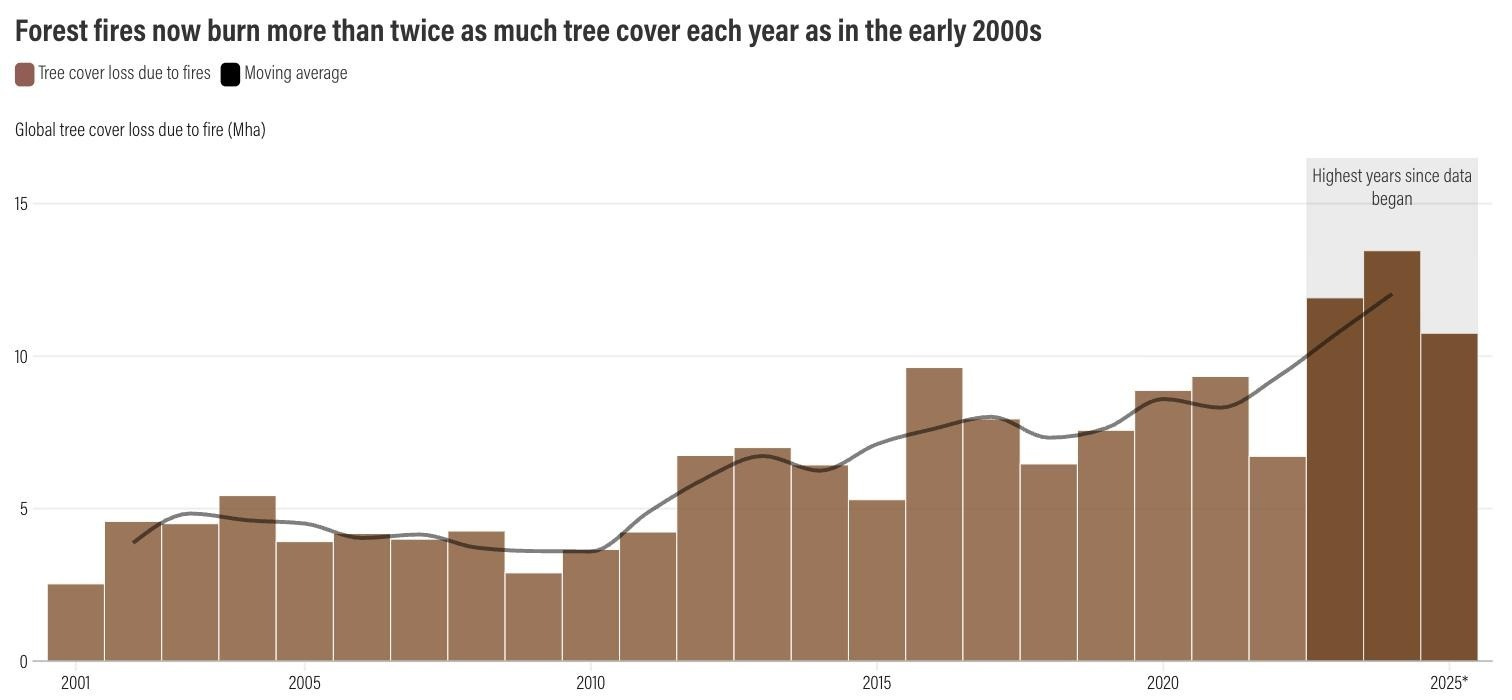
1. Fires are getting worse: Wildfires now burn more than twice as much tree cover as they did two decades ago. In 2025, Europe broke its record with over 1 million hectares burned, and Spain had its worst year since 2002, with 350,000 hectares gone.
2. A huge carbon source: Fires released around 11 billion tonnes of CO₂ in 2025. Canada's boreal forests alone have emitted about 4 billion tonnes since 2023, more than in the previous 15 years combined.
3. Satellites built for something else: Most public fire alerts come from satellites designed for general Earth observation, not for fire. A small fire in a remote forest can burn unnoticed until it's already out of control.
4. Smoke kills: Research published in Nature estimates wildfire smoke will contribute to around 2 million deaths a year over the next three decades.
Product / Service 📦
Satellites on Fire sells an early-warning platform to fire brigades, governments, forestry and farming companies, energy companies and insurers, mostly across Latin America.
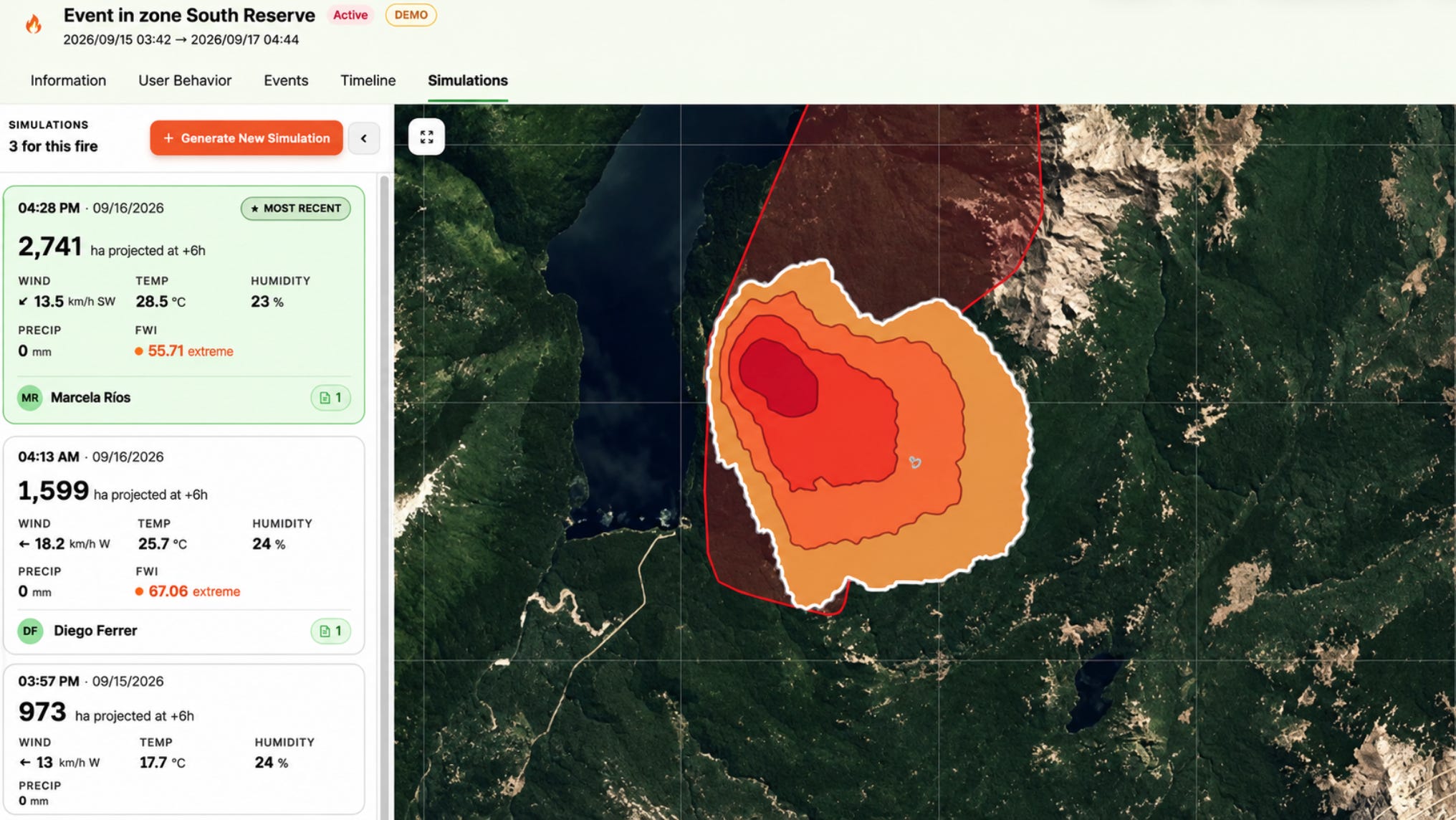
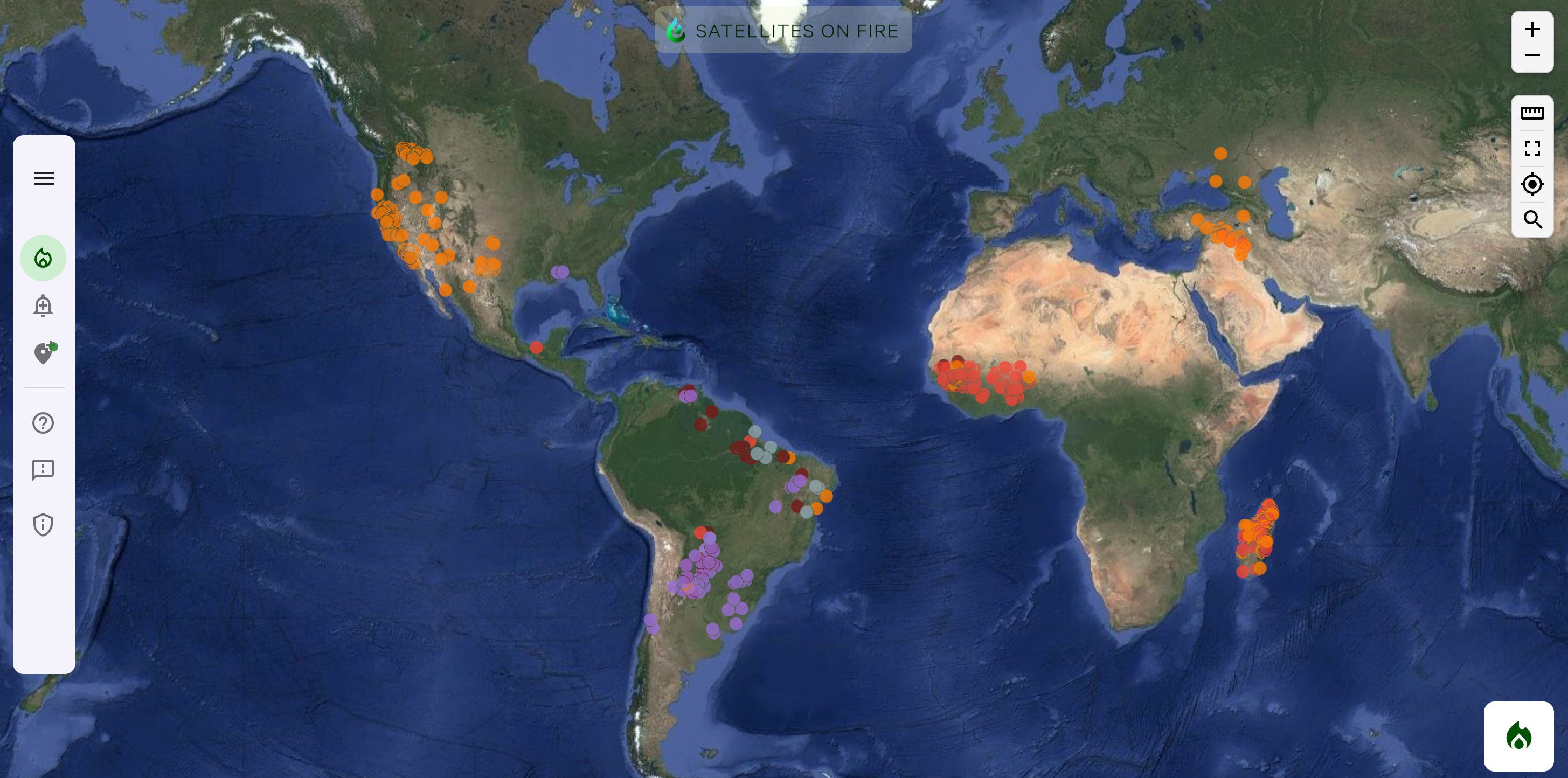
How it works: Its AI crunches images from more than 13 satellites every few minutes, plus feeds from 360° cameras on towers, lightning strikes reported every 20 seconds and weather data. A smoke detector for an entire country. When something looks like fire, it confirms it, predicts where it will spread and sends the alert.
Faster than NASA: Where its cameras are installed, fires are flagged in about 3 minutes. On average, the company says it beats NASA's alerts by 35 minutes.
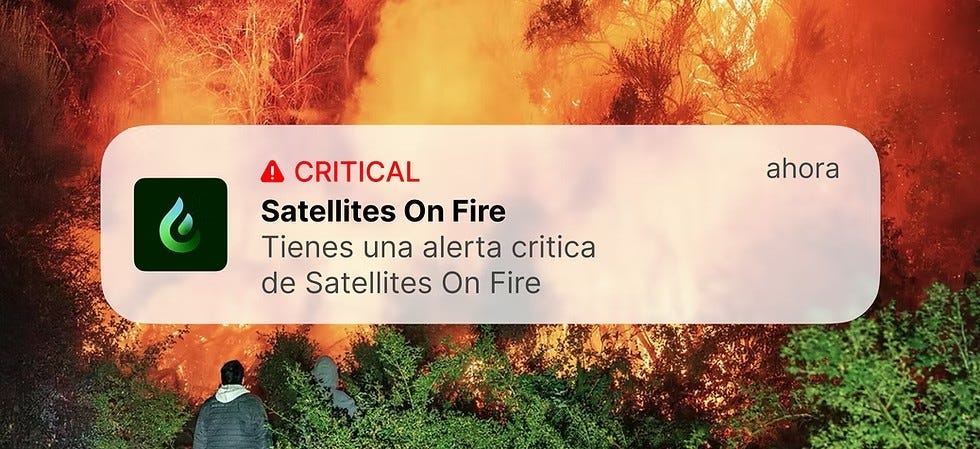
Alerts where people are: No dashboard that nobody checks at 3 a.m. Alerts land on WhatsApp, SMS, email or push, straight to the brigade that needs them.
Prediction, not just detection: A database of over 90,000 validated fire events lets the AI map high-risk areas and forecast how a fire will move.
Bigger eyes coming: It's the first commercial company in FireSat's early adopter program, a constellation of 50+ satellites funded by Google.org and the Bezos Earth Fund that can spot fires as small as 5 x 5 meters.
Market 🌐
Analysts value the forest wildfire detection market at around $250 million, growing to over $420 million by 2030. That's tiny next to the losses: 2025 was the costliest wildfire year on record.
Demand is driven by longer fire seasons and insurers trying to get ahead of claims. In Spain, Allianz uses Satellites on Fire's alerts to warn policyholders, and sent more than 1.2 million preventive messages this year.
Other Key Players
OroraTech 🇩🇪: Builds its own constellation of thermal satellites and powers Greece's national satellite wildfire warning system.
Pano AI 🇺🇸: Ultra-HD 360° cameras on mountaintops that scan every minute, serving 250+ agencies and utilities in the US and Australia.
Dryad Networks 🇩🇪: Solar-powered sensors that "smell" a fire before flames are visible. Covered in issue #51.
Satellites on Fire is the one combining satellites, cameras and lightning data in a single WhatsApp-first platform, built for Latin America's huge, remote forests.
Founding Story 🦄
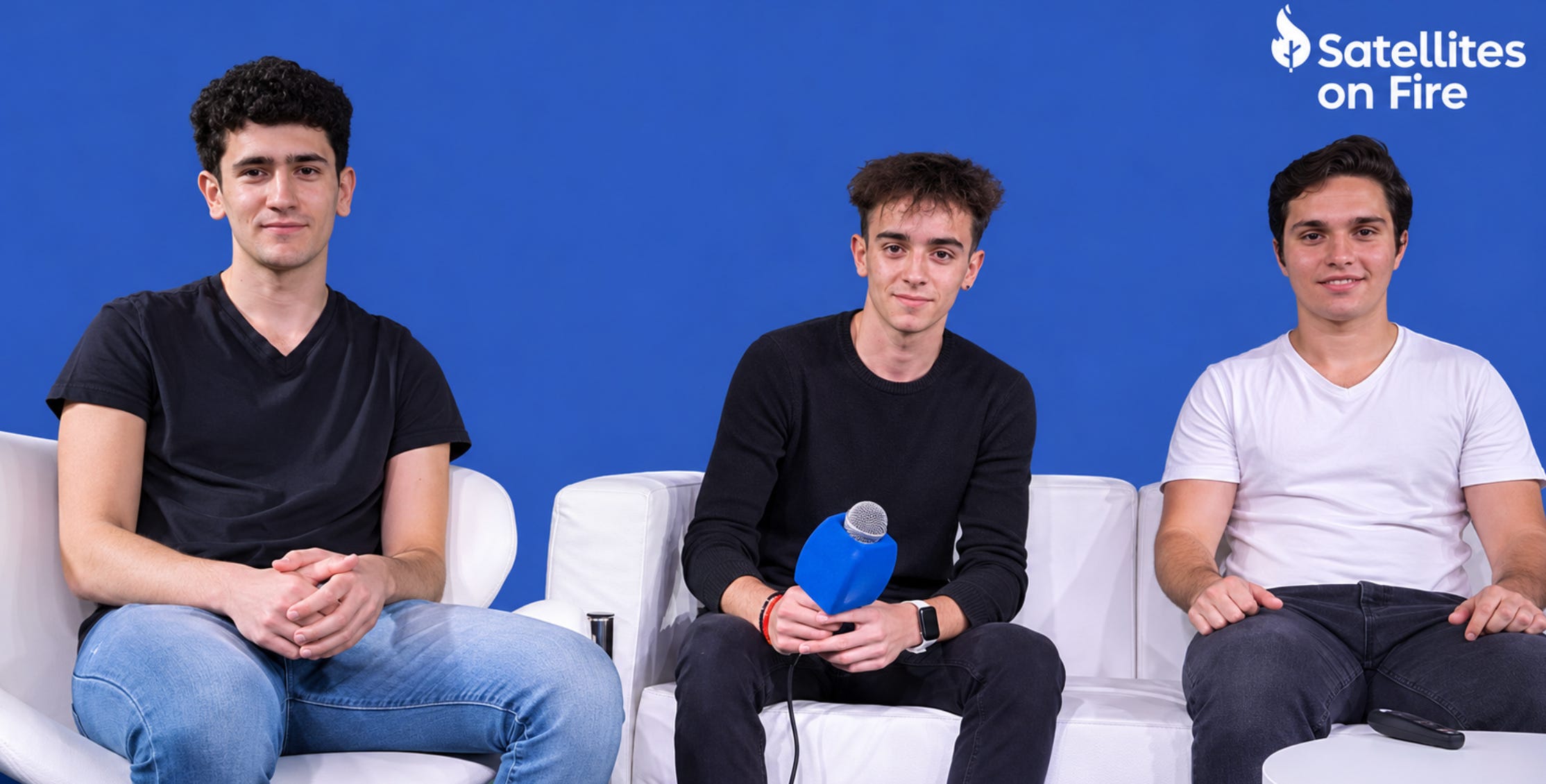
Satellites on Fire started in 2020 as a school project. Franco Rodríguez Viau, Joaquín Chamo and Ulises López Pacholczak were 16 and studying programming at a technical high school in Argentina. That year, family friends of Franco lost their homes in the Córdoba wildfires. "I remember seeing the fires up close, the sky black with smoke, and the feeling of not being able to do anything," he says.
The first version flopped: an Argentine national park told them it was useless. They kept going after graduating, heard "no" from more than 100 investors, and in April 2026 closed a $2.7M seed round led by Dalus Capital.
Now 22, Franco just made TIME's 2026 TIME100 Climate list. The platform has around 70,000 users and expects to cross $1M in revenue this year. They're also one of 15 Earthshot Prize finalists and Prince William called the app "absolutely brilliant".
Top Impact Stats 📈
1. Fires detected an average of 35 minutes faster than NASA's system, according to the company.
2. More than 92 million hectares monitored across 21 countries.
3. Helped firefighters respond to more than 2,000 wildfires in 2025.
Whenever you’re ready, there are 2 ways I can help you:
Scale and optimize your business: Automation and AI implementation (Claude expertise) for companies so they can free up time to scale their revenues.
Give visibility to your climate company: Get your company in front of an audience of thousands of climate players and enthusiasts by sponsoring newsletter issues and LinkedIn posts.
Thanks for reading today’s issue! If you liked it feel free to hit the ❤️ button and share it with someone who might like it too. See you next Saturday:)
Subscribe to keep learning about cool climate tech companies :)