


Read time: 5 minutes
Hi, I’m Javi Gascón.
This is Climate Tech Distillery, a newsletter where I talk about one specific climate tech company every week.
Today we'll distill a company that's killing weeds with lasers instead of chemicals, and just crossed $100M in revenue: Carbon Robotics 🇺🇸

Want to sponsor Climate Tech Distillery? Here’s all the info.
What Problem Does Carbon Robotics Tackle❓
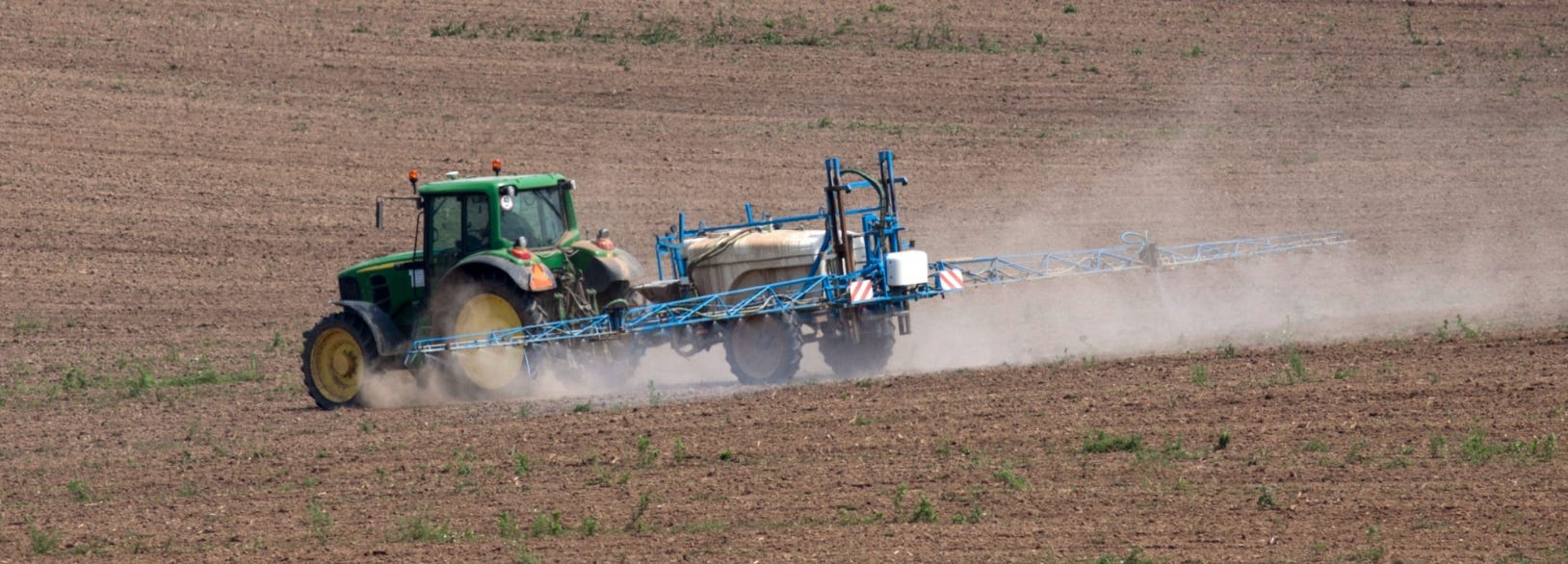
Weeding is the most expensive, most chemical-heavy and most labor-dependent job on a farm, and every existing solution is getting worse.
1. Superweed Crisis: Decades of herbicide overuse have bred resistance. Herbicide-resistant weeds destroy roughly 30% of US crops every year, and resistance keeps growing at 4-8% annually. Farmers spray more to get the same result.
2. Chemicals in Everything: The US uses over a billion pounds of herbicides a year. They contaminate groundwater, degrade soil and end up as residues in food. Regulators are openly pushing farmers to find alternatives.
3. Nobody Wants to Weed by Hand: Hand crews are the fallback, but most US farm labor comes from seasonal guest-worker programs that are shrinking every year. For a specialty crop grower, weeding labor can run into millions of dollars a season.
4. Mechanical Weeding Damages Crops: Blades and hoes disturb the soil, hurt roots and can't tell a weed from a seedling when they're growing an inch apart.
Product / Service 📦
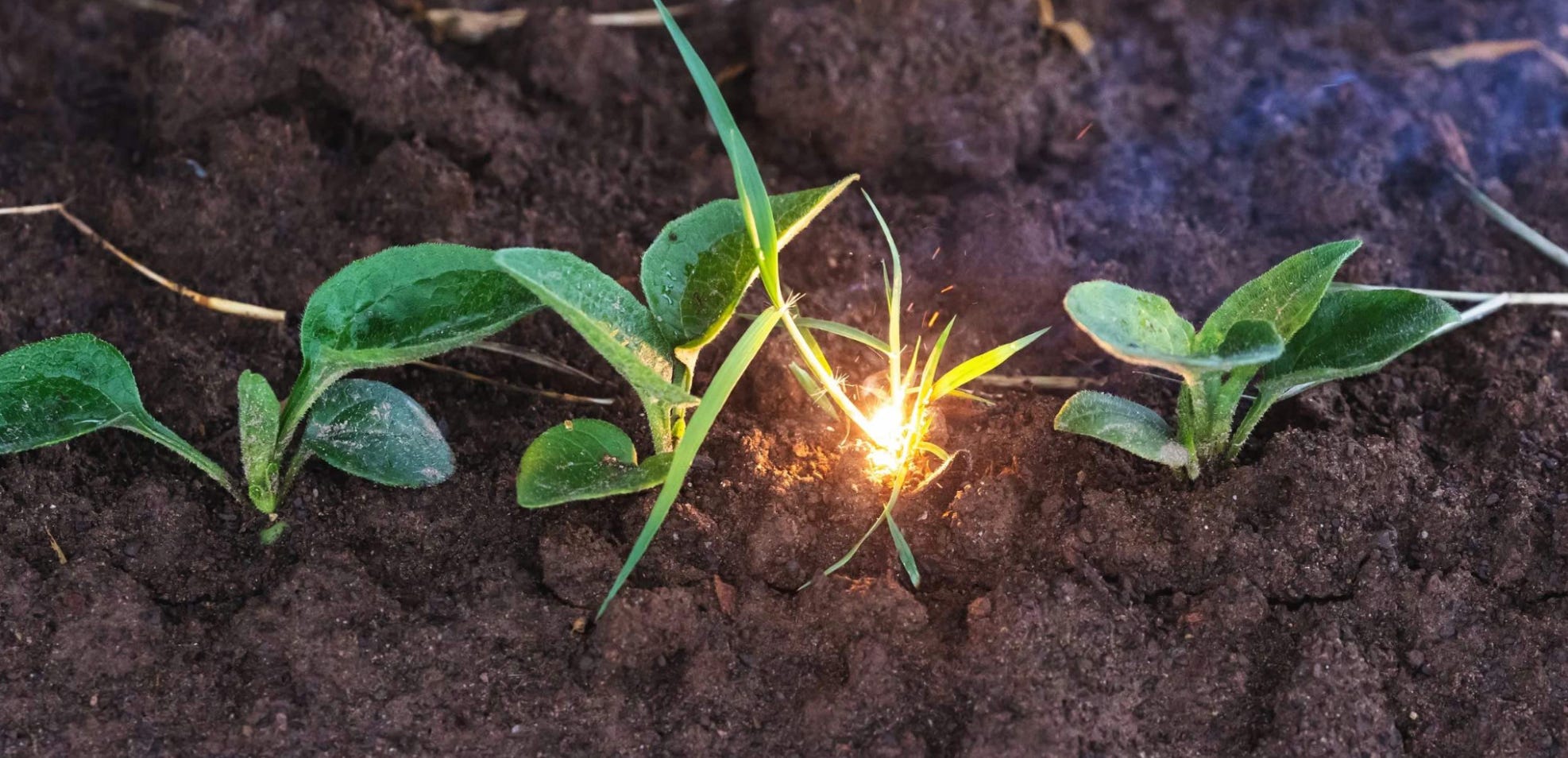
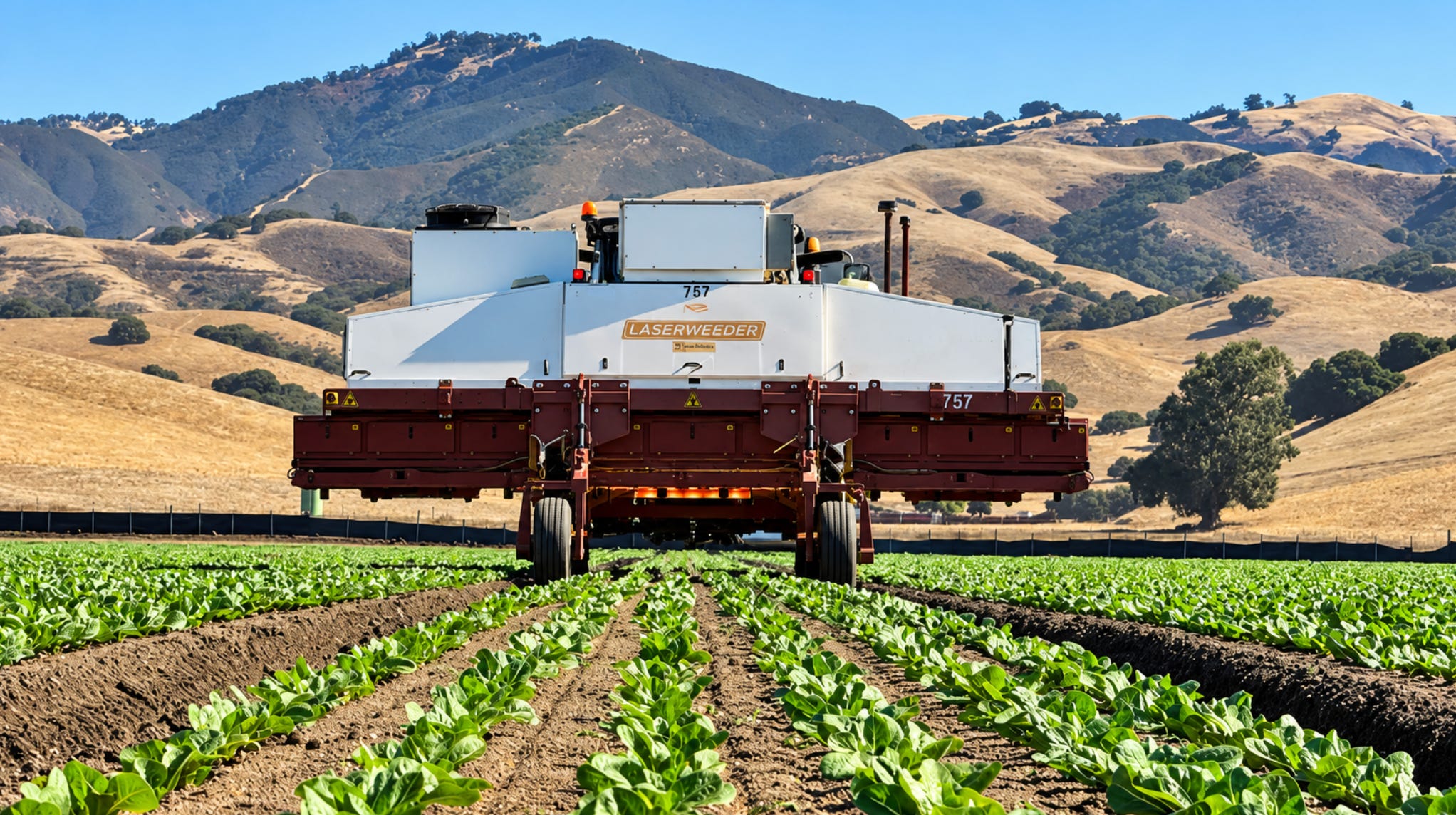
Carbon Robotics makes the LaserWeeder, a tractor-pulled device that identifies every plant in the row with AI and vaporizes the weeds with high-powered lasers.
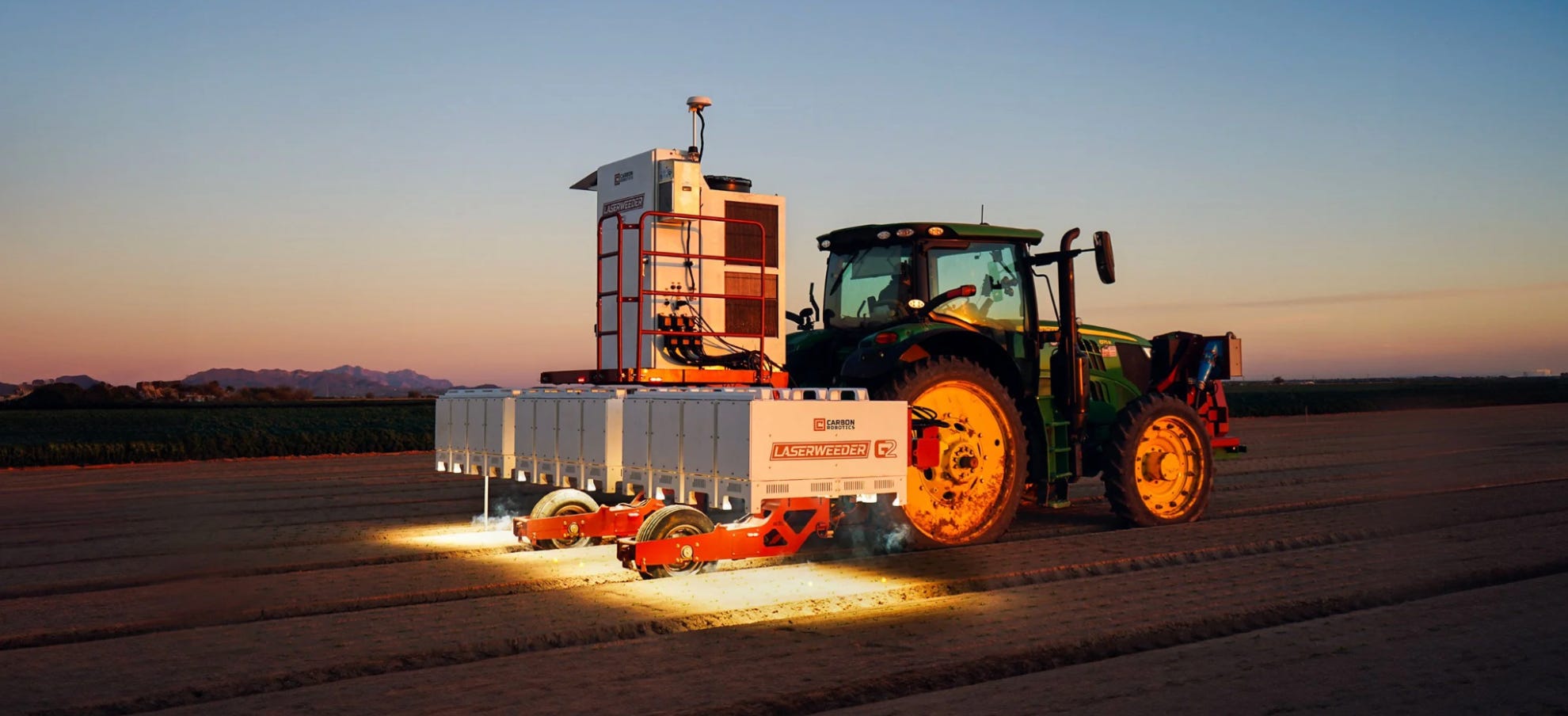
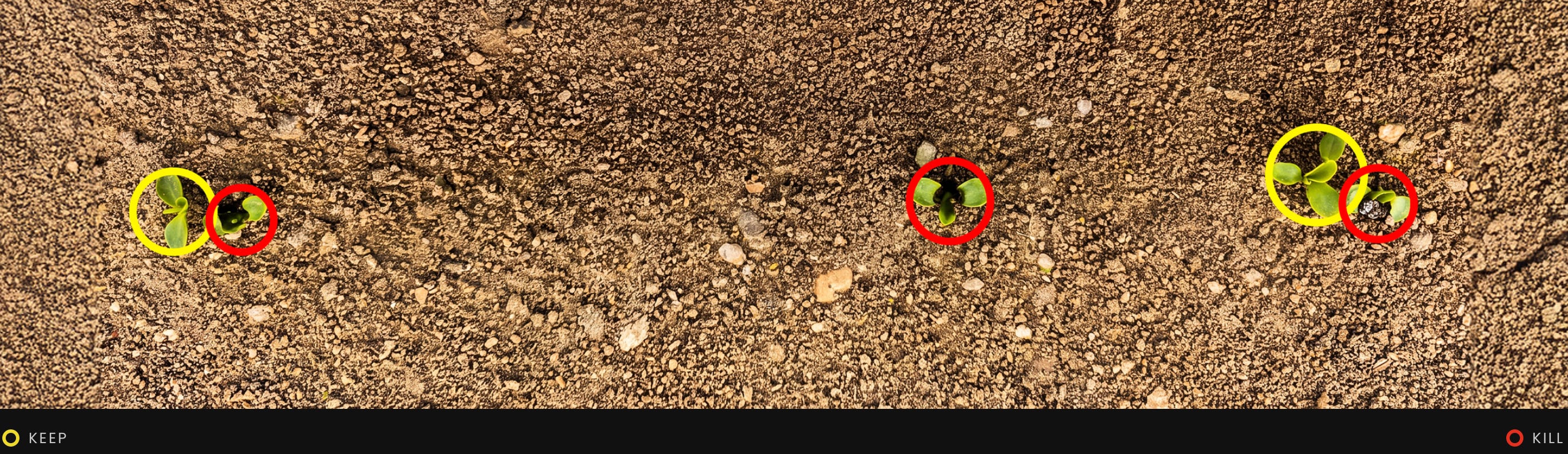
How it works: Cameras scan the ground and feed a vision system running on dozens of NVIDIA GPUs. The AI decides in milliseconds what's crop and what's weed, then 30 carbon dioxide lasers hit each weed at the growing point with sub-millimeter precision. Up to 5,000 weeds per minute, day or night.
Zero chemicals, zero soil disturbance: No herbicides, no blades. The soil and the crop roots are never touched, which also means better soil health season after season.
Large Plant Model: Their AI is trained on 150 million labeled plants, so it can tell weeds from crops across dozens of species. Drop it into a new region and it learns the local weeds in about 24 hours.
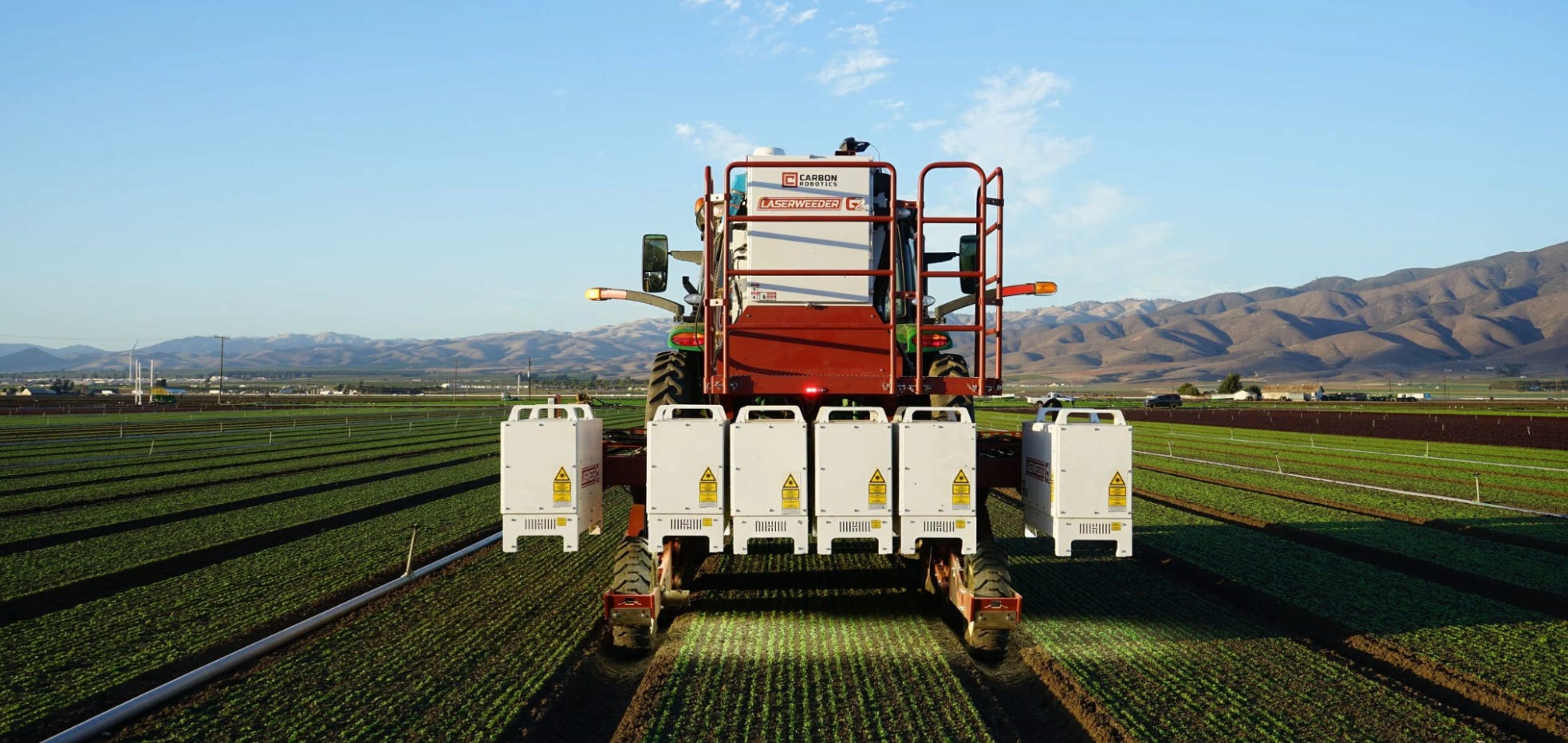
A growing product family: The G2 line comes in sizes from small specialty-crop units to 1,800-lb-class machines for Midwest row crops. There's also LaserThinning (using the same lasers to thin seedlings).
The economics: Growers report weed control costs down by up to 80%, and higher yields because crops are never damaged. One farm went from over $1M a year in weeding to under $200K.
Market 🌐
The agricultural robotics market sits at around $10 billion today and is heading toward $38 billion by 2033. Precision weeding is the fastest-growing slice, and a recent report found that 70% of specialty crop growers are now investing in farm robots.
Labor shortages, herbicide resistance and tightening chemical regulation all point in the same direction, and Carbon Robotics now sells in 15 countries across North America, Europe, Australia and New Zealand.
Other Key Players
Aigen 🇺🇸: Small, fully solar-powered autonomous robots that cut weeds with steel blades and are rented per acre. No tractor and no diesel, but far less capacity per machine.
Ecorobotix 🇨🇭: AI-guided micro-dosing that applies 95% less herbicide with precision targeting. Reduces chemicals but doesn't eliminate them.
Naïo Technologies 🇫🇷: Europe's most established agri-robotics player, with electric robots for vineyards, vegetable fields and orchards.
Carbon Robotics is the only one with lasers, and the only one at real commercial scale: hundreds of customers, two factories and over $100M in annual revenue.
Founding Story 🦄
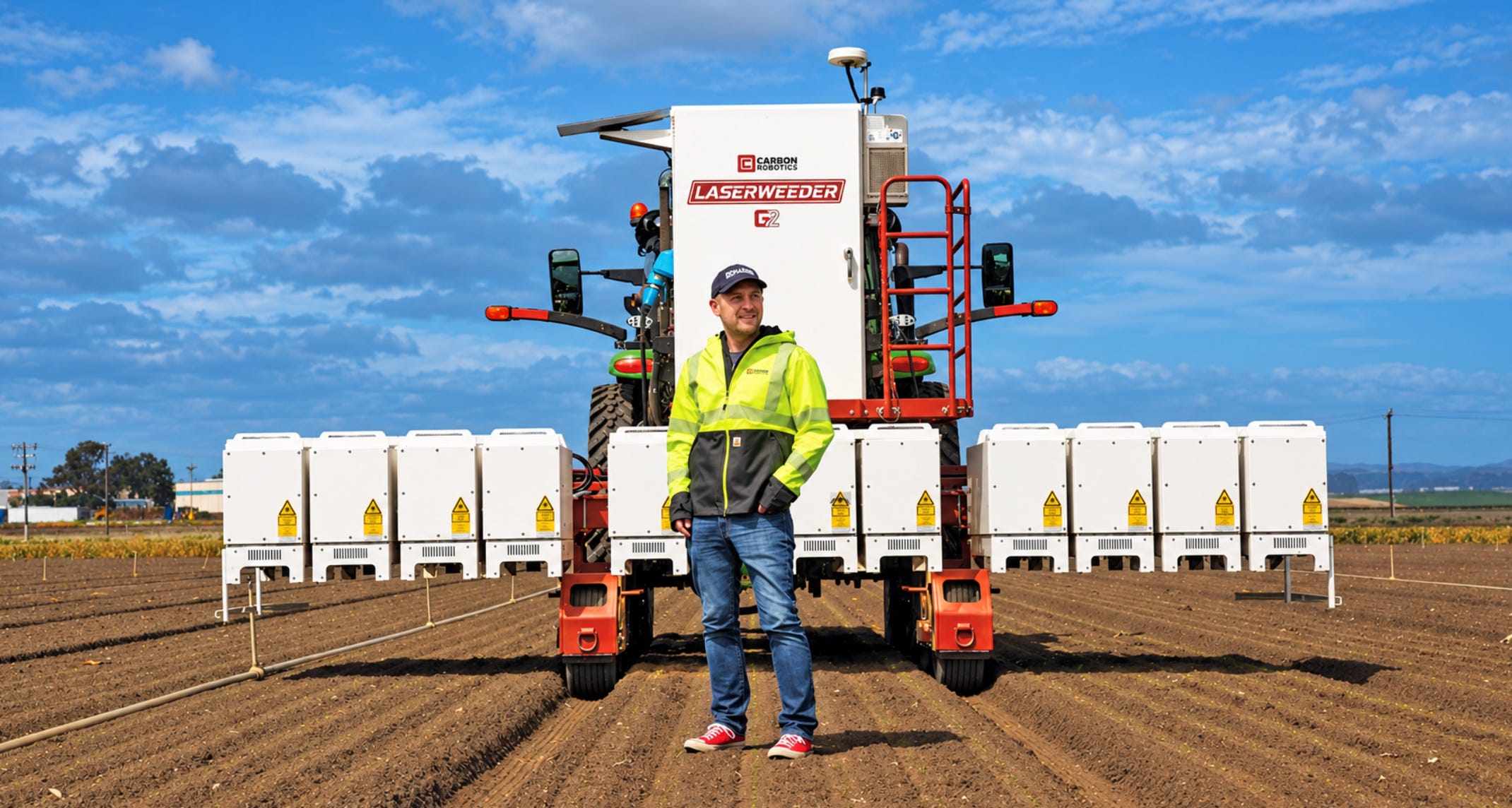
Carbon Robotics was founded in 2018 in Seattle by Paul Mikesell, a distributed-systems engineer with zero farming background. He had co-founded a storage company that was bought for $2.25 billion, and later led infrastructure engineering at Uber.
Looking for a real-world problem to apply AI to, he started talking to farmers. The answer was always the same: the hardest part of farming wasn't the weeds, it was finding people to deal with them. Lasers turned out to be the only tool that could kill a weed without touching the soil or the crop next to it.
The first LaserWeeders shipped in 2021. Five years later, they've raised $184M (NVIDIA's venture arm among the investors), opened two factories and crossed $100M in annual revenue.
They just made the 2026 CNBC Disruptor 50 list. Next up: a third, still-secret AI robot, and Paul is openly talking about an IPO.
Top Impact Stats 📈
1. Zero herbicides: every acre weeded by laser is an acre with no chemical weed control at all.
2. The world’s most precise weed control: 5,000 weeds killed per minute with sub-millimeter precision and no soil disturbance.
3. Weed control costs cut by up to 80%, with $100M+ in annual revenue proving farmers are buying.
Whenever you’re ready, there are 2 ways I can help you:
Scale and optimize your business: Automation and AI implementation (Claude expertise) for companies so they can free up time to scale their revenues.
Give visibility to your climate company: Get your company in front of an audience of thousands of climate players and enthusiasts by sponsoring newsletter issues and LinkedIn posts.
Thanks for reading today’s issue! If you liked it feel free to hit the ❤️ button and share it with someone who might like it too. See you next Saturday:)