


Read time: 5 minutes
Hi, I’m Javi Gascón.
This is Climate Tech Distillery, a newsletter where I talk about one specific climate tech company every week.
Today we’ll distill a company that's building autonomous, solar-powered robots to eliminate herbicide-resistant weeds and help farming go chemical-free: Aigen 🇺🇸

Do you use Google Drive and love color coding to stay organized? 🎨
If so, check out this extension I built that lets you customize any folder with UNLIMITED colors. 👀
Want to sponsor Climate Tech Distillery? Here’s all the info.
What Problem Does Aigen Tackle❓
Modern agriculture is stuck in a chemical dependency loop, and it’s breaking down on multiple fronts:
1. The Superweed Crisis: Decades of herbicide overuse have bred resistance. The USDA estimates herbicide-resistant “superweeds” destroy ~30% of crops in the US annually. Resistance is growing at 4–8% per year.
2. Chemical Overload in Food: The US uses over a billion pounds of herbicides per year. These chemicals contaminate groundwater, degrade soil health, and end up as residues in food. Agriculture accounts for 10–12% of global GHG emissions, and chemical production is a big part of that.
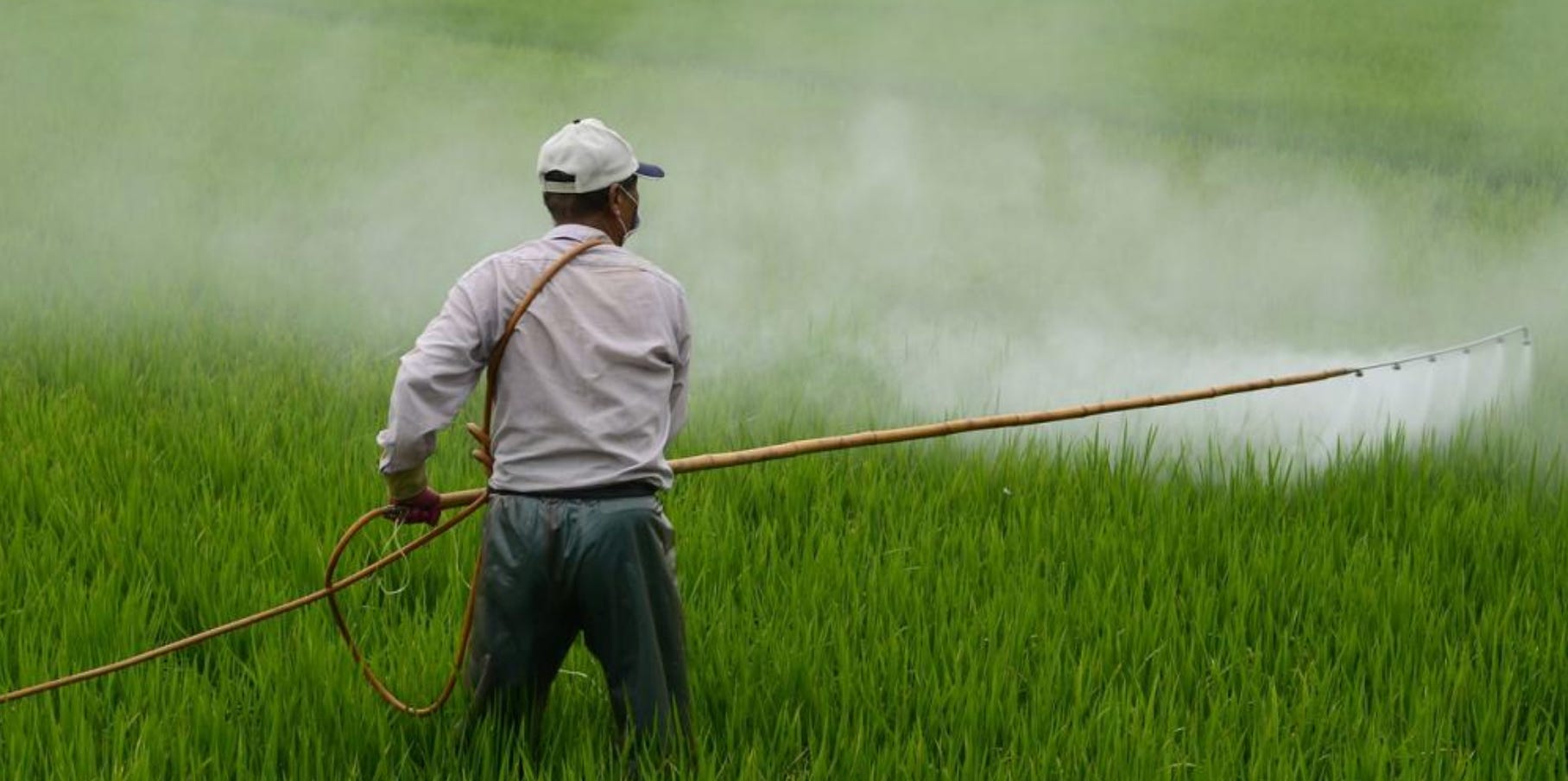
3. A Labor Crisis: Weeding by hand is slow, expensive, and reliant on a workforce that’s rapidly shrinking. US farms face chronic labor shortages, and the work itself is grueling “just spend two hours in the field weeding,” says Aigen’s CEO.
4. Farmers Flying Blind: Most farms have little real-time visibility into what’s happening at the crop level: which weeds are spreading, where yield losses are happening. Without data, precision management is nearly impossible.
5. Sustainable Herbicides: Biological and organic herbicides exist, but they're 3–5x more expensive than conventional ones, less effective at scale, and still don't solve the resistance cycle. Resistant weed populations evolve faster than herbicide solutions can reach market.
Product / Service 📦
They make the world’s first truly solar-powered, AI-driven robotic fleet for regenerative agriculture.
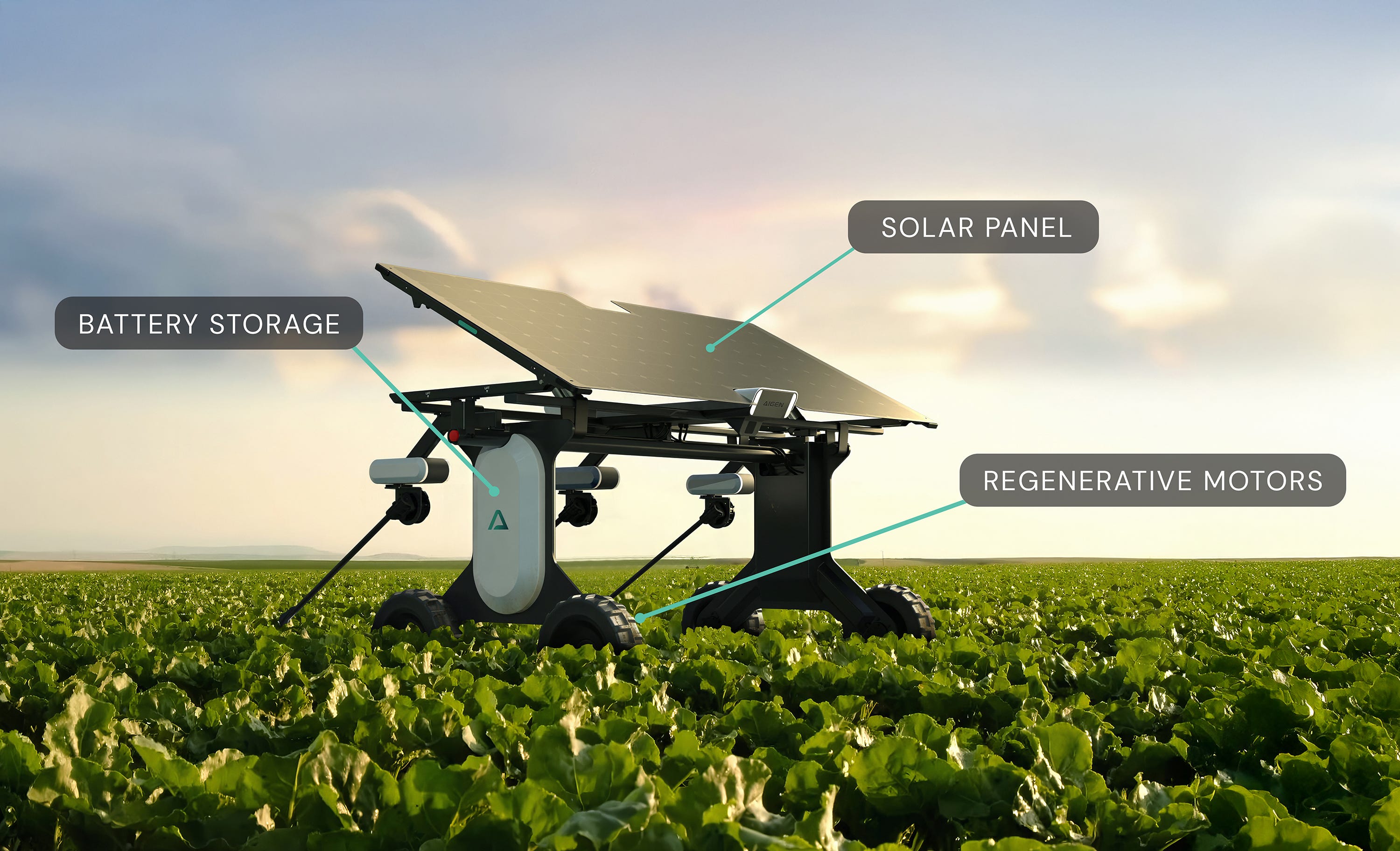
Their robot, the “Element”, patrols crop fields autonomously. No diesel, no chemicals, no farmer needed to operate it.
100% Solar-Powered: The Element runs entirely on solar with onboard battery storage, no grid connection required. In 2024 they increased custom panel surface area by 20%, and their AI accelerator chip uses 2–3x less power than an iPhone.
AI Weed Detection: Multiple onboard cameras feed a real-time vision system that identifies weeds vs. crops down to plant anatomy, then strikes precisely at the root with steel blades. No herbicides involved.
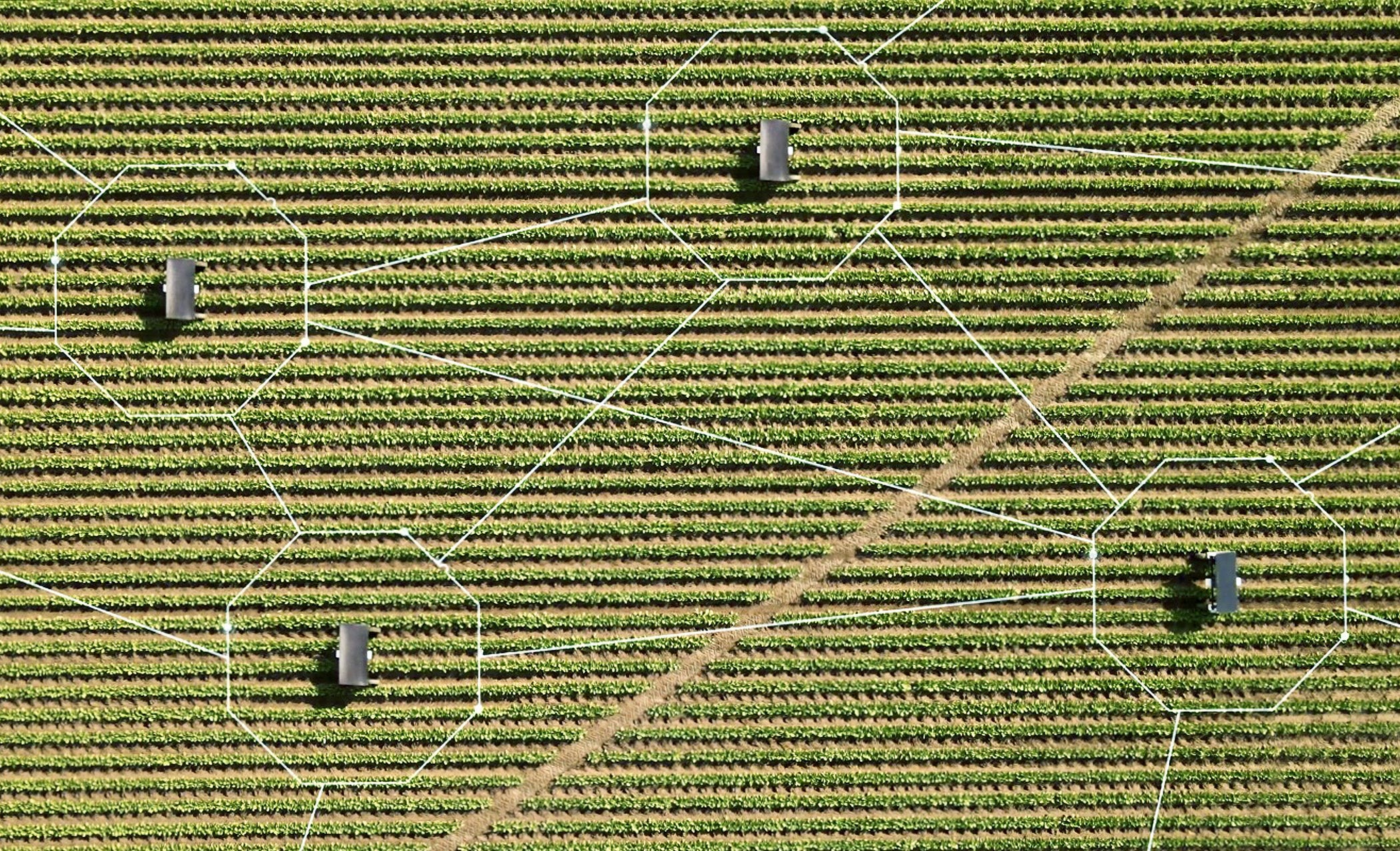
Network Fleet Intelligence: Robots talk to each other. An onboard device lets the fleet coordinate, routing crews to problem areas automatically without human input.
Robotics-as-a-Service: Aigen charges a per-acre fee instead of selling hardware. Farmers rent the robots for the season and the data collected (weed density, crop health, soil conditions) and insights are easily accessible to them in an app.
Market 🌐
The precision weeding segment alone is growing at 13.7% CAGR. The broader agricultural robotics market sits at $10.43 billion in 2024, heading toward $38 billion by 2033.
Labor shortages, tightening chemical regulations, and rising consumer demand for clean food are all pushing the same direction. Aigen sits at the intersection of all three.
Other Key Players
Carbon Robotics 🇺🇸: Builds large laser-guided robots that zap weeds with high-powered lasers rather than blades, targeting broad row-crop deployments.
Ecorobotix 🇨🇭: Uses AI-guided micro-dosing to apply 95% less herbicide with precision targeting. Reduces chemicals but doesn’t eliminate them.
Naïo Technologies 🇫🇷: Europe’s most established agri-robotics player, with electric robots for vineyards, vegetable fields, and orchards.
Aigen’s differentiator is the full stack: 100% solar, zero chemicals, and a networked fleet that gets smarter over time. None of its competitors combine all three.
Founding Story 🦄
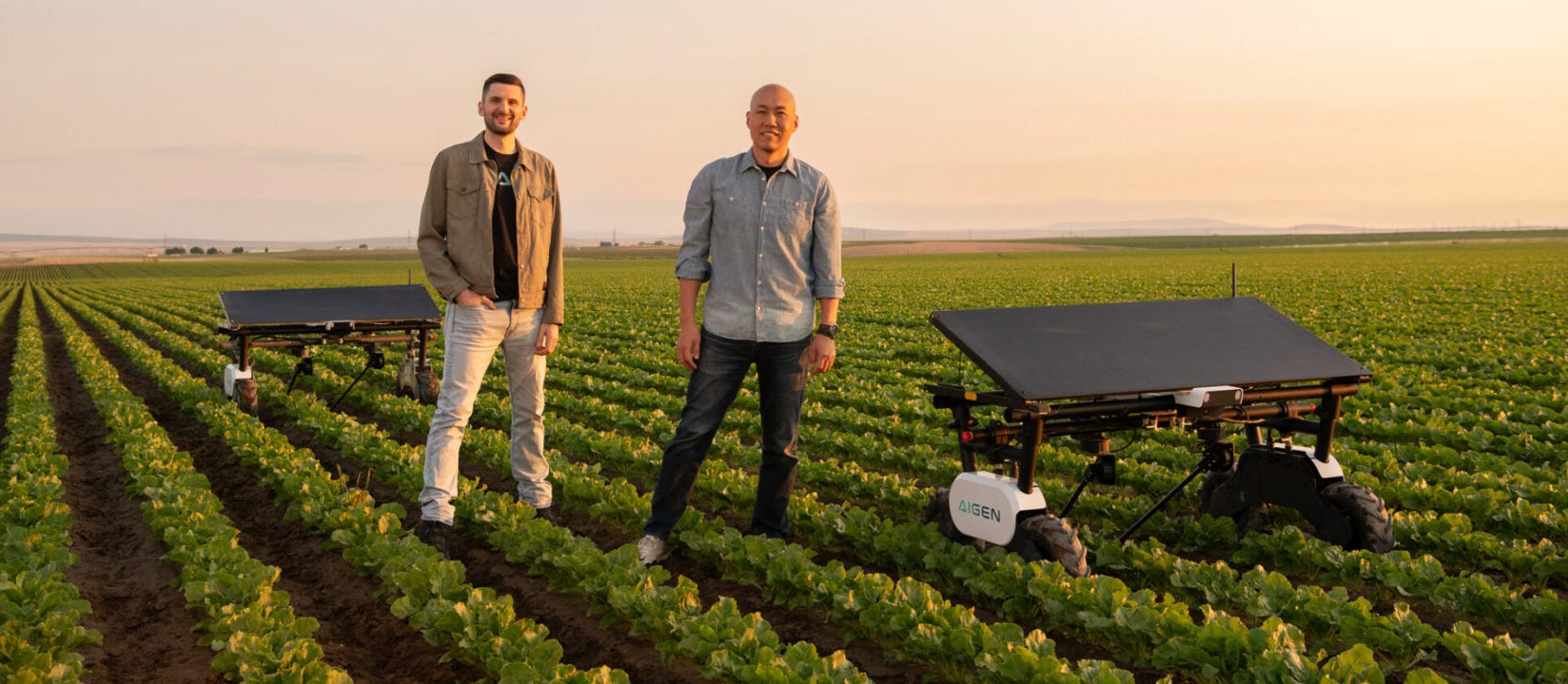
Aigen was founded in 2020 by Kenny Lee and Rich Wurden, two engineers who met in a Slack group for tech workers pivoting their careers to climate.
Kenny had a software and cybersecurity background. He previously co-founded Weblife.io, acquired in 2017. Rich was a former mechanical engineer at Tesla and senior engineer at Pure Watercraft, a Seattle electric boat company. Rich’s relatives are farmers in Minnesota, and years of conversations with them made the problem impossible to ignore.
They raised a $4M seed round in early 2022 and they’ve since raised $24 million in total funding.
In 2024 they debuted on 20,000+ U.S. acres, reached 50 units operational units across all sorts of crops in 2025 and their 2026 season is already sold out, with 2–3 years of pre-orders.
Top Impact Stats 📈
Eliminates chemical herbicide use entirely.
The fleet currently covers 20–40 acres per robot per growing season.
Mechanical weeding can actually reverse herbicide resistance over time by letting nature recover.
Whenever you’re ready, there are 2 ways I can help you:
Scale and optimize your climate business: Automation and AI systems for climate companies so they can free up time to scale their revenues and their climate impact.
Give visibility to your climate company: Get your company in front of an audience of thousands of climate players and enthusiasts by sponsoring newsletter issues and LinkedIn posts.
Thanks for reading today’s issue! If you liked it feel free to hit the ❤️ button and share it with someone who might like it too. See you next Saturday:)