


Read time: 5 minutes
Hi, I’m Javi Gascón.
This is Climate Tech Distillery, a newsletter where I talk about one specific climate tech company every week.
Today we'll distill a company that seals invisible cracks in buildings with a fog of tiny particles, cutting energy waste by 30% per building. All without touching a single wall: Aeroseal 🇺🇸

Shoutout to my friend Hugo Rauch at New Wave, the only podcast you need to keep up with Europe’s climate-tech VC world.
Available on Substack, YouTube, Apple Podcasts, and Spotify.
Want to sponsor Climate Tech Distillery? Here’s all the info.
What Problem Does Aeroseal Tackle❓
Buildings are the planet's biggest energy sinkhole, and most of the waste is literally leaking through the cracks.
1. Building Operations: They account for 30% of global final energy consumption and 26% of global energy-related emissions. By pretty much any measure, buildings are one of the biggest climate problems on the planet.
2. HVAC (Heating Ventilation and Air Conditioning): Roughly half of the energy associated with buildings goes to heating and cooling. And 20–30% of it is wasted through air duct leaks, disconnections, and poor insulation. That's not a rounding error. That's a structural failure happening in nearly every building on earth.
3. Manual Sealing Doesn't Work: Traditional duct sealing means crawling through attics with mastic paste and tape. It's messy, labor-intensive, and imprecise. Even brand-new homes with tape-sealed ducts show 25%+ leakage rates right out of the gate.
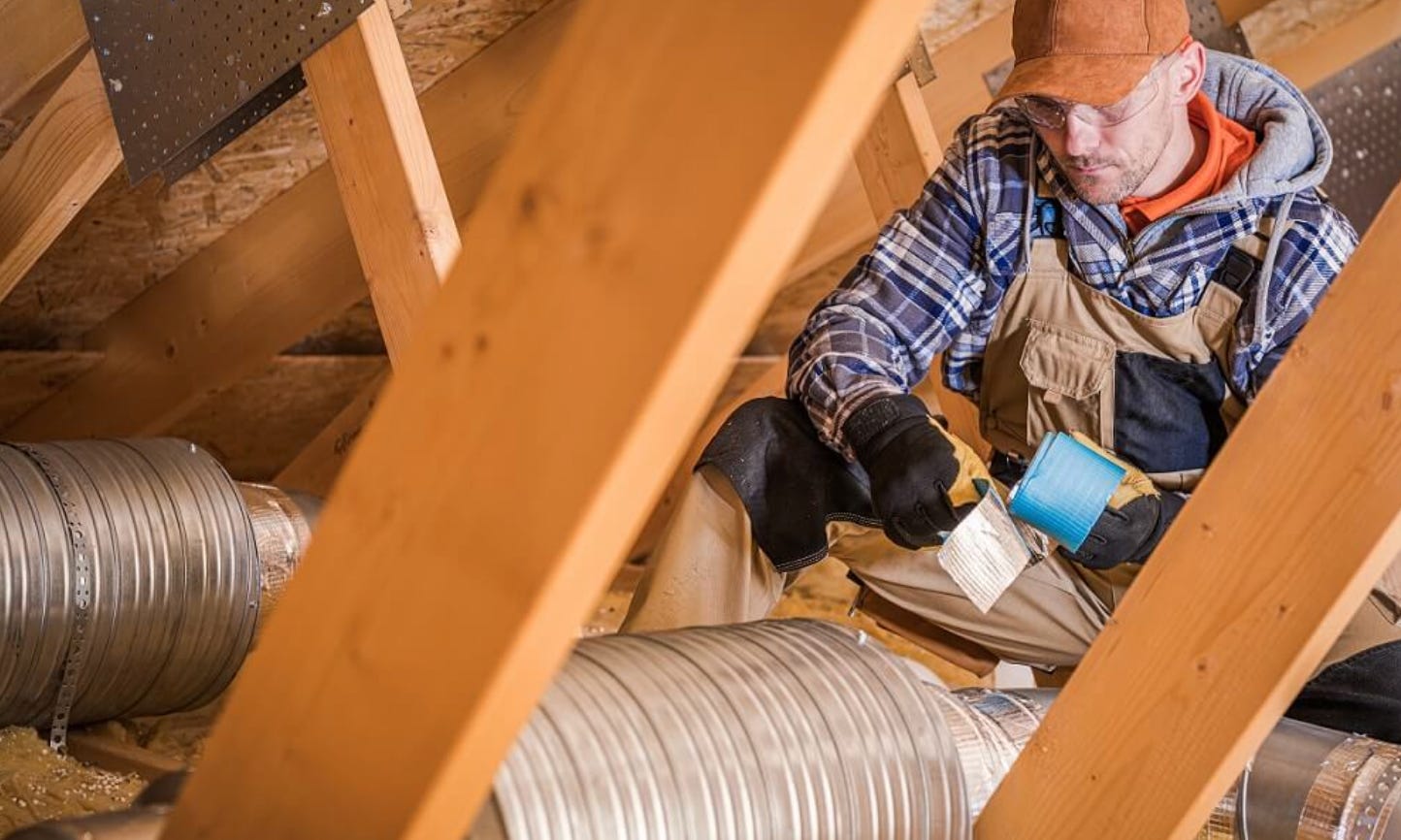
4. Buildings Need Fixing: The U.S. alone hosts over 140 million housing units, many aging and requiring retrofitting. 95%+ of older homes have leaky ducts. It's basically every building. Worldwide that number is in the billions.
Product / Service 📦
Aeroseal's technology is deceptively simple. They call it "fix-a-flat for buildings." Here's why it’s so awesome:
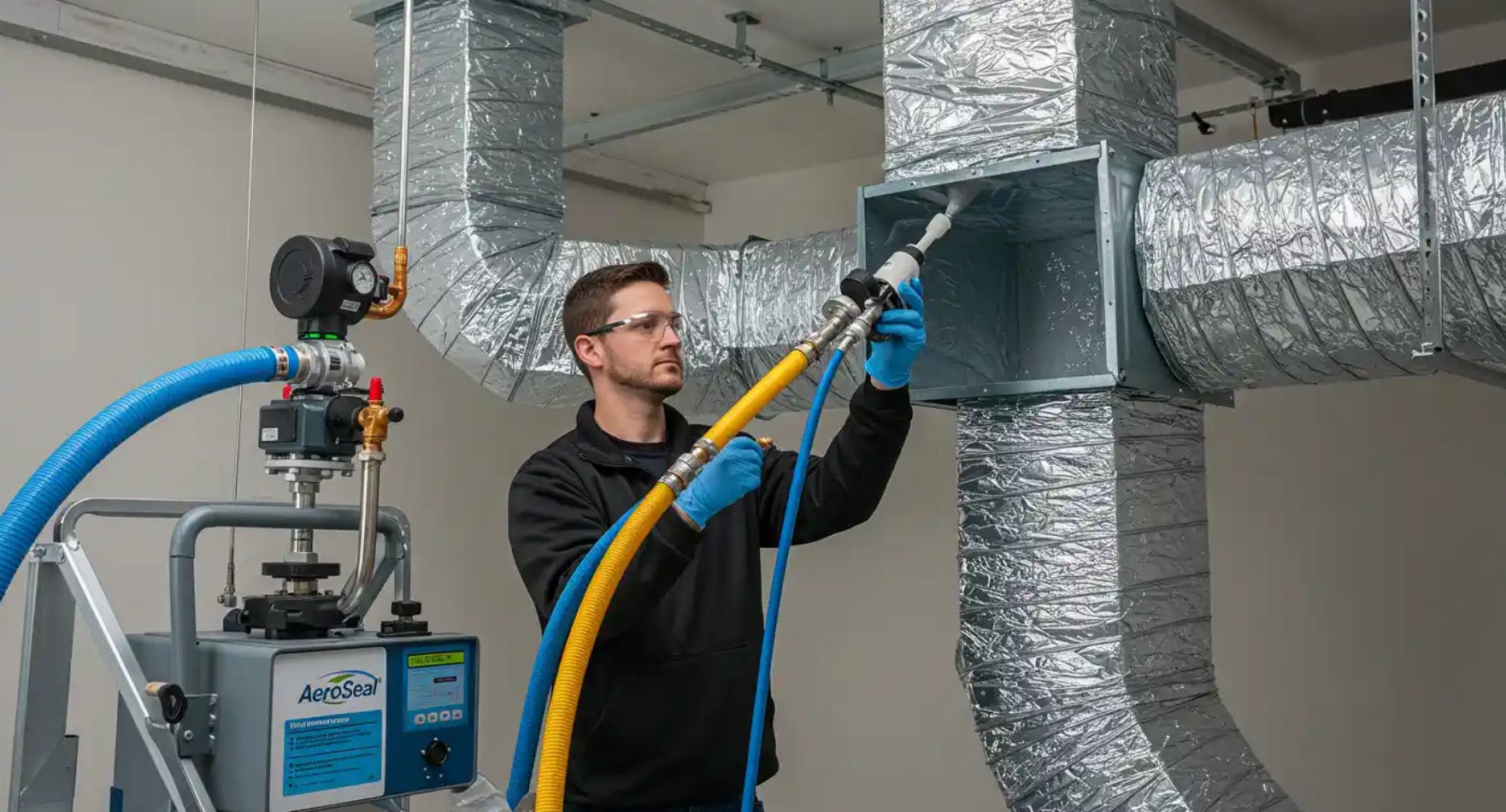
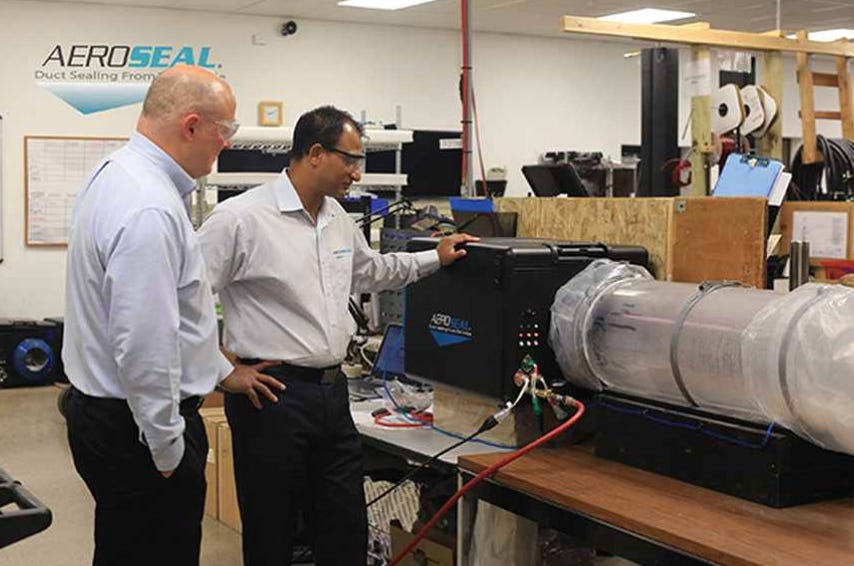
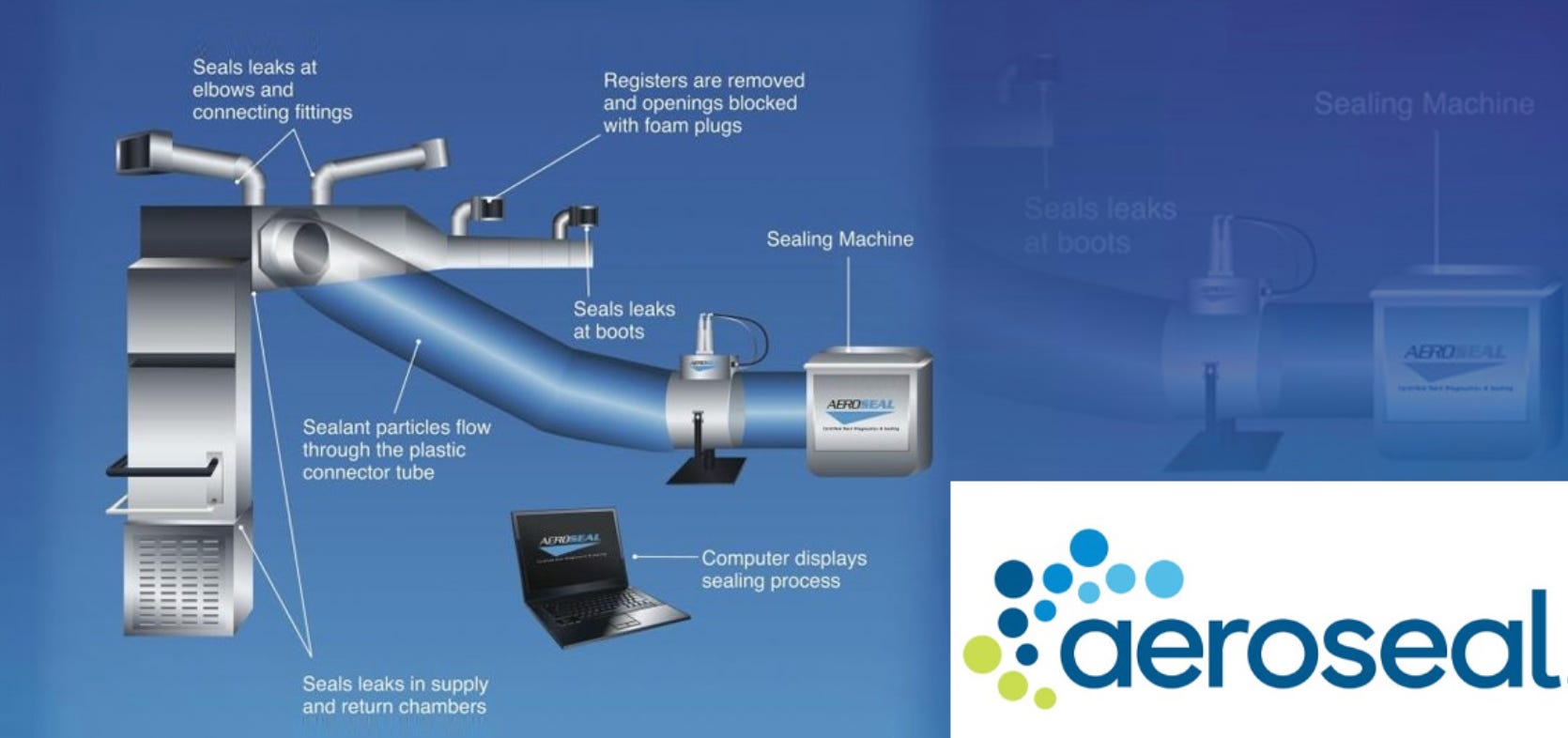
Aerosol Sealing: They introduce a fog of non-toxic polymers into a building's pressurized air ducts and envelopes, creating a sealant that plugs ducts without requiring physical access to the locations. The sealant particles are 3–15 microns, small enough to travel through the system, large enough to stick to the edges of leaks and build up into a seal. No demolition. No crawling.
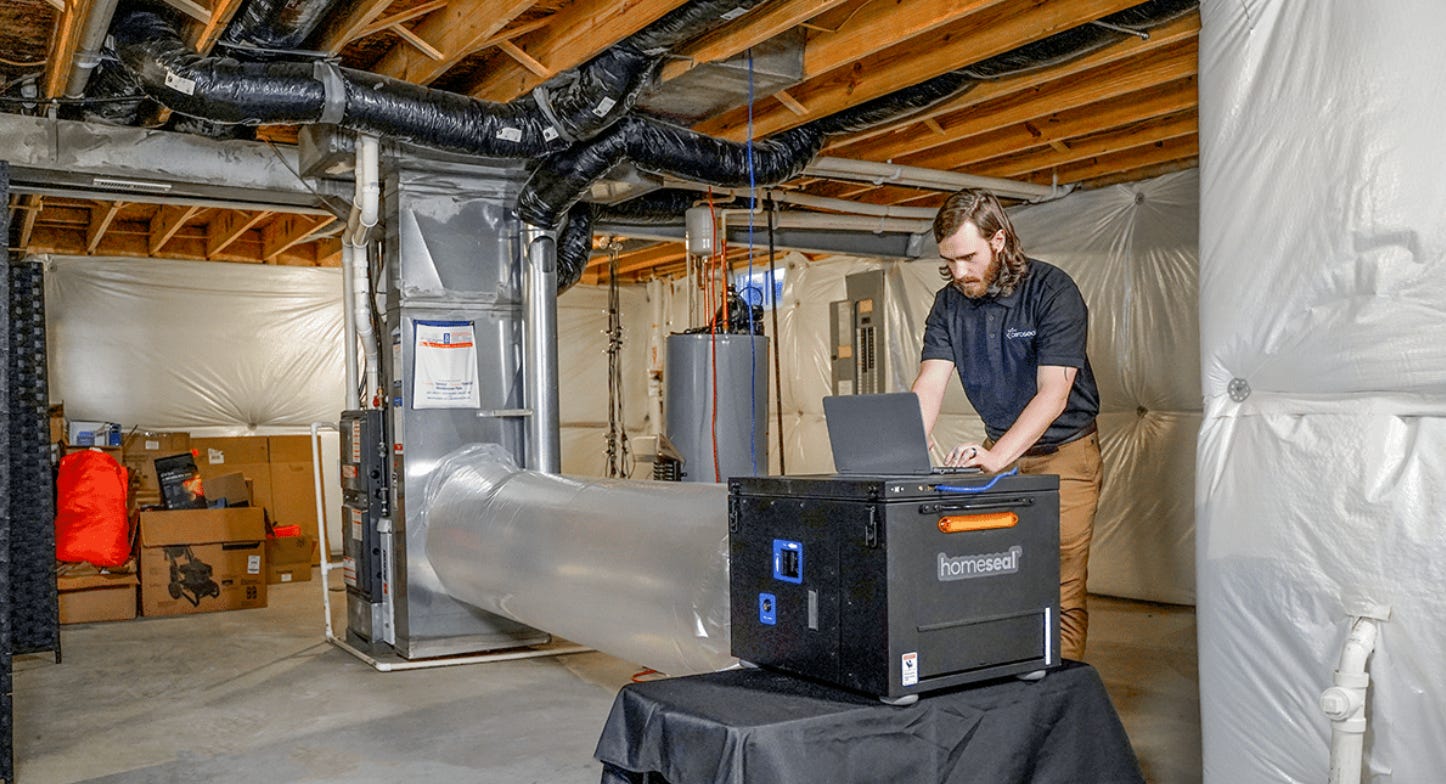
Two Products, One Platform: The company runs two core technologies. HomeSeal Connect seals HVAC ductwork in existing and new homes. AeroBarrier Connect seals the entire building envelope (walls, roof, foundation). Both work the same way: pressurize, spray, seal, measure.
Software-Verified Results: Every seal comes with a before-and-after certificate. Their software measures leakage before sealing and compares with leakage after sealing, so their technologies can meet code requirements for new construction.
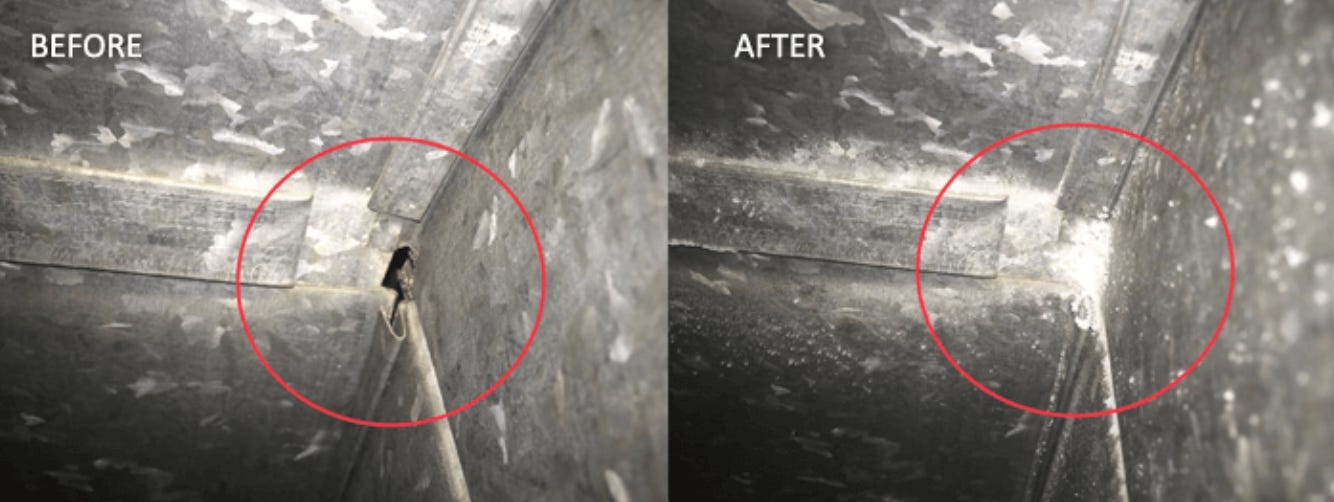
Safe Substance: The sealant is water-based, non-toxic, and is certified for ultra-low VOC content. The building can be occupied 30 minutes after sealing. The CEO calls it "as safe as bubblegum."
Dealer Network Model: Aeroseal doesn't go door-to-door. They sell machines to HVAC contractors and insulation contractors, who then provide the service. They now have a growing 1,500+ dealer network operating in 90+ countries.
Market 🌐
The broader weatherization (making buildings weather-resistant and energy-efficient) services market was valued at $35.5 billion in 2024 and is projected to reach $52.3 billion by 2033 (3.7% CAGR). Aerosol-based air sealing is still a fraction of that, just $115 million in 2024, but growing at 8.2% CAGR as building codes tighten.
The real math is simpler: 140 million U.S. homes × ~$2,500 per seal = a $350 billion total addressable market in the U.S. alone. Most of those homes haven't been touched yet.
Other Key Players
Kingspan 🇮🇪: Global insulation giant specializing in high-performance insulated panels with some of the lowest embodied carbon in the industry. Focused on the thermal side of building efficiency, not air sealing.
Henry Company 🇺🇸: Major provider of building envelope systems including air barriers and waterproofing membranes. Traditional construction materials approach, not aerosol-based.
Aeroseal is the only company that seals ducts and envelopes from the inside using aerosol particles. No competitor has replicated the physics-driven approach or the software-verified measurement at this scale.
Founding Story 🦄
In 1993, Dr. Mark Modera invented a breakthrough aerosol-based sealing technology in his California garage while working at Lawrence Berkeley National Laboratory. For the first time, it was possible to seal air duct leaks from the inside out. The DOE gave it the "Energy Top 100" award.
Modera created a company around it in 1997. It was acquired by Carrier (the HVAC giant), but that relationship didn't last. Ultimately it was bought back by Modera in 2010.
That same year, Amit Gupta, a mechanical engineer with stints at Tata Motors and Carrier saw Modera’s technology and believed it could be the key to decarbonizing buildings. He quit his job, emptied his 401K, and put $75,000 to become CEO.
For a decade they bootstrapped. Then in 2021, Breakthrough Energy Ventures (Bill Gates) led a $22M Series A. In 2023 came a Series B and as of 2026 they’ve raised ~$119M in total funding. They've now sealed 300,000+ buildings, improved 500M+ square feet of commercial space across 90+ countries, and made the 2025 Global CleanTech 100.
Top Impact Stats 📈
1. 30% average energy reduction per building. At ~$2,500 per home, the investment pays for itself in 4 years. For commercial buildings, ROI hits 5 years.
2. Seals 80% of available leaks in under 2 hours, versus days of manual labor with uncertain results.
3. Their stated mission is to eliminate 1 gigaton of CO₂ annually. That’s roughly equivalent to Japan’s total emissions.
Whenever you’re ready, there are 2 ways I can help you:
Scale and optimize your climate business: Automation and AI systems for climate companies so they can free up time to scale their revenues and their climate impact.
Give visibility to your climate company: Get your company in front of an audience of thousands of climate players and enthusiasts by sponsoring newsletter issues and LinkedIn posts.
Thanks for reading today’s issue! If you liked it feel free to hit the ❤️ button and share it with someone who might like it too. See you next Saturday:)