


Read time: 5 minutes
Hi, I’m Javi Gascón.
This is Climate Tech Distillery, a newsletter where I talk about one specific climate tech company every week.
Today we’ll distill a company that’s turning trains and semi-trucks into moving carbon-capturing powerhouses to then monetize those emissions: Remora 🇺🇸

Shoutout to my friend Hugo Rauch at New Wave, the only podcast you need to keep up with Europe’s climate-tech VC world.
Available on Substack, YouTube, Apple Podcasts, and Spotify.
Want to sponsor Climate Tech Distillery? Here’s all the info.
What Problem Does Remora Tackle❓
They tackle the problem of carbon emissions from semi-trucks and heavy-duty transportation, which can be broken down into several issues:
1. Massive Emissions from Heavy-Duty Vehicles: In the US alone 2 million semi-trucks and thousands of diesel locomotives account for 338+ million metric tons of CO2 emissions annually (around 7% of total), with fuel representing 30-40% of operating costs.
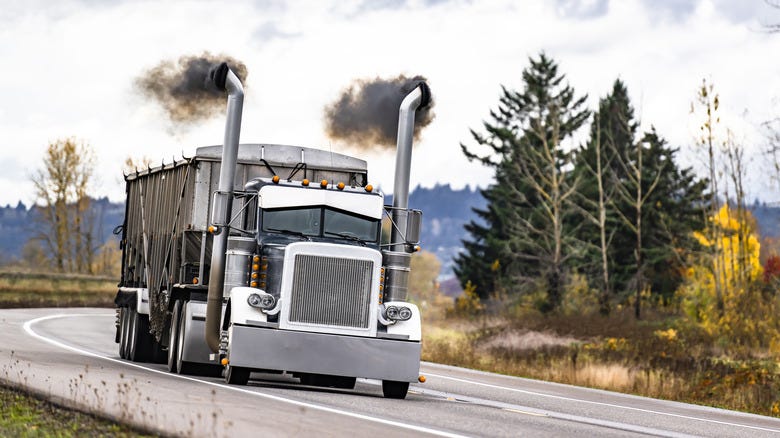
2. Decarbonization Limitations: Battery technology cannot efficiently power long-haul trucks or locomotives for 300+ miles. Rail electrification is extremely expensive and takes very long to build out.
3. Retrofitting Challenges: These 2 million trucks and thousands of locomotives operate 15-40+ year lifespans. Waiting for new zero-emission vehicles means decades of emissions. Existing assets need immediate retrofitting solutions.
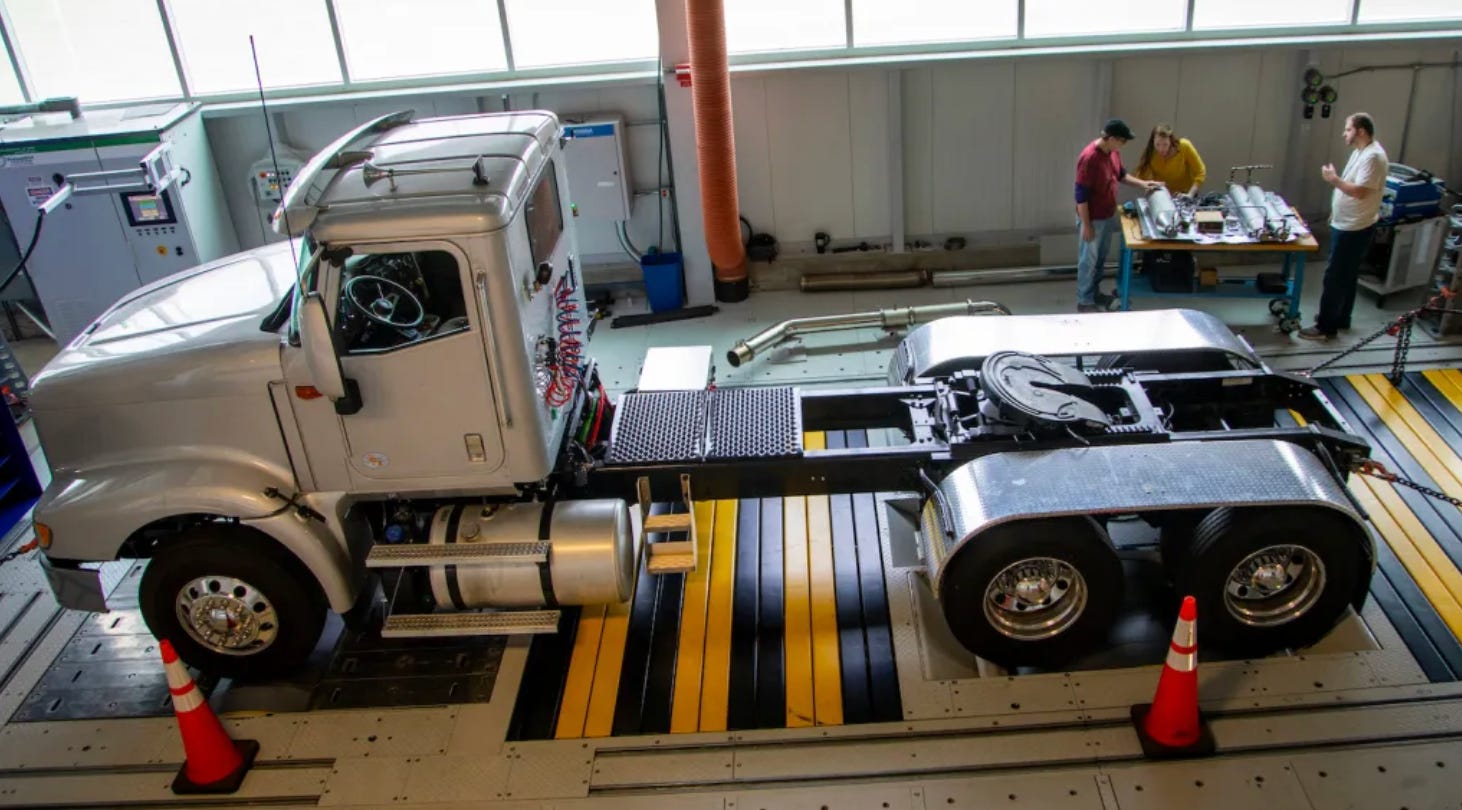
4. Lack of Viable Decarbonization Solutions: Traditional carbon capture is energy-intensive and expensive. New vehicle purchases are capital-prohibitive for operators, and incremental improvements don’t meaningfully reduce emissions at scale.
5. Limited Visibility & Data: Fleet operators lack regular data on emissions performance and emissions reductions. Without this data, optimizing operations and verifying emissions progress is nearly impossible.
Product / Service 📦
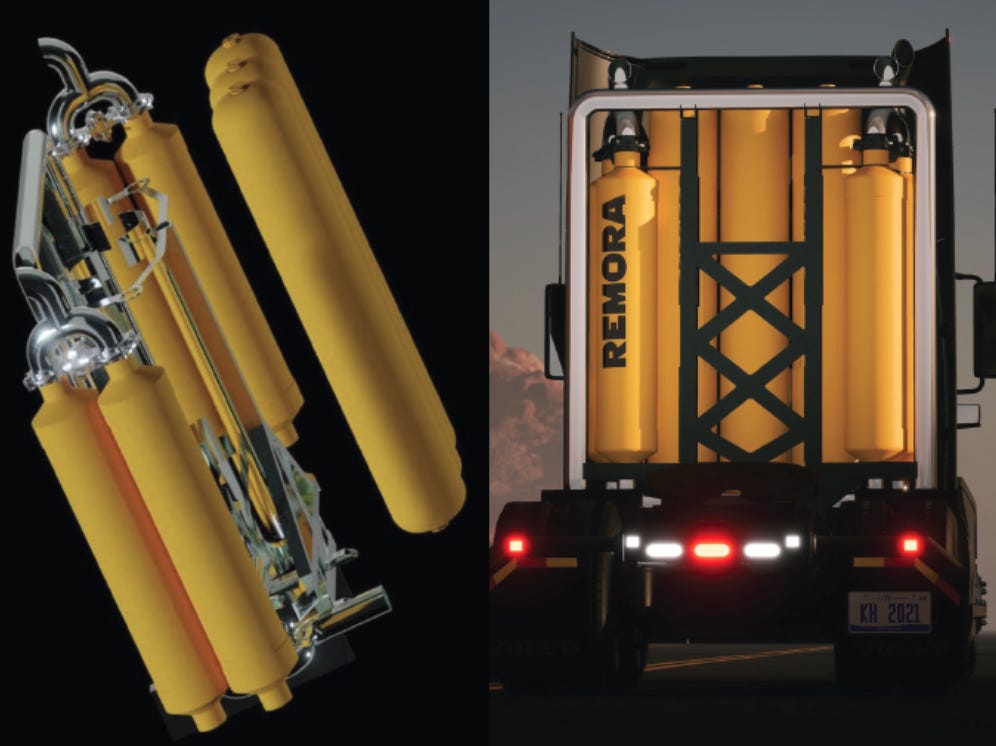
Remora retrofits semi-trucks and locomotives with carbon capture devices that extract CO2 directly from exhaust pipes. They make the unusable, recyclable. They're awesome:
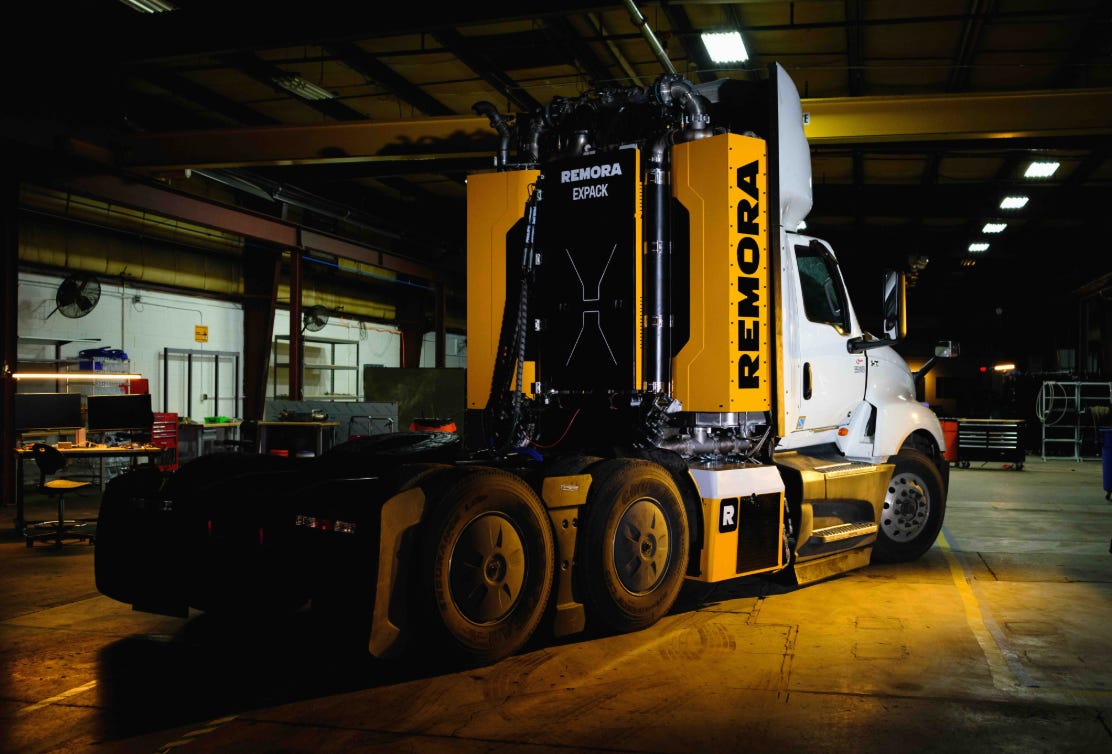
Revolutionary Capture Tech: Their patented system captures up to 90% of CO2 from vehicle exhaust using specialized adsorbent pellets with microscopic pores. It doesn't affect engine performance while simultaneously reducing soot, particulate matter, and NOx to meet regulatory standards.
Mobile Carbon Monetization: Drivers offload captured CO2 in under 5 minutes at truck stops or distribution centers. Remora then purifies the CO2, sells it to other industries, and shares the revenue with the railroad or trucking company. The device doesn’t just pay for itself, it ends up generating a positive ROI for fleets.
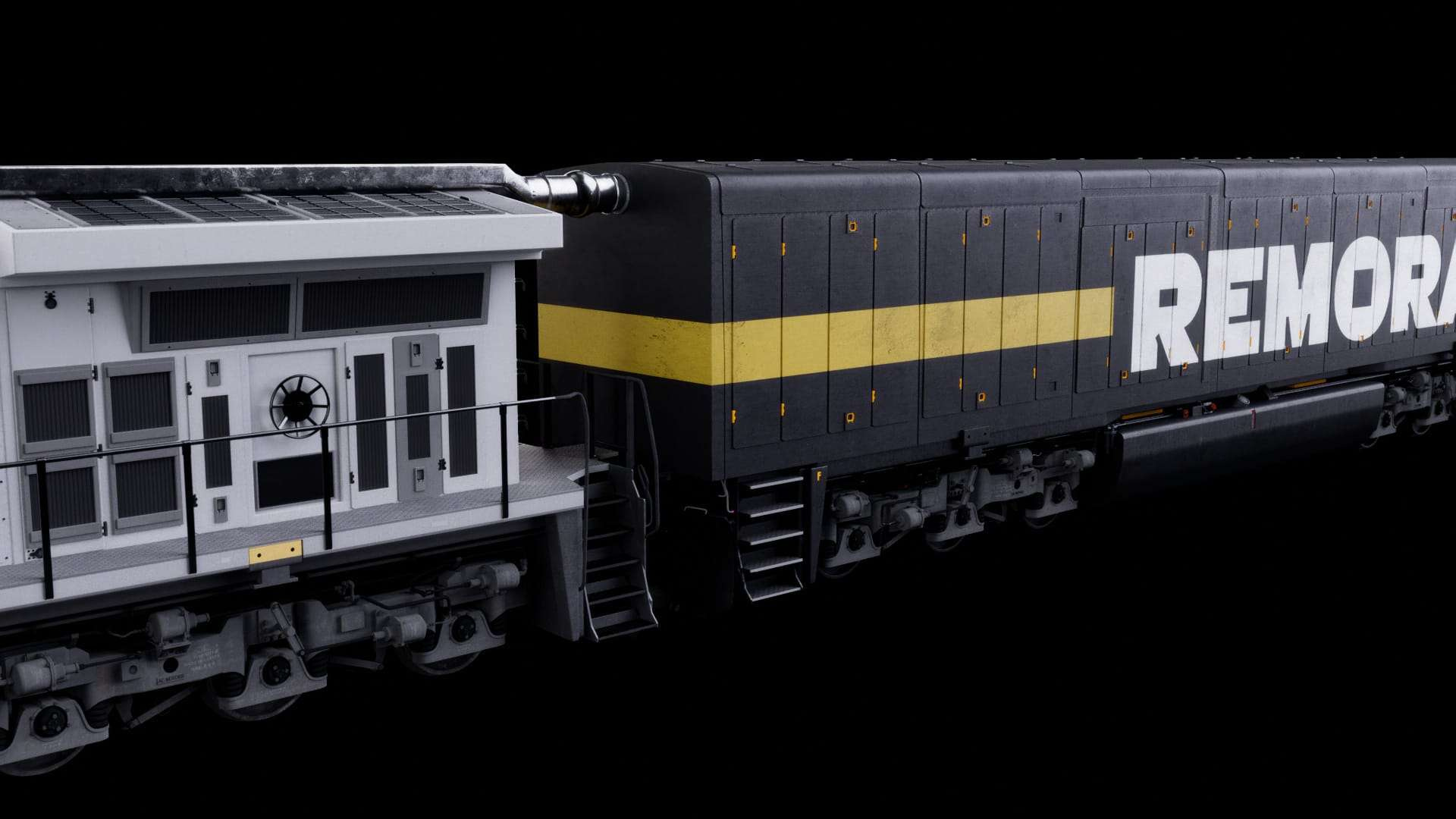
Trains: For locomotives, they're building tender cars that scrub emissions before they enter the atmosphere, with captured CO2 stored as liquid and easily offloaded when refueling.
Data: Their devices collect verifiable emissions data for sustainability reporting. This also helps fleet operators and drivers improve their efficiency and lower fuel costs.
Future Versality: They target the heavy-duty, long-haul segment where battery and hydrogen solutions face huge near-term challenges. First trucks and now trains. Eventually it could also apply to mining equipment, ships and others!
Market 🌐
The global carbon capture market for heavy-duty transportation was valued at $5.8 billion in 2024 and is projected to reach $10.2 billion by 2030. The US trucking and rail sector alone emits ~375 million metric tons of CO2 annually.
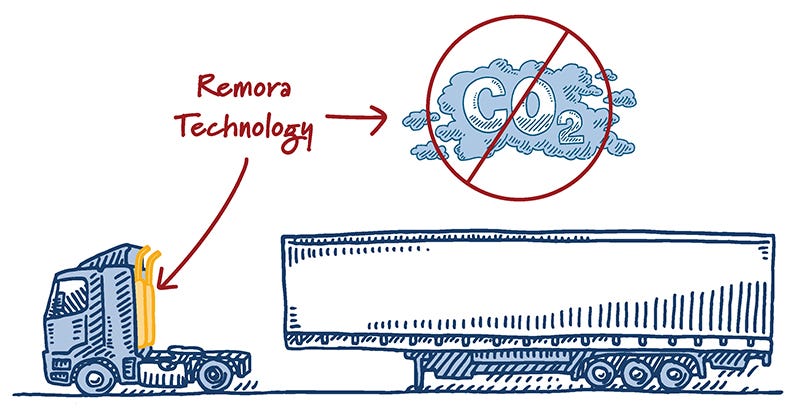
Stricter emissions regulations, corporate decarbonization commitments from major logistics operators, and the high cost of fuel (30-40% of operating expenses) are strongly driving adoption of carbon capture solutions for existing fleet retrofitting.
Other Key Players
Most carbon capture happens in fixed locations. Besides big oil companies like Aramco that are running some tests, not many are focusing on the mobile carbon capture sector. But here are some:
Qaptis 🇨🇭: Developing mobile CO₂ capture kits designed to retrofit heavy vehicles (trucks and ships) with limited energy penalty by capturing waste heat from exhausts.
Ionada 🇺🇸: They make carbon capture systems for the marine (all sorts of huge ships) and power generation industries to reduce greenhouse gas emissions.
Remora seems to be the only one currently implementing mobile solutions for trucks and trains.
Founding Story 🦄
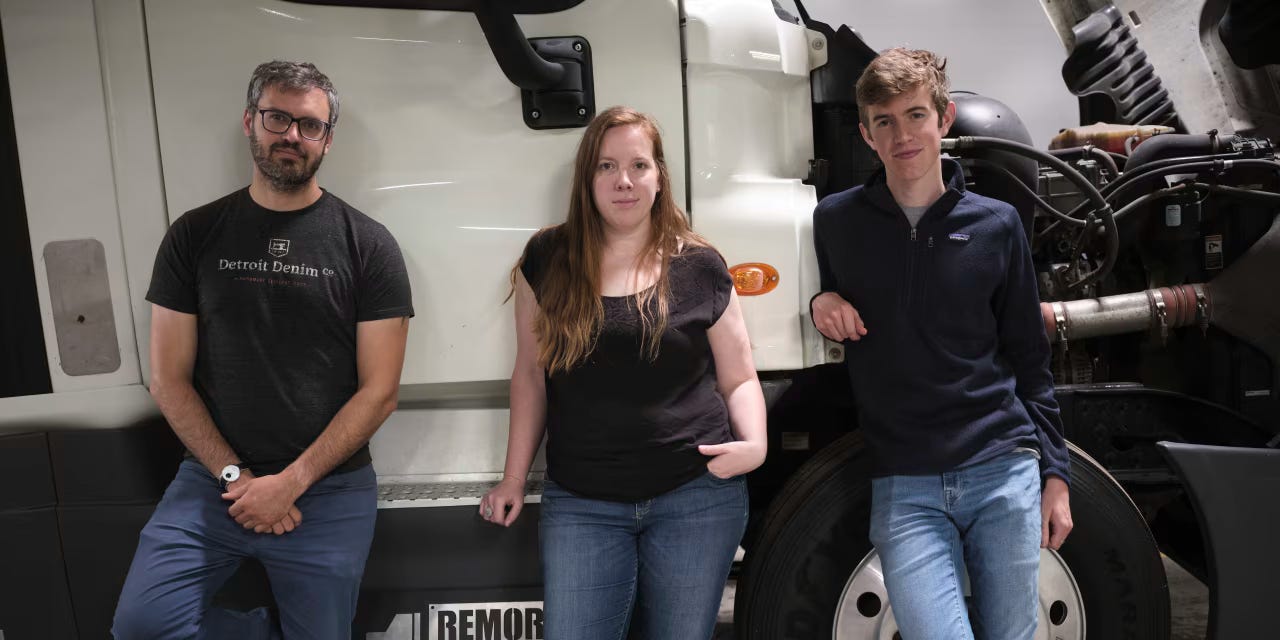
Remora was founded in 2020 by Paul Gross (CEO), Christina Reynolds, and Eric Harding, who met at the University of Michigan. The idea emerged from Christina's doctoral research on mobile carbon capture, where she pioneered techniques for capturing CO2 from vehicle exhaust.
Paul, inspired by a solo bicycle trip across the US, convinced Christina to leave her job as an EPA scientist to commercialize the technology. Eric, a former diesel mechanic with experience building hydrogen and electric semi-trucks, brought the practical expertise to make it work on real vehicles.
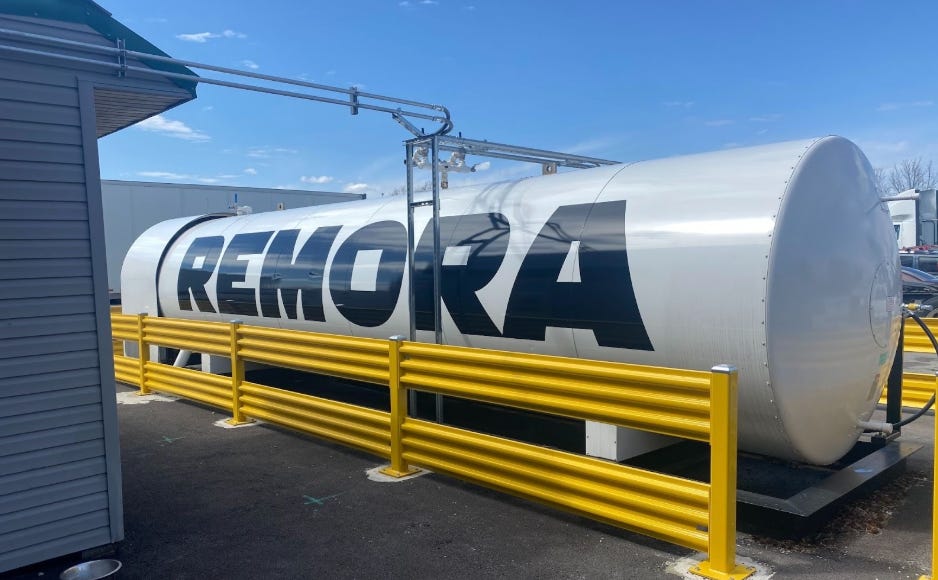
They built their first prototype in Detroit and joined Y Combinator in 2021. Since then, they've raised $117 million from VCs like Chris Sacca’s Lowercarbon Capital and partnered with trucking fleet partners (Ryder and Werner) and rail companies (Union Pacific and Norfolk Southern). Field deployments began in 2025 :)
Top Impact Stats 📈
1. Each semi-truck equipped with Remora's technology captures 135-169 tons of CO2 annually, equivalent to planting 6,200 trees.
2. Up to 90% CO2 capture for trucks and 70%+ for locomotives. 5-minute offload time for trucks and during refueling stops for locomotives.
3. By 2030, Remora plans to produce 500 units annually, capable of reducing 714,000 metric tons of CO2 each year (equal to removing 155,000 cars from the road).
Whenever you’re ready, there are 2 ways I can help you:
Scale and optimize your climate business: Automation and AI systems for climate companies so they can free up time to scale their revenues and their climate impact.
Give visibility to your climate company: Get your company in front of an audience of thousands of climate players and enthusiasts by sponsoring newsletter issues and LinkedIn posts.
Thanks for reading today’s issue! If you liked it feel free to hit the ❤️ button and share it with someone who might like it too. See you next Saturday:)