


Read time: 5 minutes
Hi, I’m Javi Gascón.
This is Climate Tech Distillery, a newsletter where I talk about one specific climate tech company every week.
Today we'll distill a company that's building the recycling plant for fusion fuel, and says it has turned mercury into gold along the way: Marathon Fusion 🇺🇸

Want to sponsor Climate Tech Distillery? Here’s all the info.
What Problem Does Marathon Fusion Tackle❓
Fusion has a fuel problem almost nobody talks about: even if the reactors work, there may not be enough fuel to switch them on.
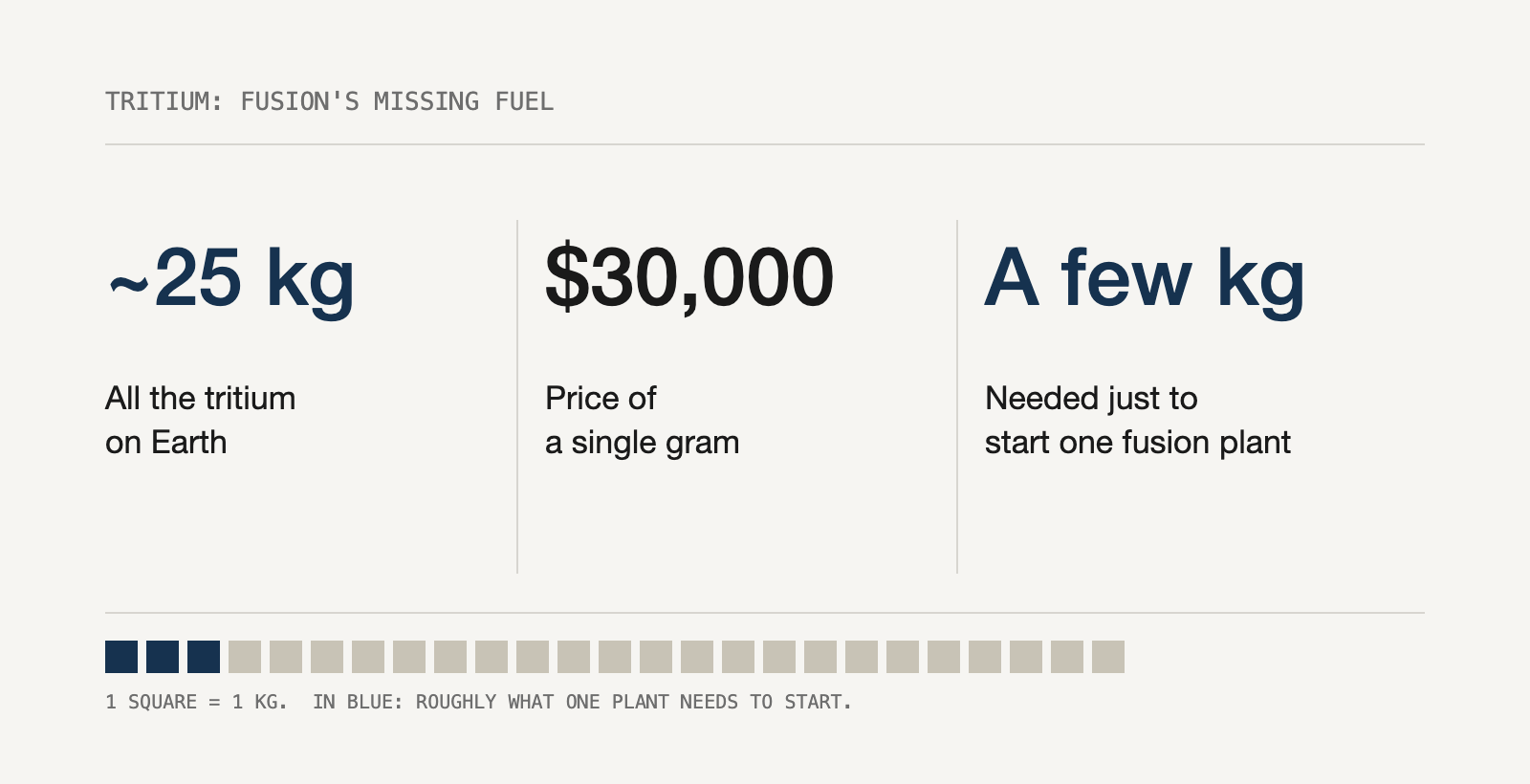
1. The rarest fuel on Earth: Most fusion reactors will burn two heavy versions of hydrogen: deuterium, which you can pull from seawater, and tritium, which barely exists. There are only about 20-25 kg of tritium in the world, selling for around $30,000 per gram.
2. Made by accident: Almost all of it is a byproduct of Canada's CANDU nuclear reactors, about 2 kg a year in total. A single commercial fusion plant needs a few kilograms just to start up.
3. Most of it goes out the exhaust: Inside a reactor, most of the tritium leaves without fusing. It has to be cleaned and fed back in fast, which today only works at lab scale.
4. A doubling race: Every plant must make enough new tritium to feed itself and to start the next one. The slower the fuel loop, the slower fusion can spread.
Product / Service 📦
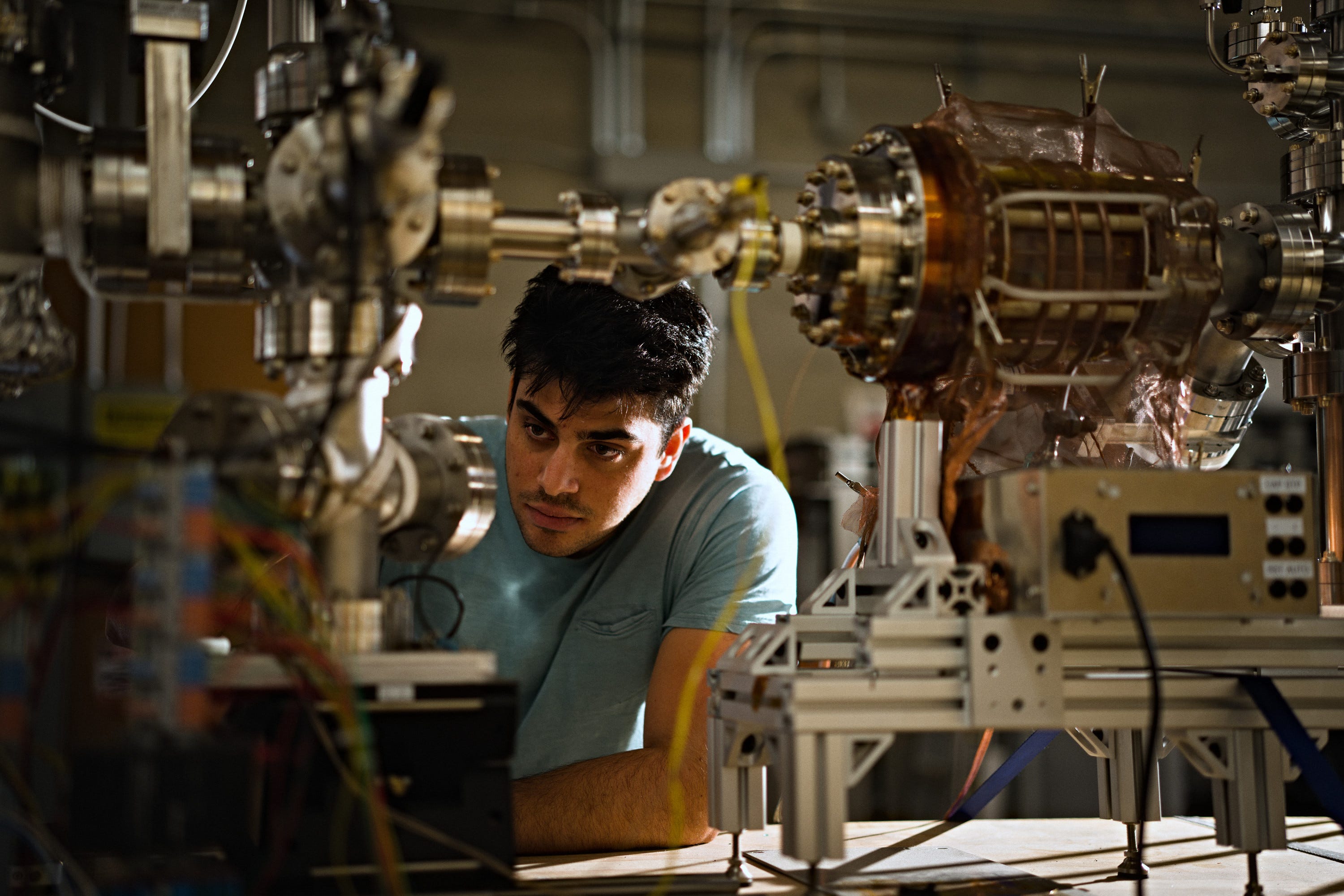
Marathon Fusion started in 2023 building the tritium fuel systems that fusion plants need. Now it's going full-stack, and its website headline says it all: "Building the world's highest power density fusion reactor."
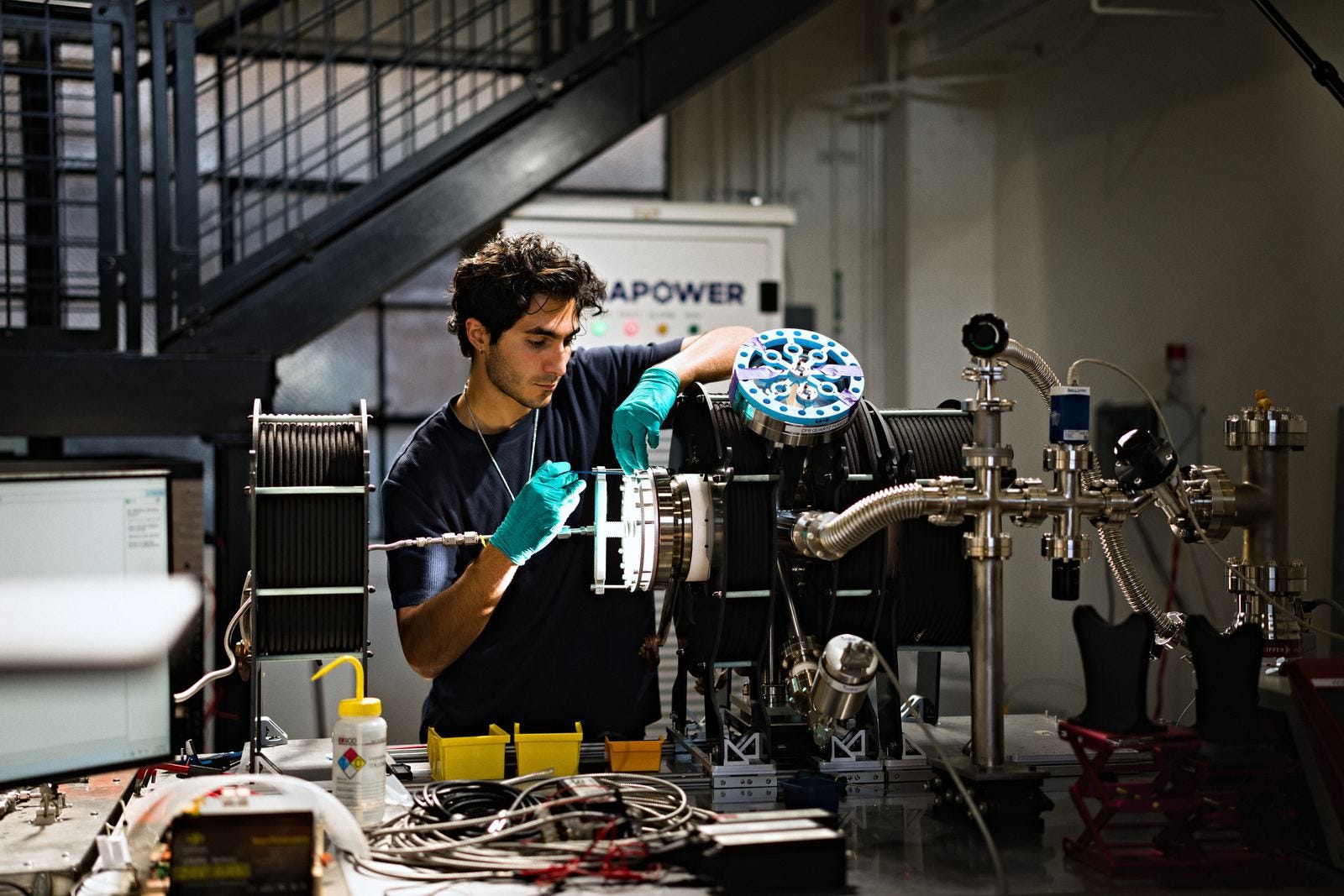
How it works: Their metal foil pumps rely on superpermeation: hydrogen atoms, tritium included, slip through certain metal sheets far faster than anything else. Think of a filter that only lets one ingredient through. The exhaust is turned into plasma (a superhot, electrically charged gas), pressed against the foil, and clean fuel comes out the other side, ready to go back in.
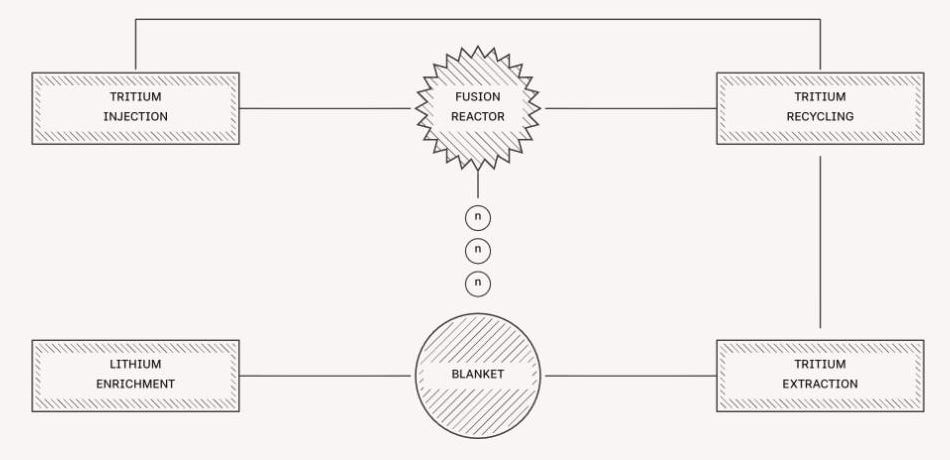
10x less tritium: According to the company, this can cut the tritium a plant needs to keep on hand by 10x or more. Less fuel locked up means smaller, cheaper plants.
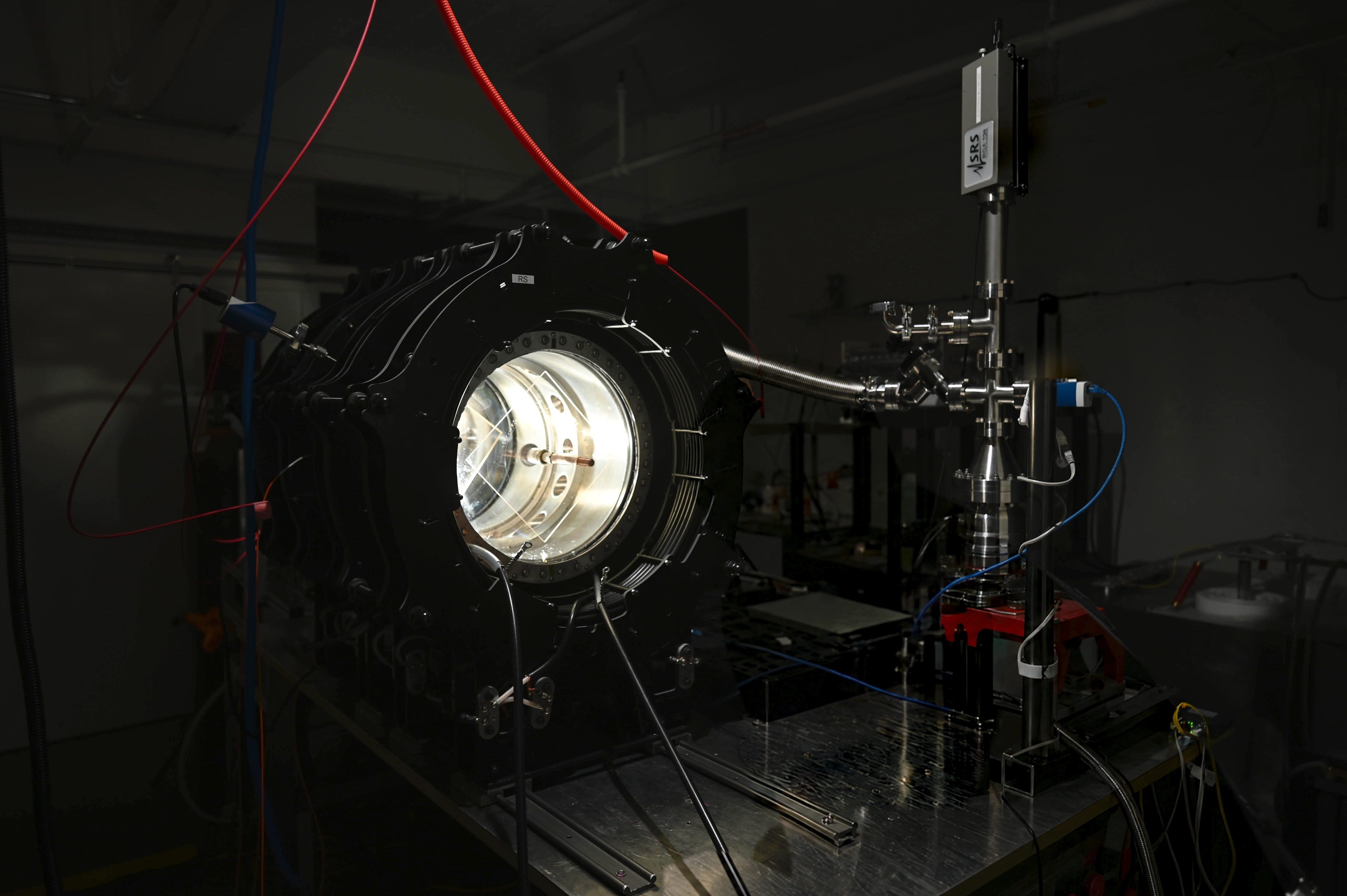
Their own reactor: Their first reactor fires a beam of charged hydrogen at a target loaded with tritium, creating fusion. Marathon plans to double its power density every month over the next year.
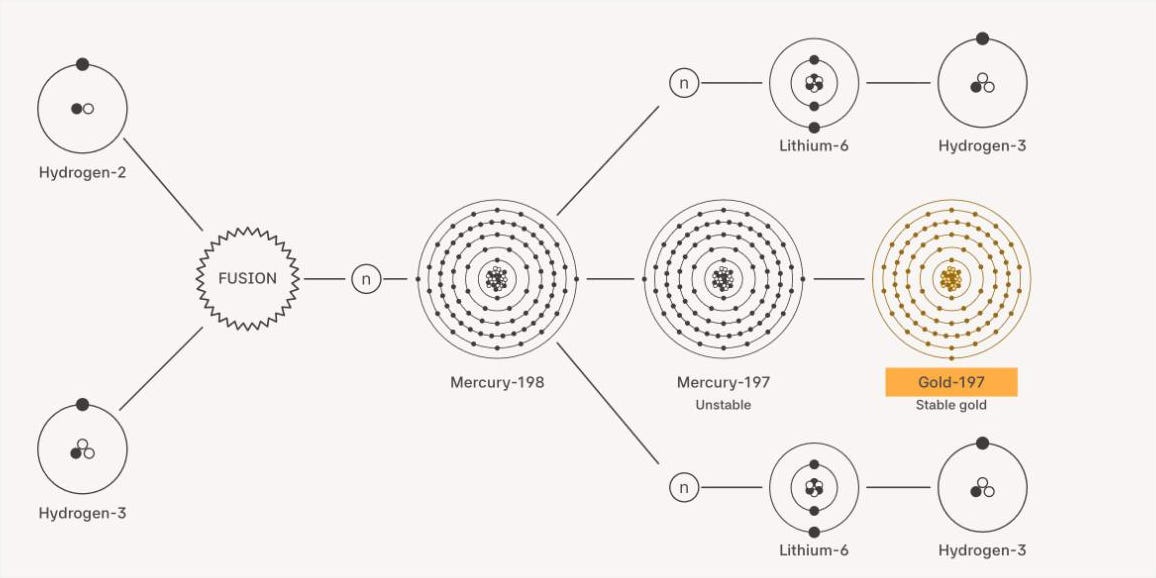
And then there's gold: In a power plant, the reactor is wrapped in a "blanket", a thick layer that catches the neutrons flying out of the fusion reaction. Put mercury in it, and those neutrons turn it into an unstable form of mercury that decays into real, stable gold. Marathon says it did it in the lab in September, though nobody outside has checked the data yet.
More than electricity: Their pitch: chemistry gave us fertilizers and modern medicines by designing molecules, and fusion can do the same with atoms. From 2027, their first reactor will supply rare medical isotopes for promising cancer drugs and test materials for future power plants.
Market 🌐
Private fusion companies raised a record $4.48 billion in the 12 months to July 2026, bringing the total since 2021 to $14.24 billion.
Tech giants want in: Microsoft has a deal with Helion and Google with Commonwealth Fusion Systems.
Other Key Players
Kyoto Fusioneering 🇯🇵: Kyoto University spin-off building the equipment around a fusion reactor, from blankets that make new fuel to fuel recycling systems.
Commonwealth Fusion Systems 🇺🇸: the best-funded fusion company, and one of the developers (with Helion) that signed a letter of intent for Marathon's fuel tech. I covered them in issue #31.
Marathon is the only one pairing a 10x smaller tritium inventory with extra revenue from medical isotopes and, potentially, gold.
Founding Story 🦄
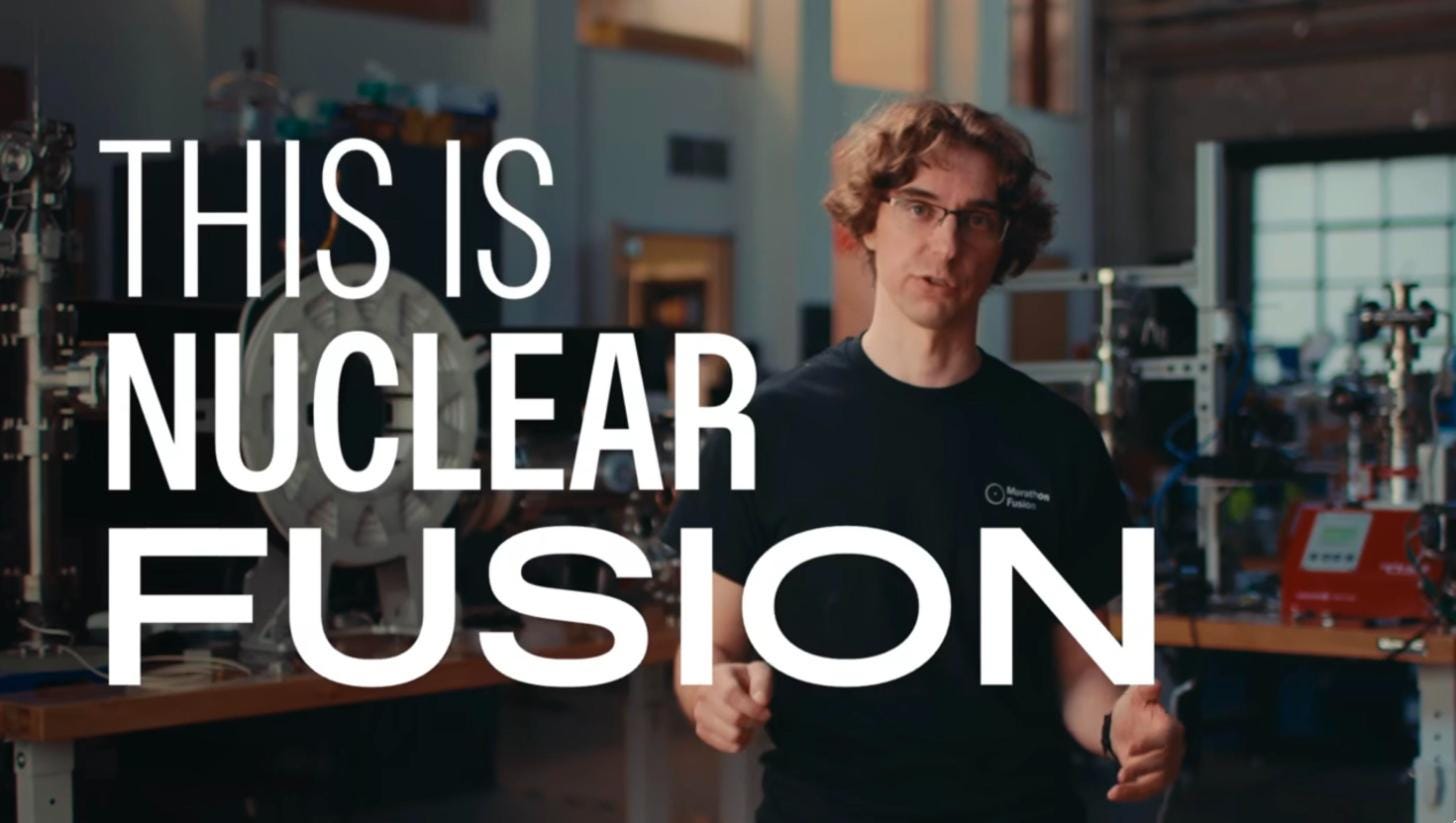
Marathon Fusion was founded in 2023 in San Francisco by Kyle Schiller and Adam Rutkowski, two Carleton College alumni. Kyle studied Asian Studies, built machine learning tools at Airbnb, then moved into science policy. Adam was a propulsion engineer at SpaceX on the mission that flew astronauts back to the ISS, then studied plasma physics at Princeton.
Their bet: everyone was pouring billions into reactors while the fuel loop lagged behind. As Kyle put it, once fusion works, "we're going to wish we had started even sooner."
They've raised around $18M, with mining giant Anglo American among the investors, plus support from Bill Gates’ Breakthrough Energy and the US Department of Energy. In July 2025, their paper on turning mercury into gold inside a fusion plant made headlines worldwide. Next up: a commercial pilot plant in 2028.
Top Impact Stats 📈
1. 10x or more reduction in the tritium a fusion plant needs to hold and circulate (company estimate).
2. $482M a year for a gigawatt-scale plant selling electricity plus gold, vs $223M from electricity alone (company modeling, not yet verified).
3. One gram of fusion fuel releases as much heat as about 10 tonnes of coal, with zero CO₂.
Whenever you’re ready, there are 2 ways I can help you:
Scale and optimize your business: Automation and AI implementation (Claude expertise) for companies so they can free up time to scale their revenues.
Give visibility to your climate company: Get your company in front of an audience of thousands of climate players and enthusiasts by sponsoring newsletter issues and LinkedIn posts.
Thanks for reading today’s issue! If you liked it feel free to hit the ❤️ button and share it with someone who might like it too. See you next Saturday:)