


Read time: 5 minutes
Hi, I’m Javi Gascón.
This is Climate Tech Distillery, a newsletter where I talk about one specific climate tech company every week.
Today we'll distill a company that's making real butter out of CO₂ and hydrogen, using 1,000x less land than a dairy farm: Savor 🇺🇸

Want to sponsor Climate Tech Distillery? Here’s all the info.
What Problem Does Savor Tackle❓
Every gram of fat we eat has to be grown first, on an animal or on a plant. That is a very slow and very dirty way to arrange a few atoms.
1. Cows are a climate problem: Dairy accounts for around 4% of global greenhouse gas emissions, according to the FAO. Butter is the most concentrated version of it. It takes more than 20 litres of milk to make 1 kg.
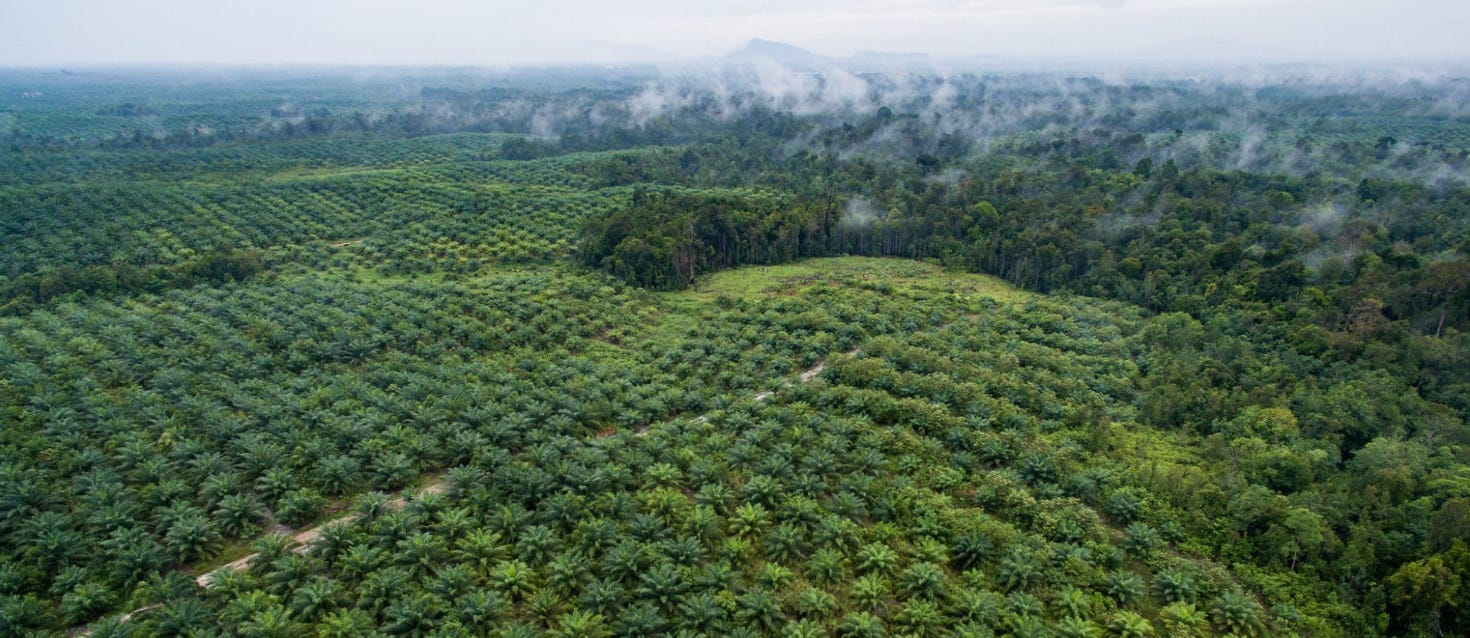
2. Palm oil eats rainforests: Palm oil is in roughly half of supermarket products, from cookies to shampoo. It only grows in the tropics, often where the richest forests used to be. Orangutans have paid the price for decades.
3. Supply is fragile: Heatwaves could cut global milk output by 4% by 2050. Tropical oil prices swing with weather, tariffs and geopolitics, and food makers are tired of the rollercoaster.
4. Land is the bottleneck: Agriculture already uses half of the world's habitable land. New carbon accounting rules now make companies count every hectare behind their ingredients.
Product / Service 📦
Savor makes fats without agriculture and sells them to chefs, food manufacturers and beauty brands.
How it works: Savor takes carbon gases like captured CO₂ or methane, plus green hydrogen, and links them into carbon chains. Heat and pressure turn those chains into fatty acids, which are assembled into the same molecules found in butter. It copies the chemistry that made the first fats at hydrothermal vents on the ocean floor, billions of years ago. No cow, no plant, not even a microbe.
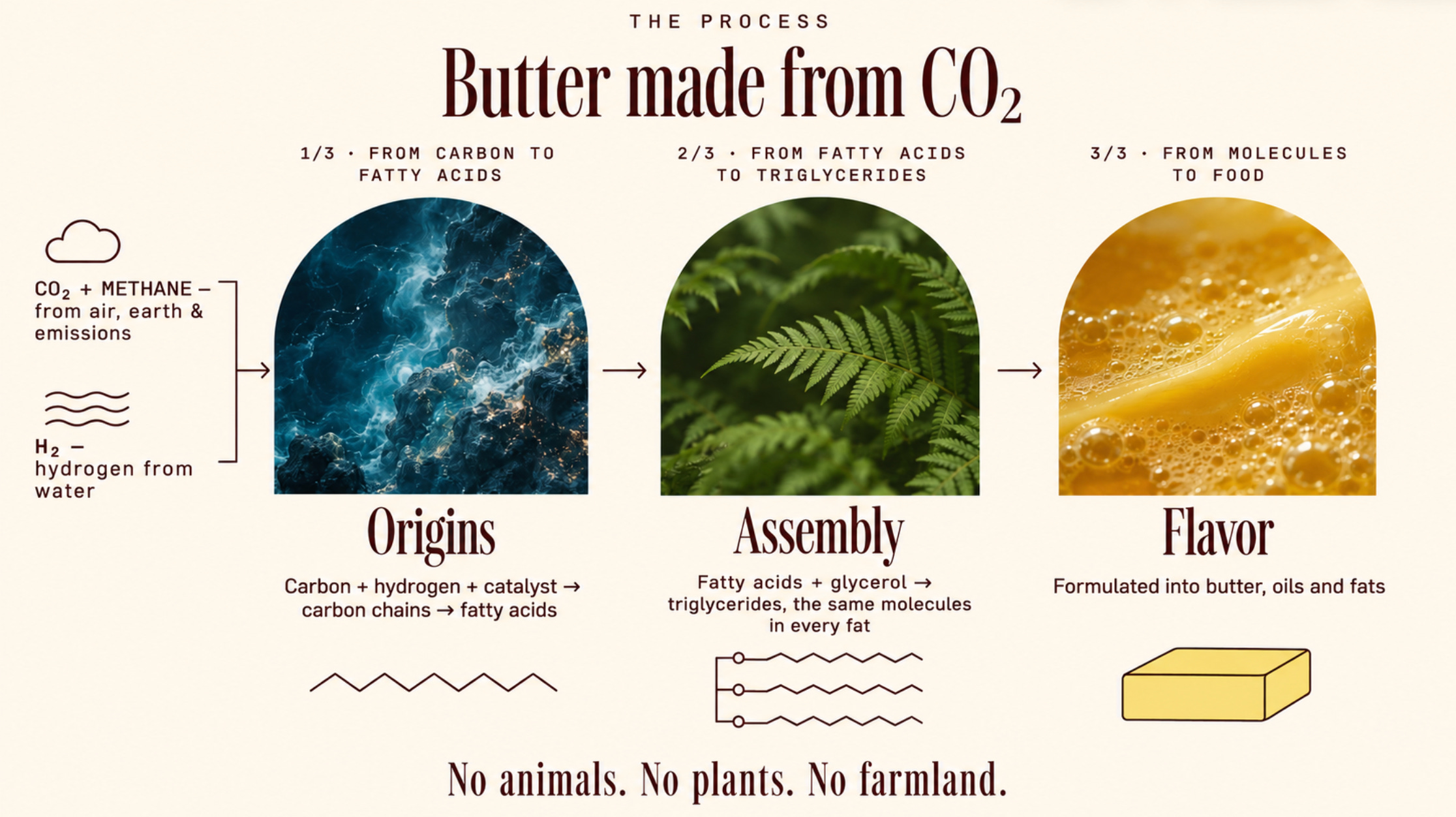
Real fat, not a substitute: The fats are chemically identical to conventional ones. According to the company, tasters can't tell the difference in bonbons and croissants.
Tunable: Because they build every molecule, they can design melting point and texture. The same platform makes butter, palm oil and cocoa butter alternatives.
Tiny footprint: Around 0.8 g of CO₂e per calorie, roughly a third of dairy butter’s 2.4 g. The company also claims 1,000x less land.
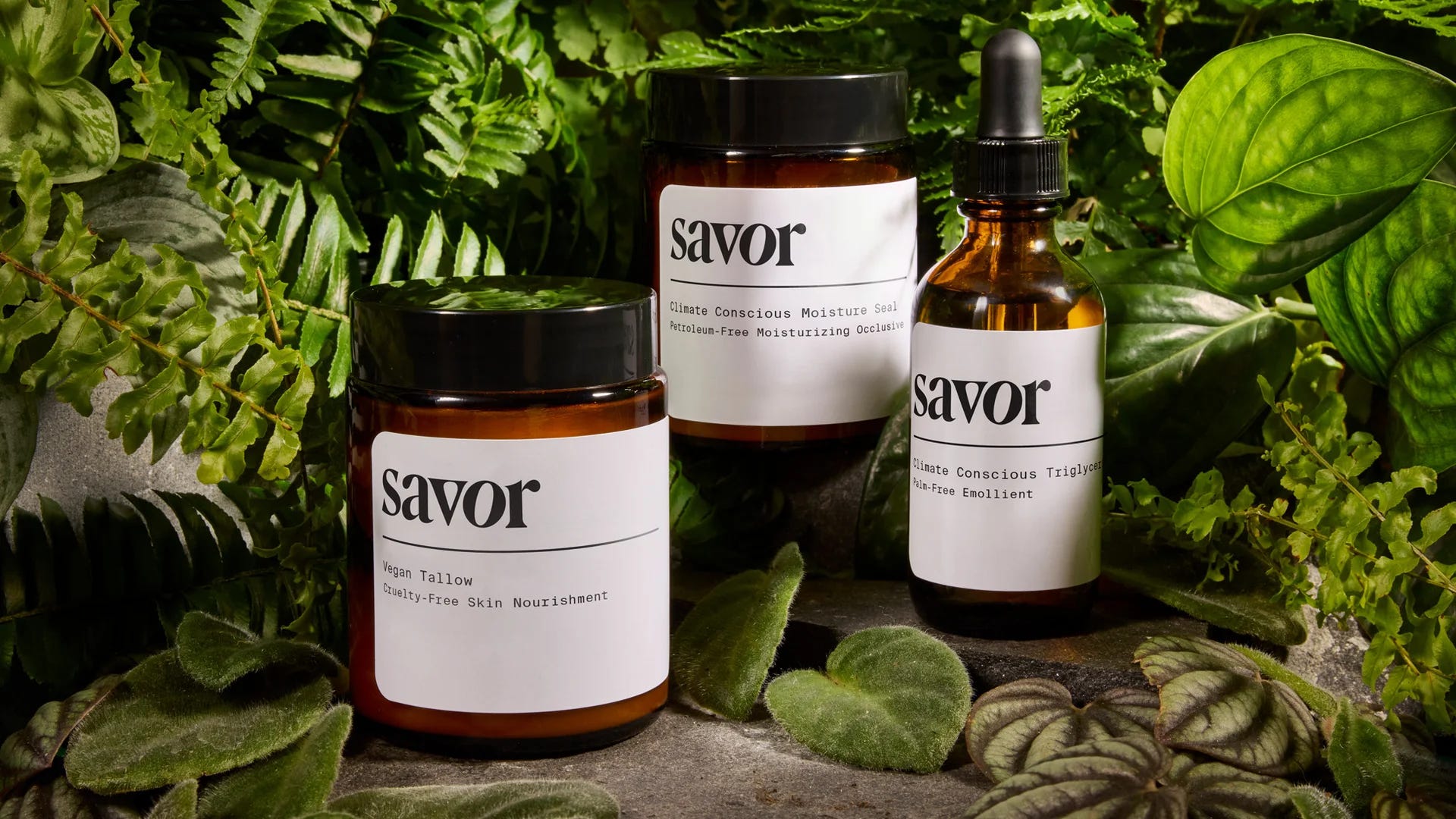
Beyond food: In February 2026 they launched a beauty division, with a vegan tallow and a palm-free emollient for skincare brands.
Market 🌐
The global butter market is worth around $50 billion. The wider fats and oils market is around $240 billion and is projected to reach $336 billion by 2033.
Food makers want fats that don't depend on tropical weather or imports. Beauty brands need to prove their ingredients aren't clearing forests. Both are now asking for a third option beyond animals and plants.
Other Key Players
C16 Biosciences 🇺🇸: Brews a palm oil alternative with yeast, starting with cosmetics.
Zero Acre Farms 🇺🇸: Ferments sugarcane into a cooking oil already used by chains like Shake Shack.
Nourish Ingredients 🇦🇺: Uses precision fermentation to make animal-like fats for plant-based meat.
They all rely on microbes eating sugar or waste. Savor skips biology entirely, so it needs no farmland at all.
Founding Story 🦄
Savor was founded in March 2022 in San Jose, California, by Kathleen Alexander, Ian McKay and Henrik Bennetsen.
The idea was born at Orca Sciences, a Gates-backed R&D lab that Ian founded. Kathleen, an MIT materials scientist, was leading projects there. The team mapped dozens of ways to make food without farms, and fats won.
Ian had done this before: he co-founded Form Energy, the iron-air battery company we covered in issue #50. Henrik, a serial founder from robotics lab Otherlab, ran the business side as first CEO until Kathleen took over in 2024.
Their logic: fat is just carbon, hydrogen and oxygen. Why grow a cow to arrange them?
Then came the chefs. Three-Michelin-star SingleThread and Atelier Crenn tested the butter before launch, and One65's patisserie started selling Savor bonbons. Mondelez picked Savor for its CoLab Tech accelerator, and TIME named the butter one of the best inventions of 2025.
Bill Gates' Breakthrough Energy Ventures backed them early. In July 2026, Swedish fats giant AAK invested too and signed a joint development deal. Total raised: $65M.
Top Impact Stats 📈
1. Zero animals, zero plants and zero farmland in every block of butter.
2. 1,000x less land than conventional fats, according to the company.
3. Up to 98% lower emissions than dairy butter and palm oil, according to Savor and AAK.
Whenever you’re ready, there are 2 ways I can help you:
Scale and optimize your business: Automation and AI implementation (Claude expertise) for companies so they can free up time to scale their revenues.
Give visibility to your climate company: Get your company in front of an audience of thousands of climate players and enthusiasts by sponsoring newsletter issues and LinkedIn posts.
Thanks for reading today’s issue! If you liked it feel free to hit the ❤️ button and share it with someone who might like it too. See you next Saturday:)