


Read time: 5 minutes
Hi, I’m Javi Gascón.
This is Climate Tech Distillery, a newsletter where I talk about one specific climate tech company every week.
Today we'll distill a company that's flying 28-ton underwater kites through tidal currents to turn the ocean into predictable clean power: Minesto 🇸🇪

Want to sponsor Climate Tech Distillery? Here’s all the info.
What Problem Does Minesto Tackle❓
They tackle the forgotten renewable: the ocean moves twice a day, every day, on a schedule we can predict decades ahead, and we barely use it.
1. Wind and solar have a timing problem: They produce when the weather allows, not when the grid needs it. Every extra gigawatt of intermittent power means more batteries, backup plants or wasted output.
2. Tidal power is picky: Classic tidal turbines only pay off in very fast currents. Just a handful of sites on Earth have them, so most of the ocean's energy stays untouched.

3. Heavy steel, heavy bills: Conventional turbines are massive structures fixed to the seabed, and every extra meter of blade means more steel. Installing and servicing them needs big specialist vessels, which keeps costs far above offshore wind.
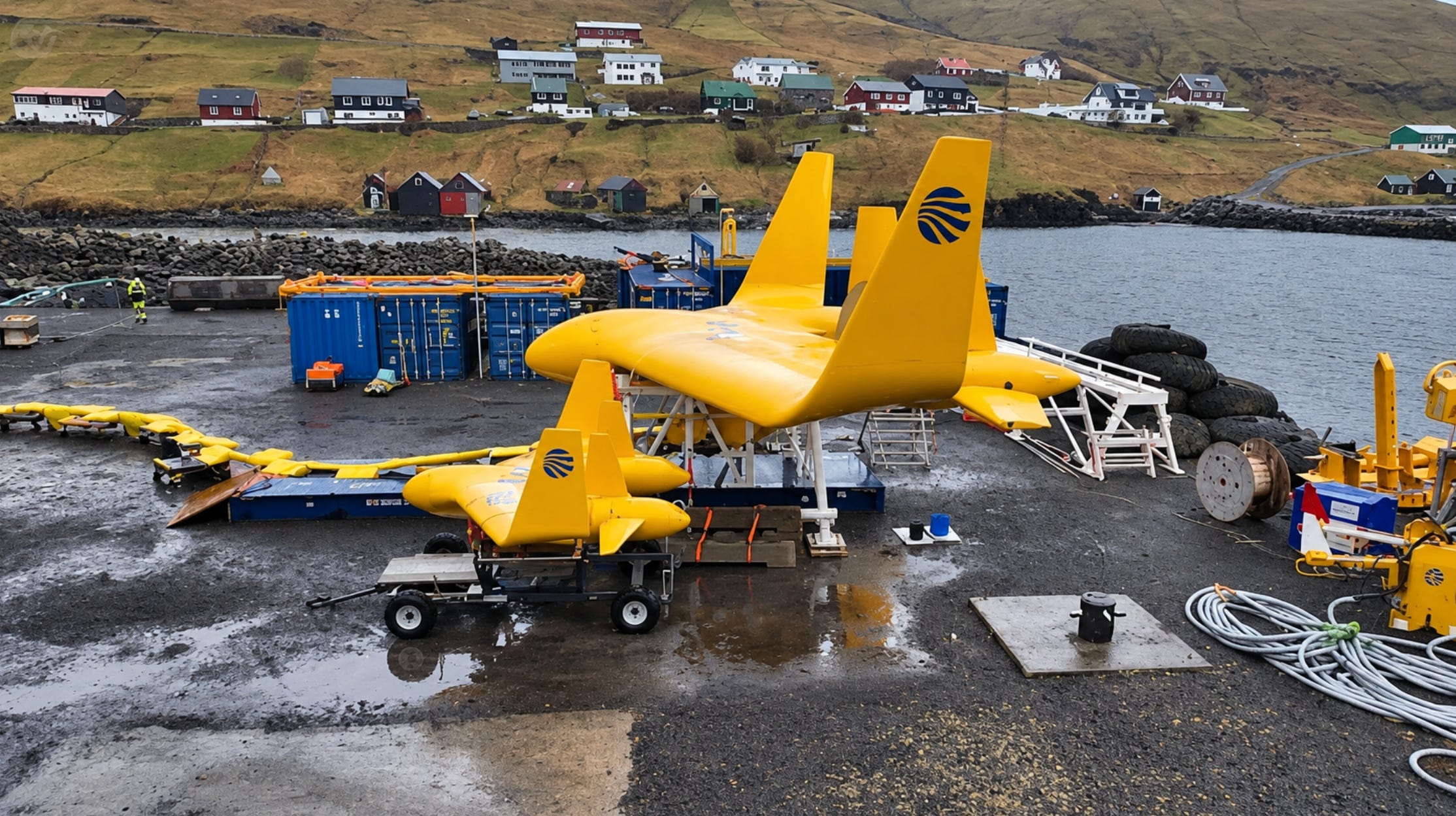
4. Islands still burn diesel: Remote coastal communities often import fossil fuels to keep the lights on, even with powerful currents running past their shores. The Faroe Islands, where Minesto tests its kites, is one of them.
Product / Service 📦
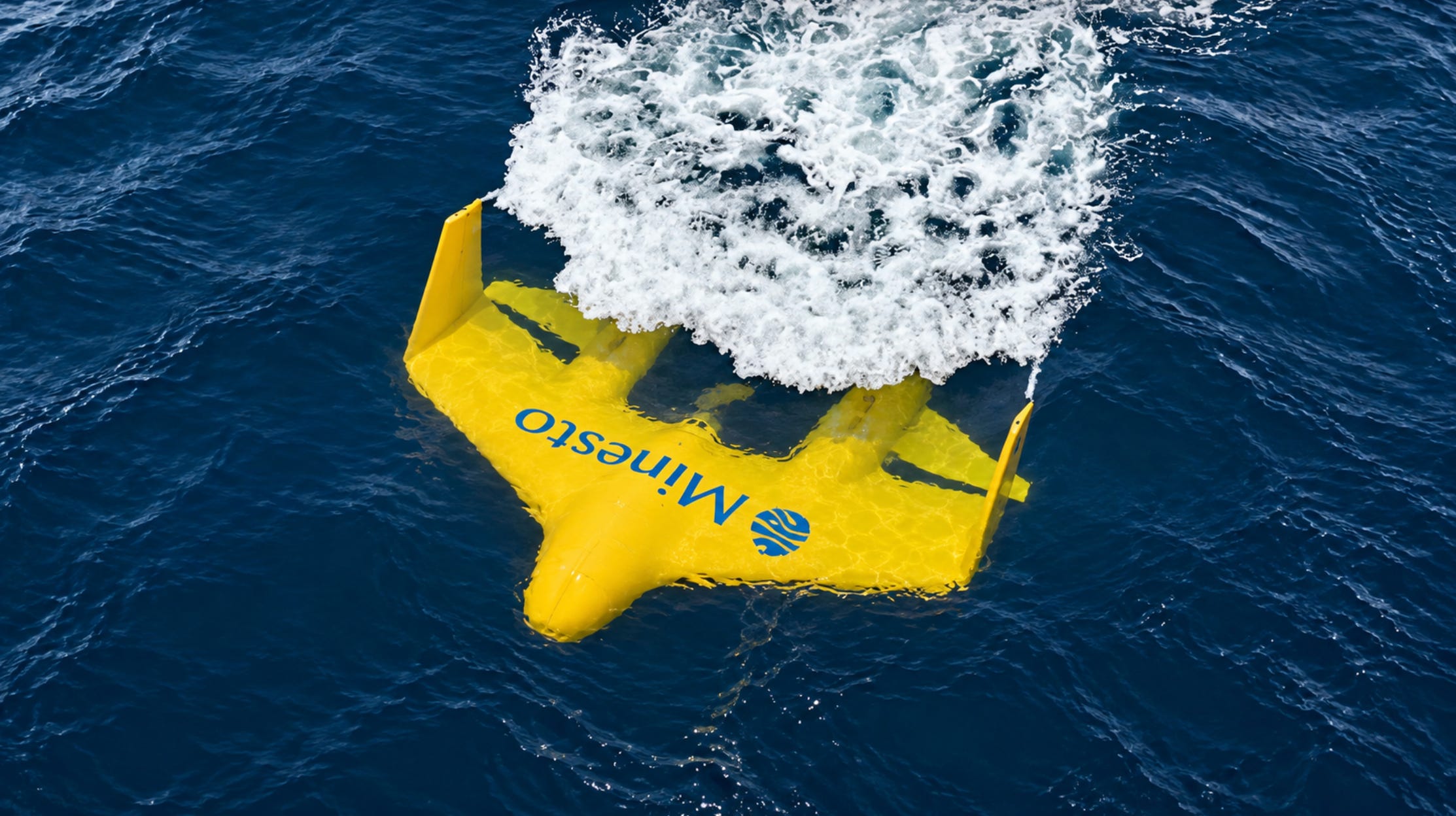
Minesto builds tidal power plants called Dragons: underwater kites tethered to the seabed that turn slow ocean currents into electricity for utilities and island grids.
How it works: Picture a kite on a windy beach, but underwater. The current creates lift on a wing, and an onboard control system steers it in a figure-of-eight loop. The kite moves several times faster than the water around it, dragging a small turbine with it. Water is 800 times denser than air, so even a slow current carries a lot of energy. And power grows with the cube of speed, so a little extra speed means a lot more electricity.

Light and compact: The Dragon 12 has a 12-meter wingspan, weighs 28 tons and is rated at 1.2 MW. No giant foundation, no towering structure.
Unlocks slower currents: Because the kite creates its own speed, it can harvest currents that are too slow for traditional turbines.
Cheap upgrades: A longer tether boosted the Dragon 12’s output by 25%. A new power take-off lifted the smaller Dragon 4 from 100 to 185 kW with no noticeable increase in hardware cost.
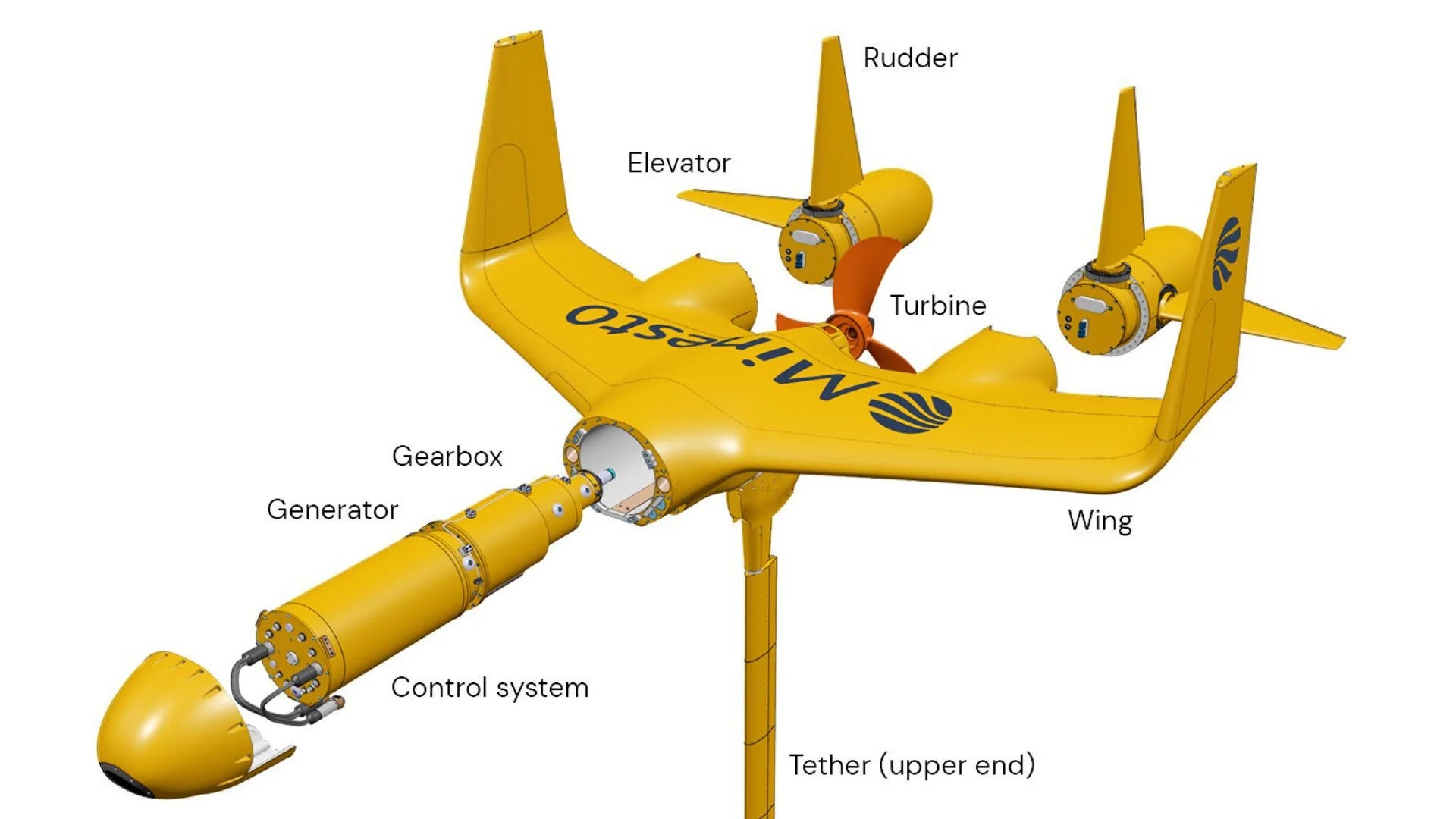
Predictable baseload: Tides follow the moon, not the weather. In the Faroe Islands, Minesto is pairing its kites with a battery to demonstrate a base-load tidal microgrid.
Market 🌐
Tidal energy is still tiny: around $50 million in 2026, forecast to grow 31% a year to roughly $200 million by 2031. Europe leads, with the UK, France and the Netherlands pushing first commercial arrays.
Demand is driven by grids struggling with wind and solar variability, energy security for islands, and EU and UK funding programs dedicated to ocean energy.
Other Key Players
Orbital Marine Power 🇬🇧: A floating 2 MW turbine in Orkney, with 32 MW of new turbines already ordered across the UK and Canada.
SAE Renewables 🇬🇧: Operates MeyGen in Scotland's Pentland Firth, the largest tidal stream array in the world.
Verdant Power 🇺🇸: Turbines fixed to river and estuary beds, first tested in New York's East River and now heading to a 5 MW project in Wales.
Minesto is the only one flying its turbine, which lets it chase slower currents with a fraction of the steel. I first featured their kite back in issue #13, a deep dive on tidal power.
Founding Story 🦄
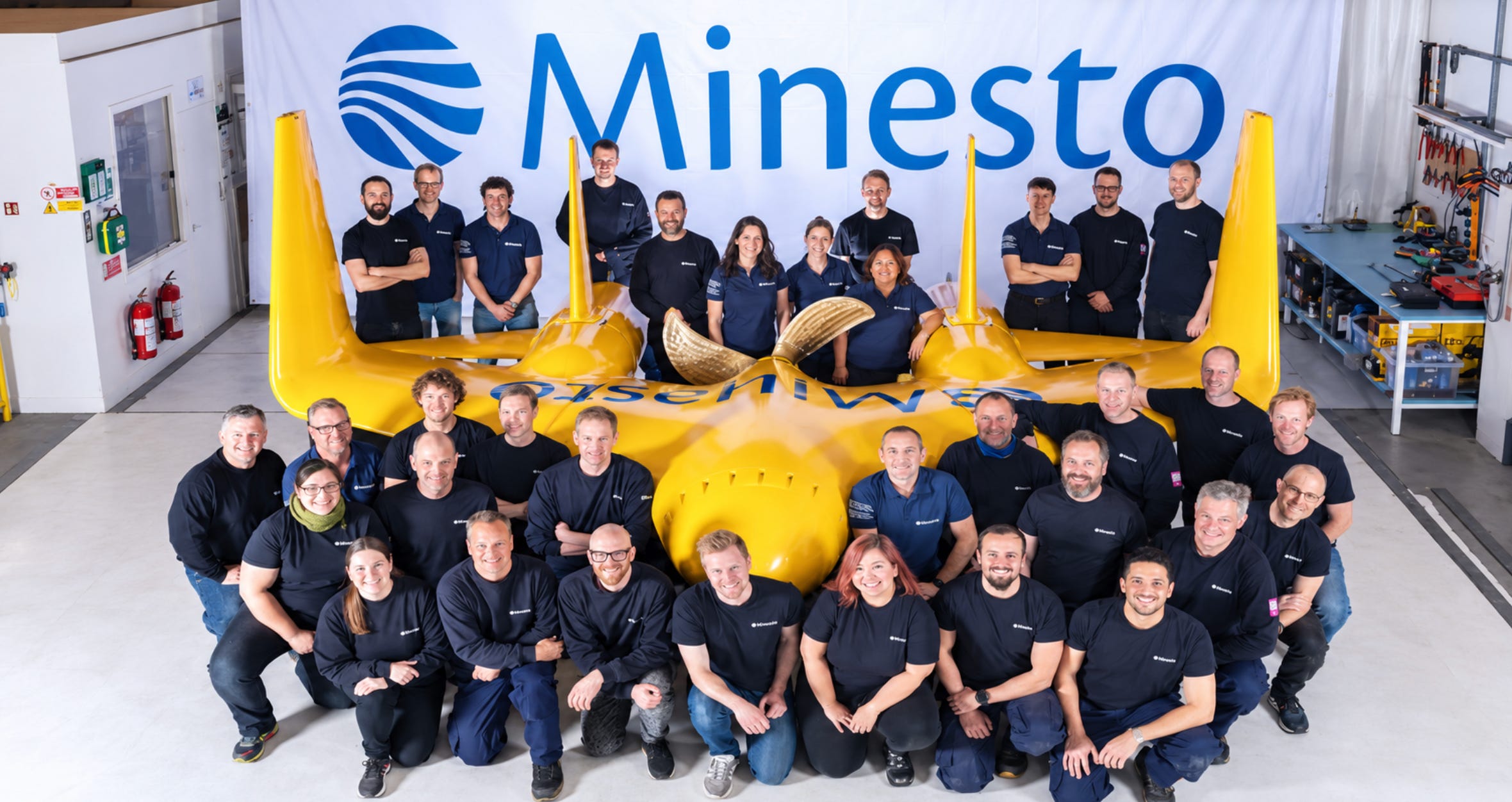
Minesto started inside Saab, the Swedish aerospace and defense company. In 2003, engineers in its wind department began applying aircraft know-how to ocean currents, and engineer Magnus Landberg came up with the underwater kite. In 2007 he co-founded Minesto as a Saab spin-off in Gothenburg, raising €2M to build a first scale model.
In 2011 a 3-meter prototype flew its first loops in Northern Ireland. A 500 kW kite followed in Wales in 2018, and in 2020 Minesto delivered electricity to the grid for the first time. In 2022 it moved its operations to the Faroe Islands, where the 1.2 MW Dragon 12 started powering the local grid in 2024. Along the way it listed on the Stockholm stock market.
Today it has around 36 employees, led by CEO Martin Edlund. On October 19 2026, Minesto was selected for a €20.2M EU Innovation Fund grant covering 60% of a 10 MW tidal kite array off the coast of Ireland, the first of its kind.
Top Impact Stats 📈
1. The kite flies several times faster than the current that powers it.
2. 1.2 MW from a single 28-ton, 12-meter kite.
3. €20.2M EU grant for a 10 MW tidal array, the first tidal kite farm of its kind.
Whenever you’re ready, there are 2 ways I can help you:
Scale and optimize your business: Automation and AI implementation (Claude expertise) for companies so they can free up time to scale their revenues.
Give visibility to your climate company: Get your company in front of an audience of thousands of climate players and enthusiasts by sponsoring newsletter issues and LinkedIn posts.
Thanks for reading today’s issue! If you liked it feel free to hit the ❤️ button and share it with someone who might like it too. See you next Saturday:)