


Read time: 5 minutes
Hi, I’m Javi Gascón.
This is Climate Tech Distillery, a newsletter where I talk about one specific climate tech company every week.
Today we'll distill a company that's replacing the wooden beehive with a solar-powered robot that treats sick bees, cutting colony losses by up to 70%: Beewise 🇺🇸

Want to sponsor Climate Tech Distillery? Here’s all the info.
What Problem Does Beewise Tackle❓
They tackle a quiet food crisis: the insects behind a third of our food are dying faster than we can replace them.
1. Food that depends on bees: About one-third of food crops rely on bee pollination, from almonds to blueberries. California's almond bloom, every February and March, is the biggest pollination job in the US.
2. Record die-offs: US commercial beekeepers lost an average of 62% of their colonies between June 2024 and March 2025, the worst year on record. Mites, viruses, pesticides and extreme weather all pile on.
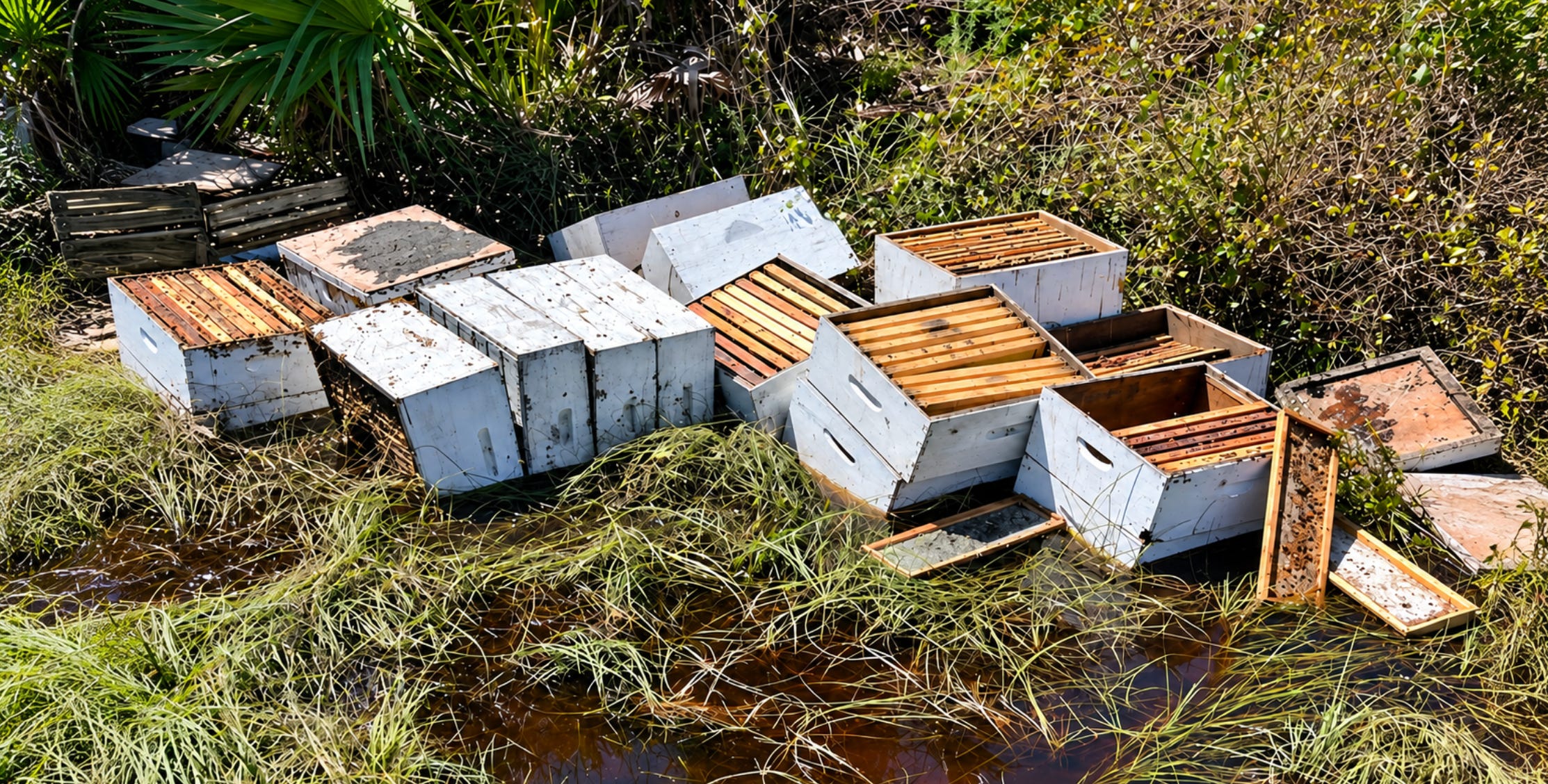
3. Hives nobody can watch: Apiaries (places where colonies of honeybees are kept) can sit hundreds of miles apart, and a given hive gets a visit only every few weeks. By then, the colony is often already lost.
4. A 150-year-old box: Skilled beekeepers are scarce, and the wooden hive has barely changed in over 150 years. Every fix still means a long drive to the yard.
Product / Service 📦
Beewise puts bees in robotic hives and sells the pollination to growers like almond and berry farms.
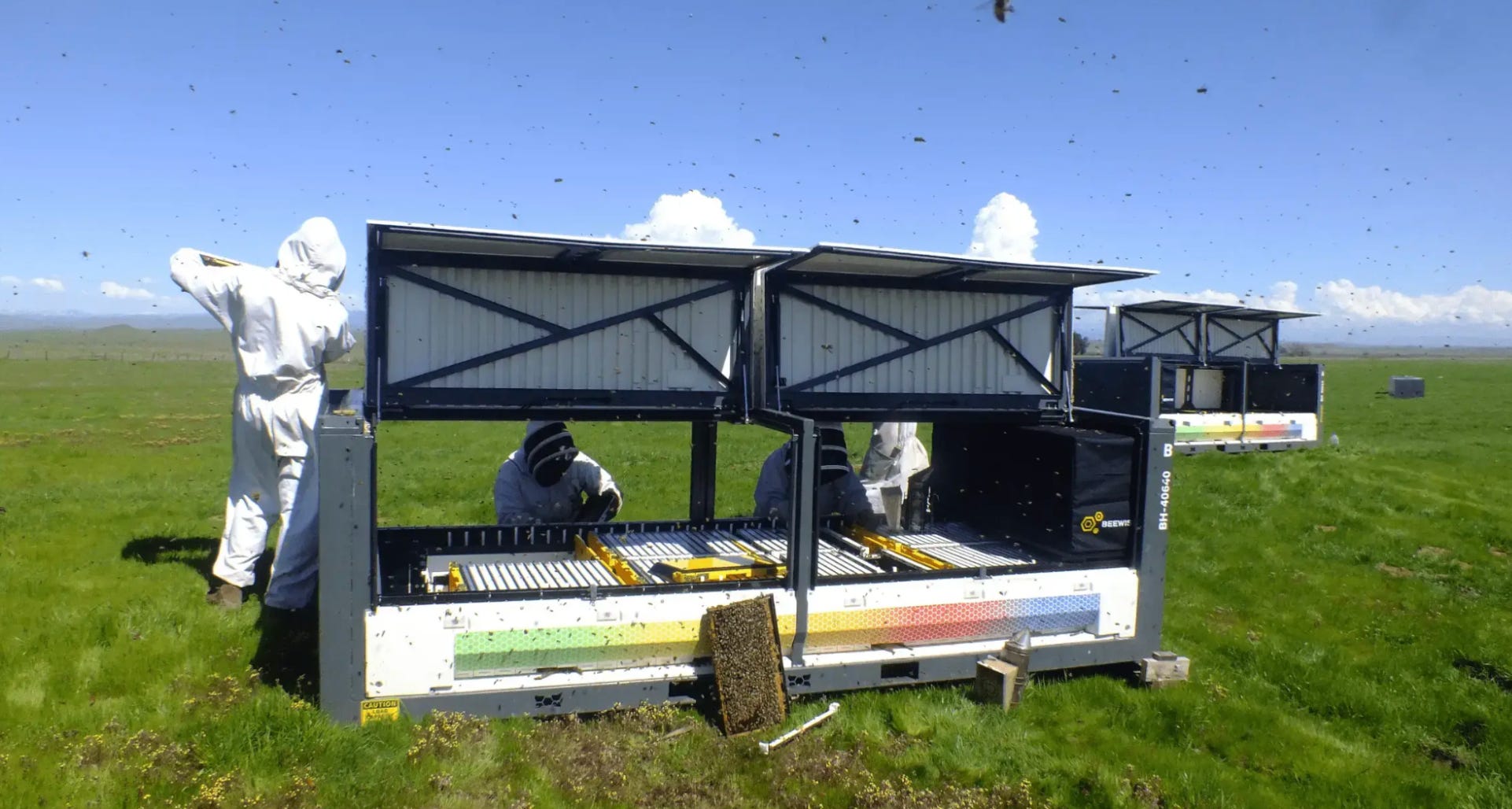
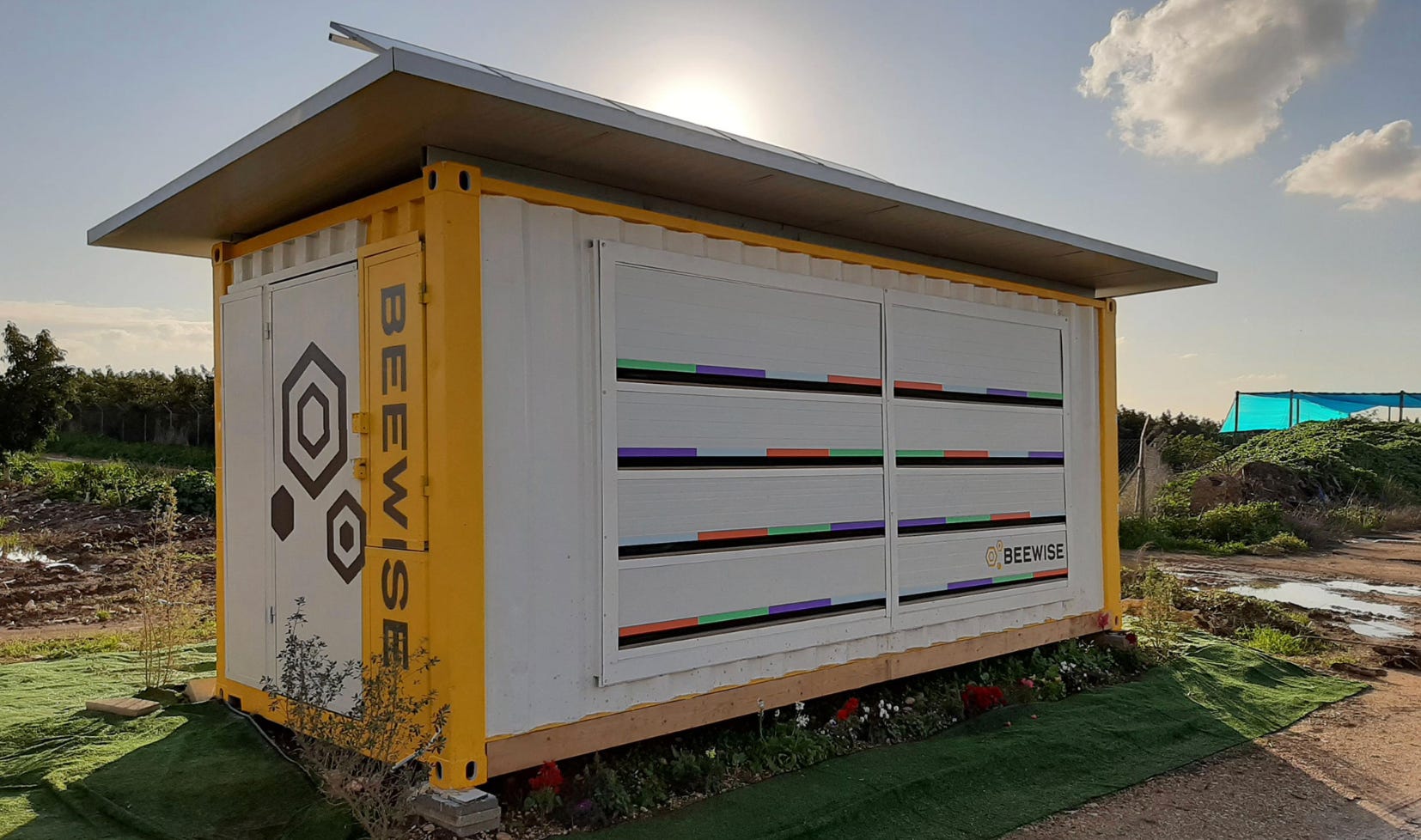
How it works: Think of a small hospital for bees. Cameras watch every frame, AI spots trouble, and robotic arms feed the colony, adjust the climate or treat pests, all on solar power. It takes the same frames and bees as a wooden hive, so beekeepers don't have to relearn their trade.
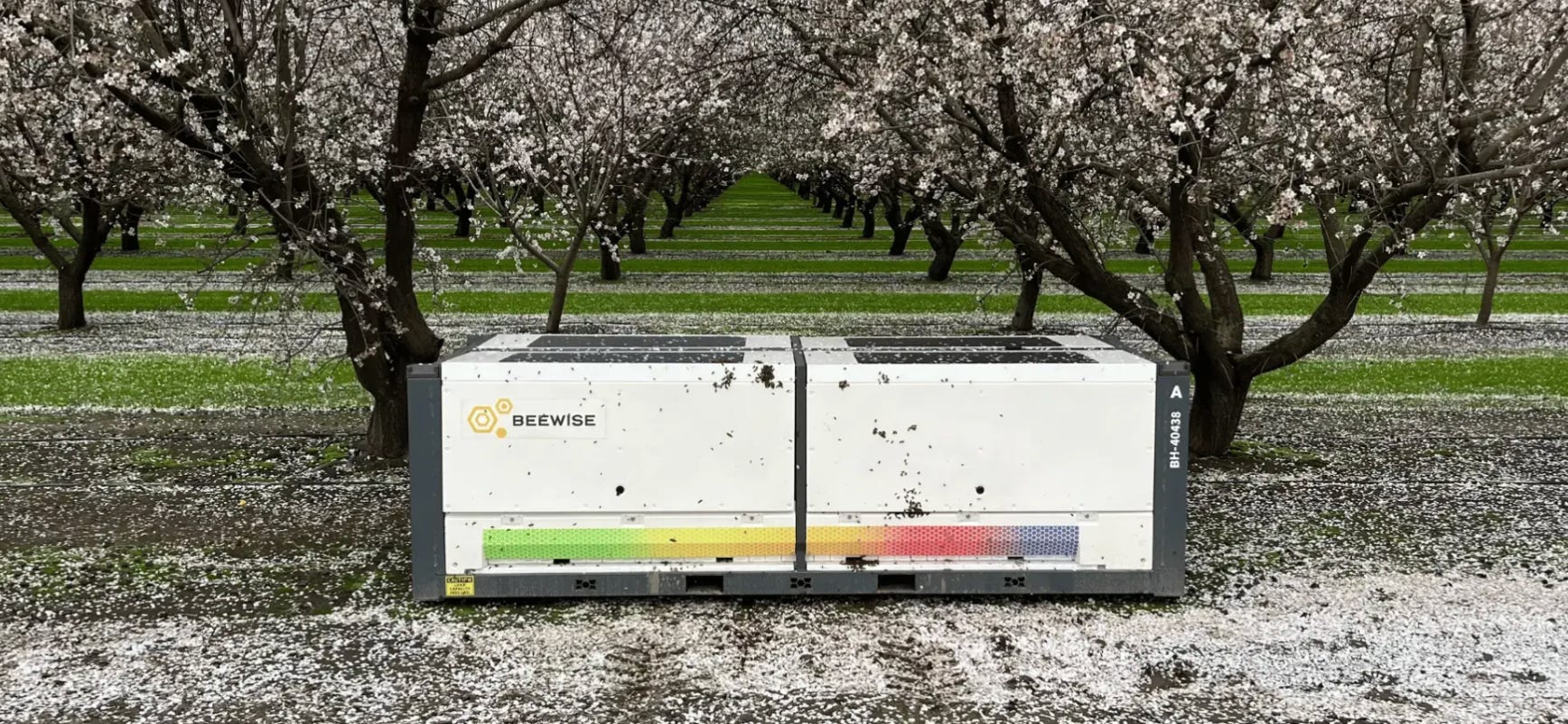
Heat, not chemicals: To kill Varroa mites, the BeeHome heats the frames to a temperature that kills the mites but spares the bees. The company says its Heat Chamber eliminates 99% of lethal mites without pesticides.
Healthier colonies: According to the company, colony losses inside BeeHomes run around 8%, against 48% across the industry in 2023. Yields rise by up to 50%.
Less work: The robots handle roughly 90% of what a beekeeper would do in the field, so one crew can run far more hives.
The economics: Growers pay for pollination as a service, while beekeepers get the BeeHome at no up-front cost, according to the company.
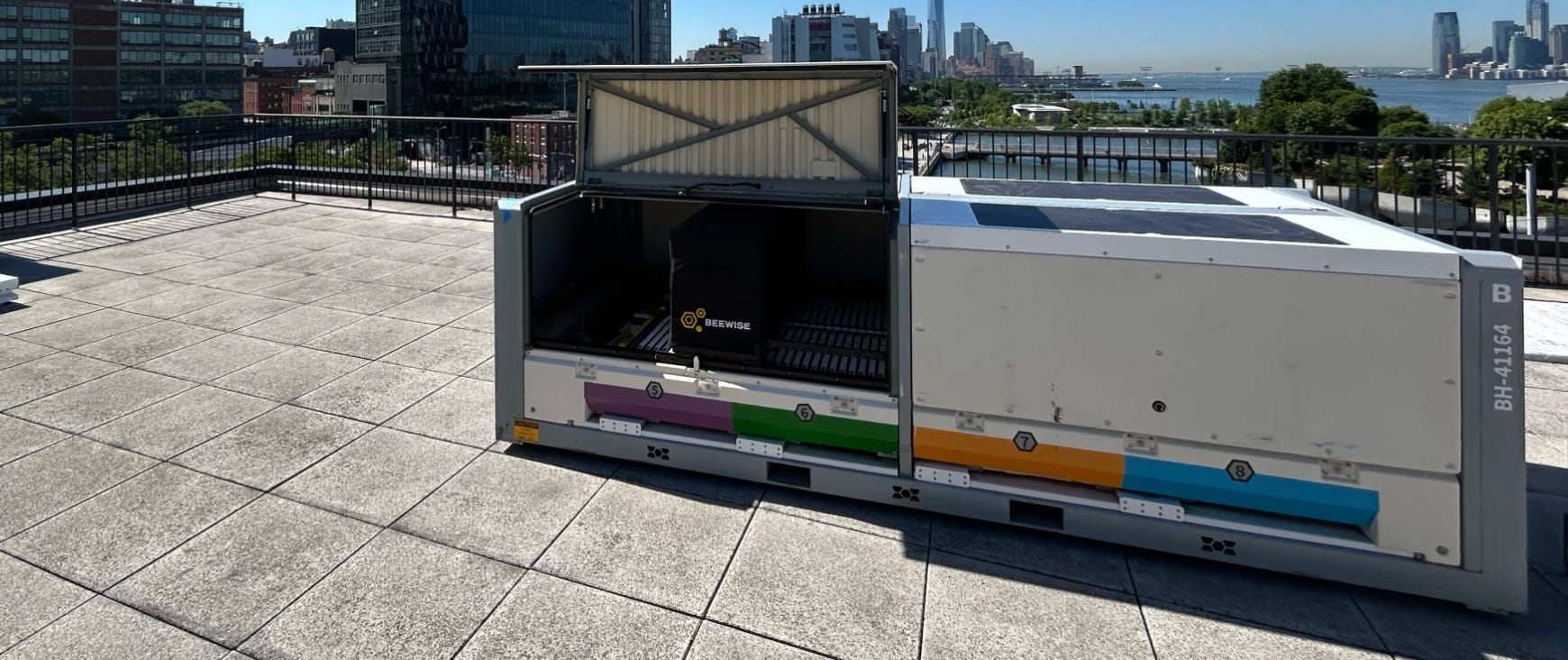
Bees for Buildings: They also put the same hive on offices and campuses across the US. Owners subscribe, Beewise installs and runs it remotely, and they get a nature-based amenity for tenants plus biodiversity data for their sustainability reporting.
Market 🌐
Estimates put the global pollination services market at around $9.5 billion in 2023, heading to roughly $14.7 billion by 2032. Beewise pollinates more than 300,000 acres a year for hundreds of growers.
Demand is driven by record colony losses and growers struggling to secure strong colonies, especially in California almonds. Scarce skilled labor pushes beekeepers toward automation.
Other Key Players
BeeHero 🇺🇸: Puts sensors in hives and sells managed pollination, with over 300,000 hives under management.
Nectar 🇨🇦: A digital operating system for commercial beekeepers, built around RFID hive tags and a mobile app.
UBEES 🇫🇷: Connected hives plus farmer training, with Nespresso as a customer and a €8M Series A in February 2026.
Most rivals monitor hives and alert the beekeeper. Beewise is the one that treats the colony itself, with robots, at scale.
Founding Story 🦄
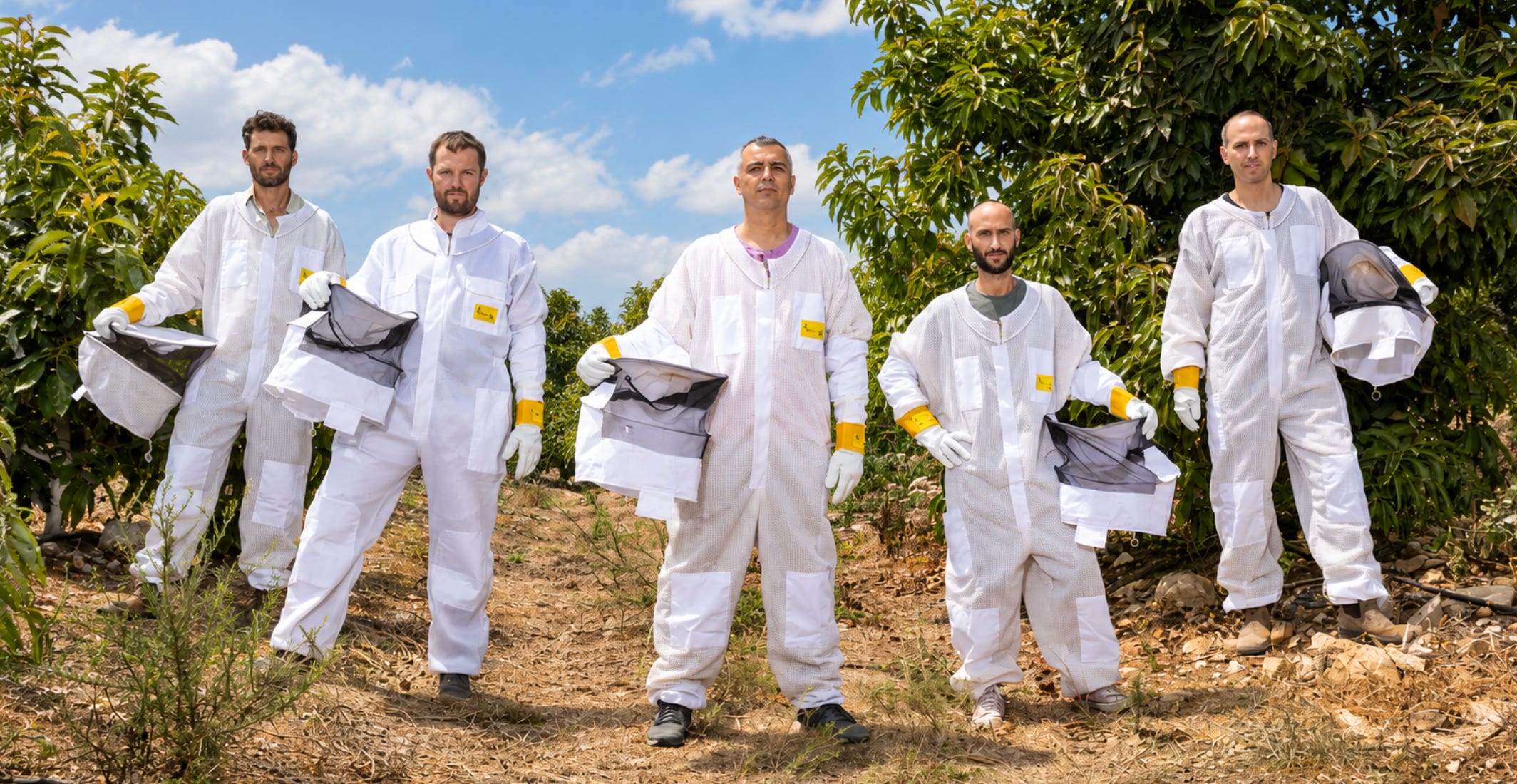
Beewise was founded in 2018 in Israel by Saar Safra and Eliyah Radzyner, with three other co-founders. Eliyah was a commercial beekeeper who had just lost a record number of hives. “I’m a beekeeper, not an engineer,” he wrote, but he saw how much data his hives held that he couldn’t use.
Saar was a serial software entrepreneur with three exits, and Eliyah had already co-founded an agtech startup. The first prototype was built in an unheated shed with a dirt floor.
An $80M Series C followed in 2022. In 2025, the Heat Chamber earned a Robotics Innovation Award, and a $50M Series D took the total to nearly $170M.
Today it has 150+ employees, 1,240+ BeeHomes pollinating 300,000+ acres a year, and a projected first profitable year in 2026. The goal it set in 2025: one million robotic hives within three years. Its pitch is that for every dollar it makes, it saves at least two bees.
Top Impact Stats 📈
1. 8% colony losses inside BeeHomes, versus 48% across the industry in 2023.
2. 99% of lethal Varroa mites eliminated by heat, with no chemicals.
3. Up to 50% lower transport emissions for beekeepers, with 100% solar-powered hives.
Whenever you’re ready, there are 2 ways I can help you:
Scale and optimize your business: Automation and AI implementation (Claude expertise) for companies so they can free up time to scale their revenues.
Give visibility to your climate company: Get your company in front of an audience of thousands of climate players and enthusiasts by sponsoring newsletter issues and LinkedIn posts.
Thanks for reading today’s issue! If you liked it feel free to hit the ❤️ button and share it with someone who might like it too. See you next Saturday:)