This is Climate Tech Distillery, a newsletter where I talk about one specific climate tech company every week.
Subscribe for free to receive my weekly articles in your inbox.
Today we'll distill a company that’s turning fruit and plant waste into sneakers with 95% less carbon than leather shoes: MoEa 🇫🇷
This issue is sponsored by:
Your next investor will Google you before the meeting. If nothing comes up, that’s a problem. Roman helps climate tech founders go from invisible to investable. Clients include Planet Protector (1.1M views), Aquaria, Reonic and more.
Sneakers are one of fashion’s dirtiest habits, and leather is most of the problem.
1. Leather’s carbon cost: One square meter of leather emits 61 kg of CO₂. That’s before tanning, which relies on heavy metals that pollute waterways near tanneries.
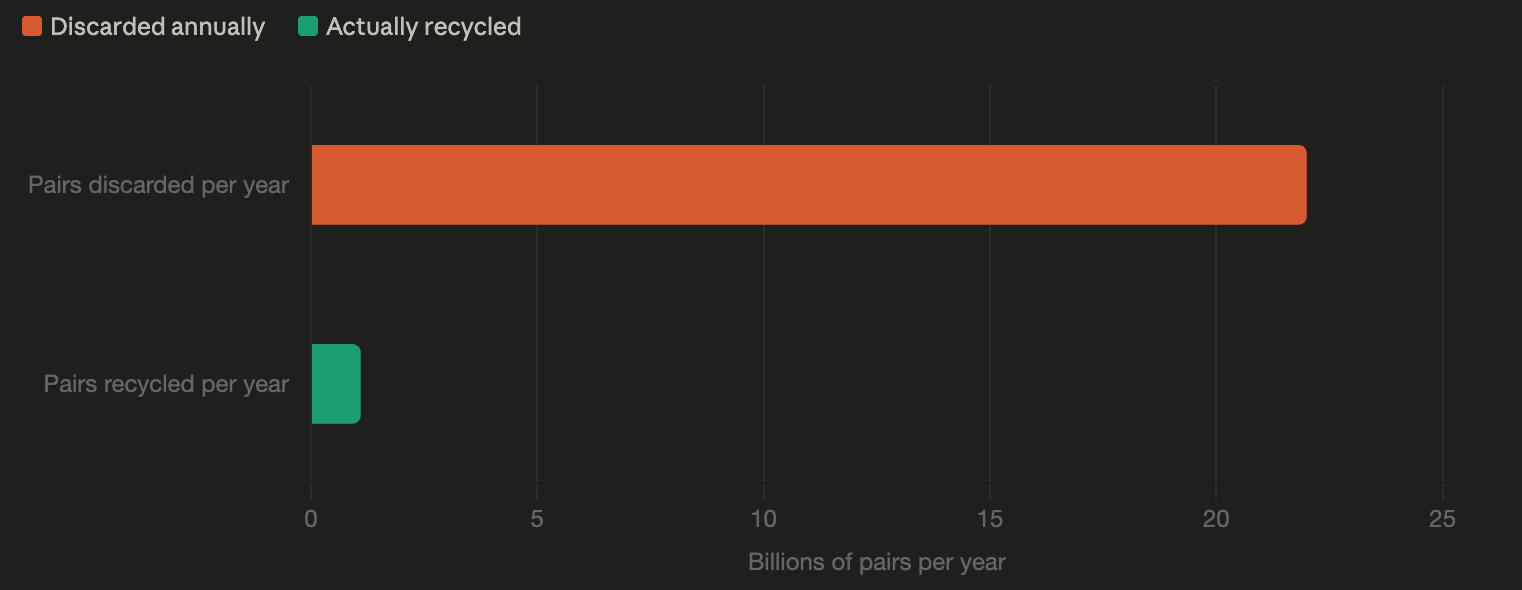
2. Won’t decompose: A pair takes 30-40 years to break down in a landfill. Foam soles can stick around for up to 1,000 years. Only 5% of shoes ever get recycled.
3. Brutal volumes: 22 billion pairs get thrown out every year, globally. Most are burned or buried.
4. Vegan means plastic: Most cruelty-free leather alternatives on the market are polyurethane (PU) or PVC, both petroleum-based plastics. Swapping a cow for crude oil doesn’t fix the emissions problem.
5. Sustainable costs more: Vegan and eco-friendly sneakers typically cost 20-30% more than standard leather ones, pricing out anyone who isn’t already paying a premium for their values.
Product / Service 📦
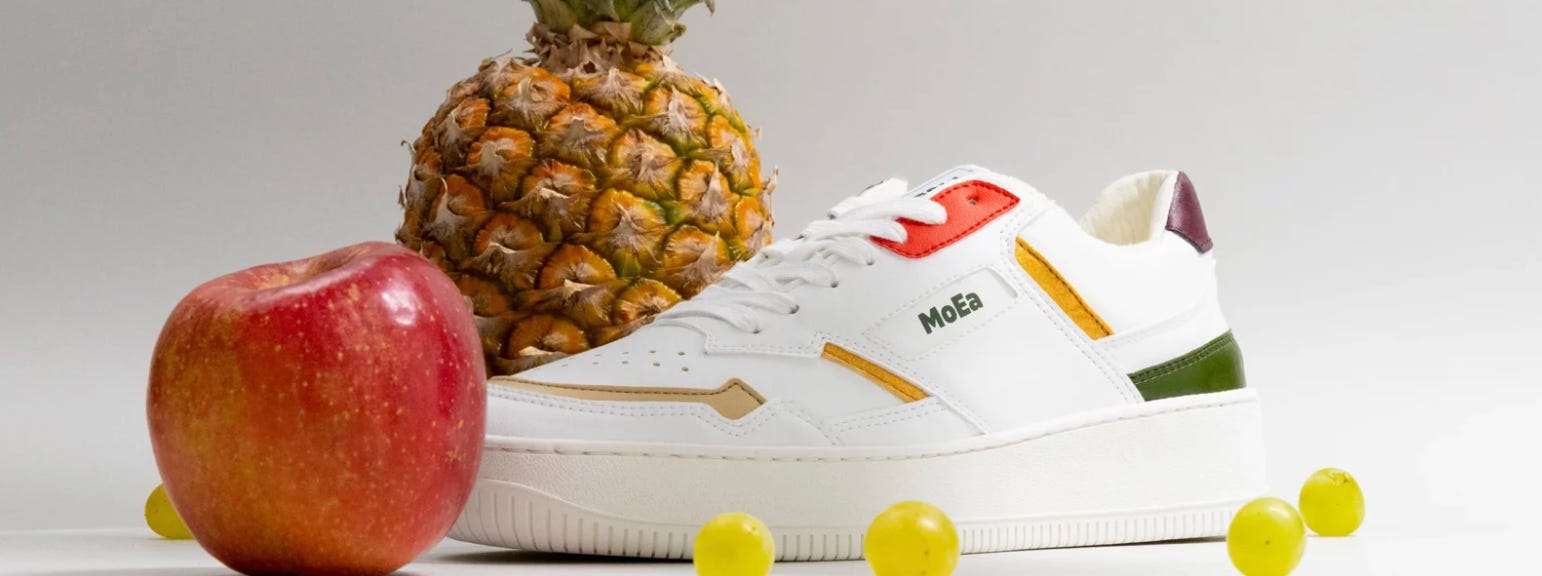
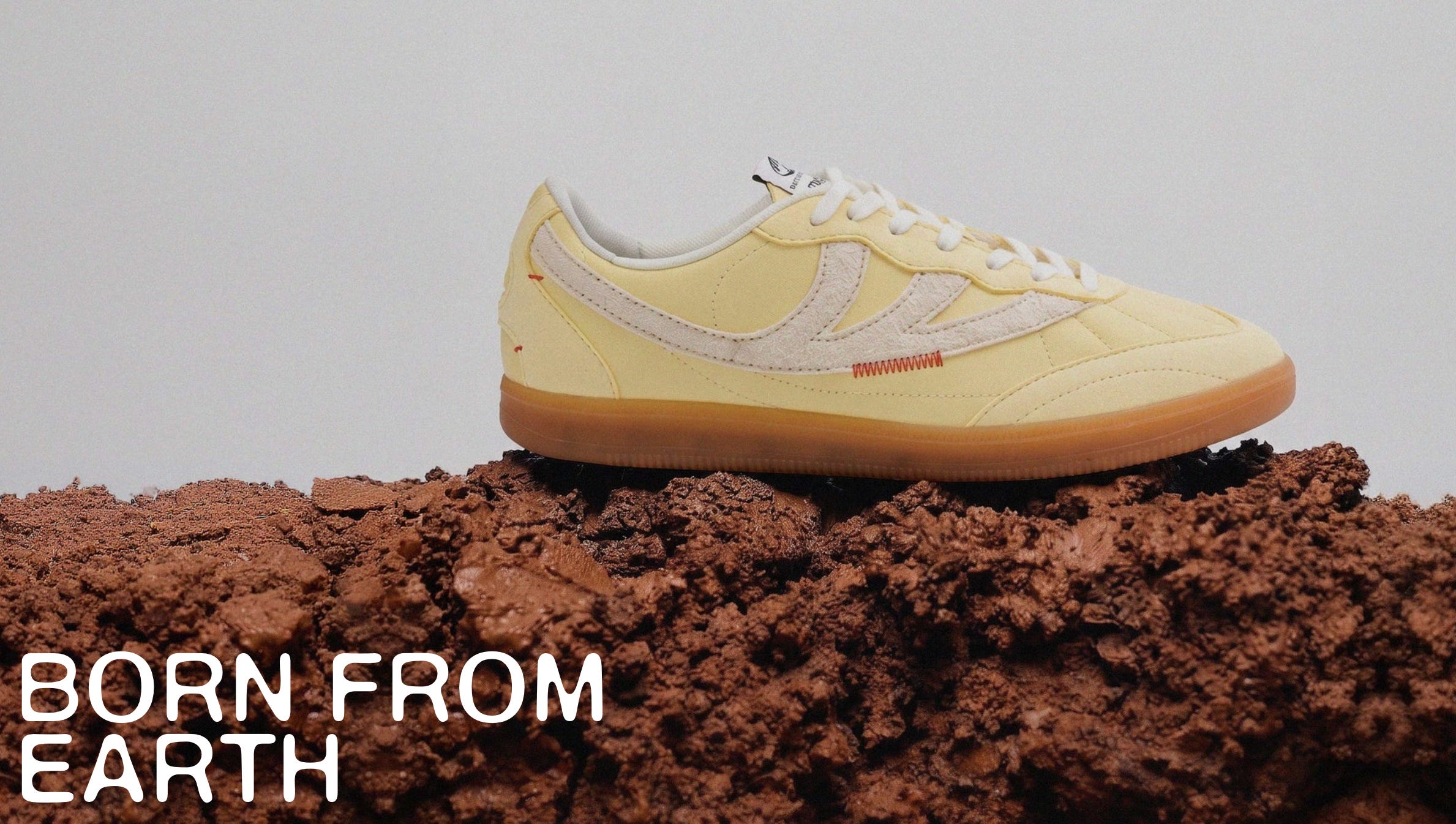
MoEa makes sneakers from 9 plant and fruit waste streams instead of leather or virgin plastic.
Nine Waste Leathers: Grape skins from Italian wineries, apple peels from Italian juice makers, corn husks, pineapple leaf fibers from Philippine farms, and cactus formed the original five. The lineup has since grown to include mushroom, hemp, coconut, and orange. Each material gets blended with a stabilizer, organic cotton, bio-PU, or recycled plastic, into a leather-like material. Every pair is hand-assembled in Portugal.
Real Carbon Cut: A GEN1 pair emits 6.4 kg CO₂ versus 30.1 kg for a traditional leather sneaker, a 95% cut verified by an independent LCA from FAIRLY MADE.
Built to Last: Materials passed 50,000+ abrasion cycles in testing, on par with leather. Linings are 70% recycled bamboo, soles 40% recycled rubber, insoles recycled wood fiber.
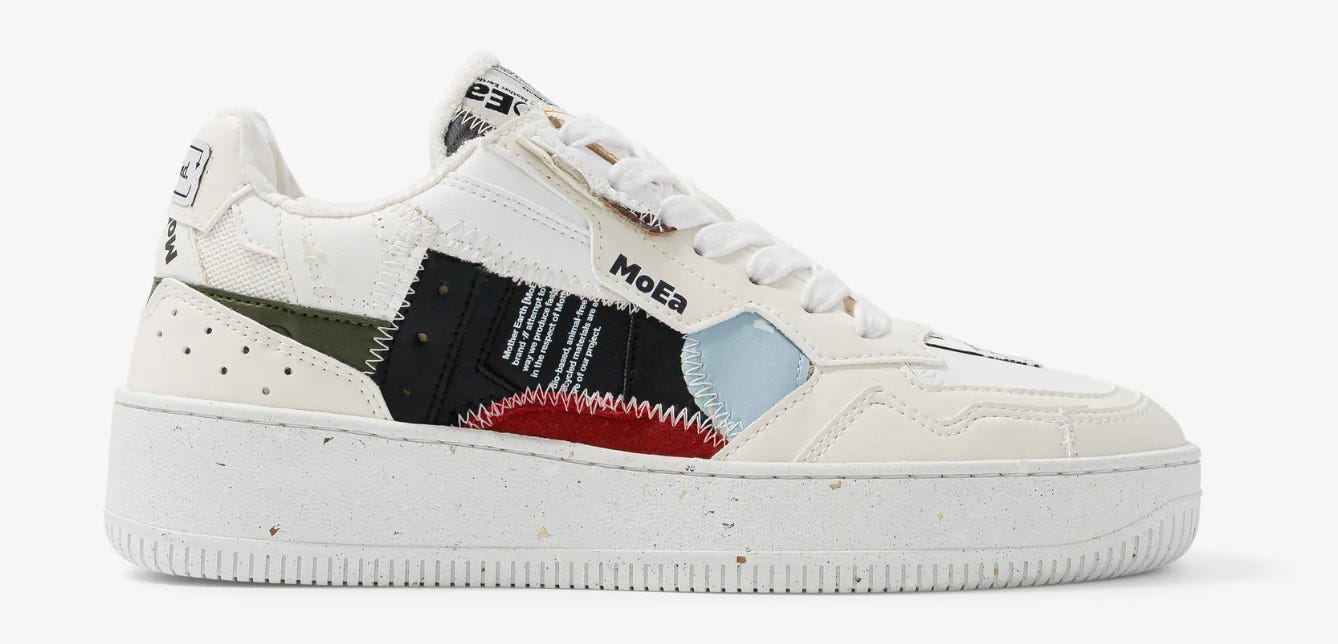
Second Life: Customers choose whether to send back worn-out pairs using a free prepaid label. MoEa shreds them and reuses the material in new sneakers, and the customer gets 25% off their next pair for doing it.
SECOND LIFE is made from pre-worn MoEa sneakers
No Premium Markup: At €139-190, MoEa sits in the same range as Veja and other sustainable sneaker brands. No extra charge for the bio-material innovation, though it’s still pricier than a mass-market basic.
Market 🌐
The vegan footwear market sits somewhere around $50 billion and growing at an 8% CAGR through the early 2030s.The plant-based leather slice specifically, is smaller but growing faster: roughly $3.3 billion in 2026, projected to hit $10.7 billion by 2035, a 14.2% CAGR.
Sustainable fashion overall is growing quickly and sneakers are the single biggest product category in vegan footwear. Europe leads adoption thanks to increasing regulation and ethical-consumer culture.
Other Key Players
Veja 🇫🇷: The French sneaker giant already sells 550k+ pairs a year on wild Amazon rubber and organic cotton, but only a fifth of its lineup is fully vegan, most models still use leather.
Bohema 🇵🇱: Polish label credited with the first cactus-leather shoe, works across the same plant palette as MoEa but stays boutique, no repair or take-back program.
MoEa's edge is depth, not breadth: 9 biomaterials engineered in-house with a full circularity loop (repair + recycling).
Founding Story 🦄
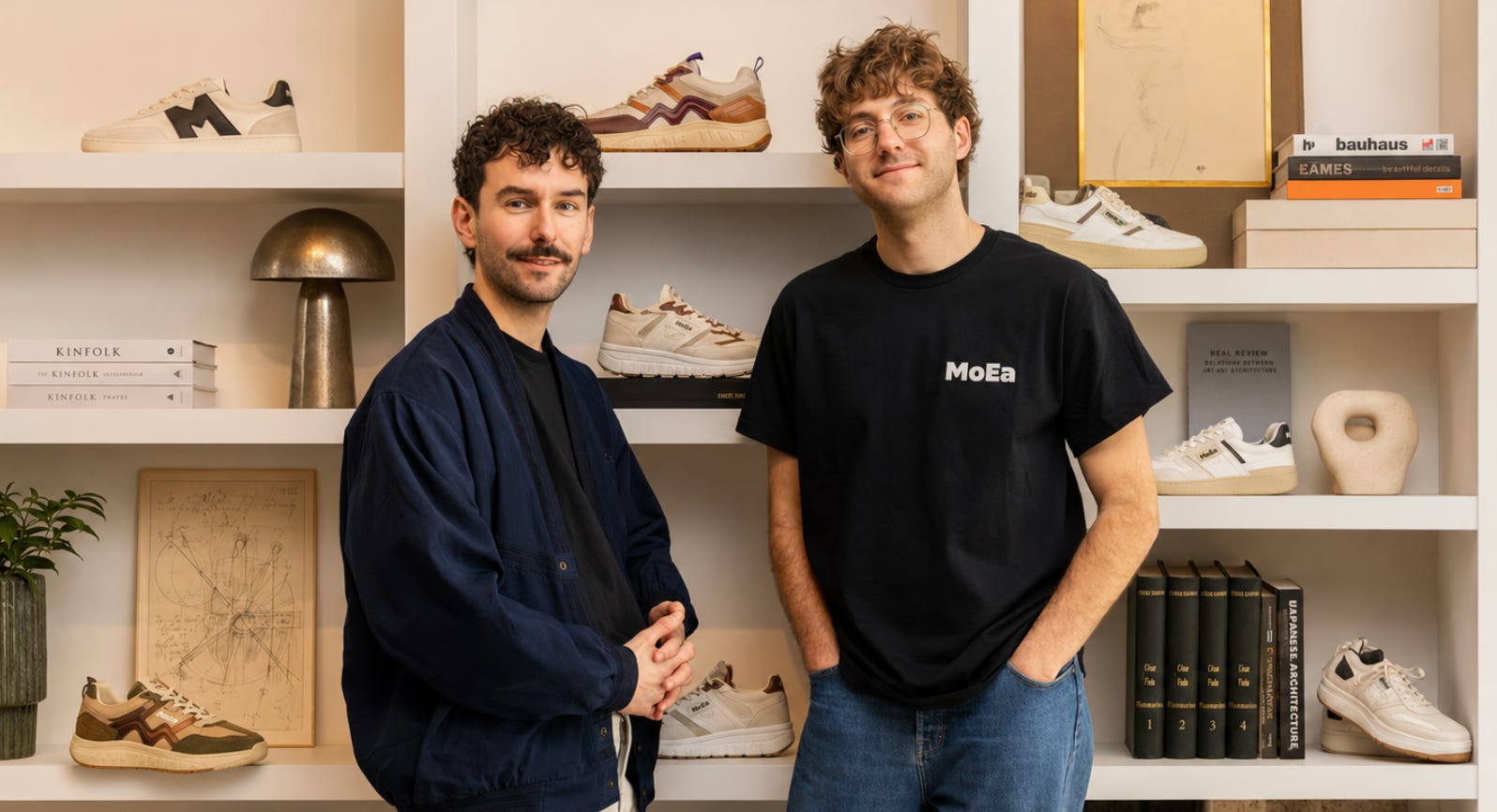
Benoit, artistic director (left) and Achille, CEO (right)
MoEa was founded in September 2020 in Paris by Achille Gazagnes, Benoit Habfast, and Simon de Swarte. Gazagnes had already spent years in the sneaker industry co-founding CAVAL, a mismatched-sneaker brand, before a meeting with an Italian engineer who'd built apple-based leather changed his direction entirely. He left CAVAL in 2023 to focus on MoEa full-time.
The trio launched a Kickstarter in 2021 that blew past its $12K goal, closing at nearly $87K. That traction became the base for direct-to-consumer sales, and the material lineup kept growing: from the original five (grape, apple, corn, pineapple, cactus) to nine, adding mushroom, hemp, coconut, and orange.
They've since raised €2.3M in a seed round led by Climate Club (Feb 2025), grown to a 16-person team, and landed collaborations with Disney's Moana 2 and Frida Kahlo's estate. PETA named them Best Shoe Brand in 2023.
Top Impact Stats 📈
1. 95% less CO₂ than leather: 6.4 kg per GEN1 pair vs. 30.1 kg for a traditional leather sneaker.
2. 9 waste-to-leather materials in production
3. Sold in 5 countries and 200+ points of sale (+ online worldwide), up from a Kickstarter in 2021.
Whenever you’re ready, there are 2 ways I can help you:
Scale and optimize your business: Automation and AI implementation (Claude expertise) for companies so they can free up time to scale their revenues.
Give visibility to your climate company: Get your company in front of an audience of thousands of climate players and enthusiasts by sponsoring newsletter issues and LinkedIn posts.
Thanks for reading today’s issue! If you liked it feel free to hit the ❤️ button and share it with someone who might like it too. See you next Saturday:)
Subscribe to keep learning about cool climate tech companies :)