This is Climate Tech Distillery, a newsletter where I talk about one specific climate tech company every week.
Subscribe for free to receive my weekly articles in your inbox.
Today we'll distill a startup using algae to power IoT devices indefinitely, with no lithium, no replacements, and no waste: e-Pho 🇬🇧
This issue is sponsored by:
Your next investor will Google you before the meeting. If nothing comes up, that’s a problem. Roman helps climate tech founders go from invisible to investable. Clients include Planet Protector (1.1M views), Aquaria, Reonic and more.
The world is embedding tiny connected sensors into almost everything. Powering all of them is becoming a serious problem.
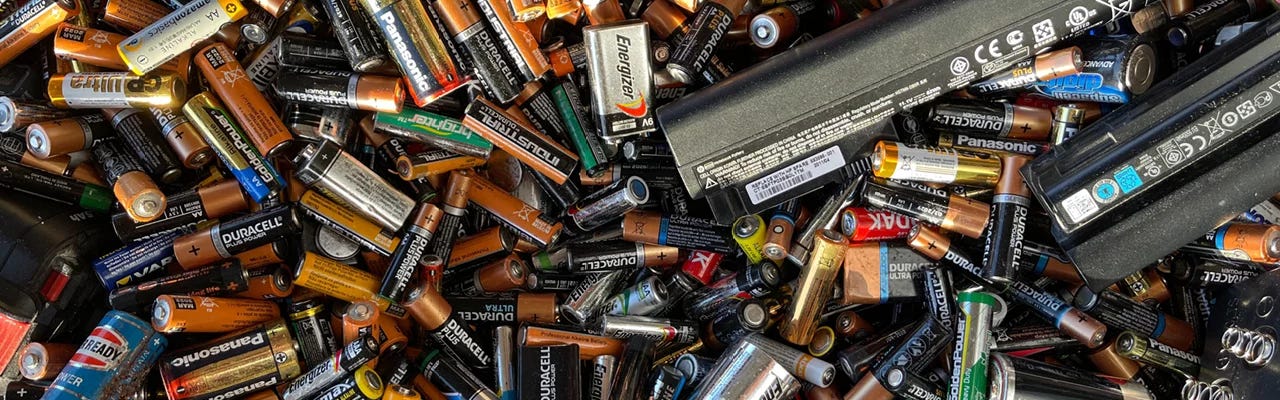
1. Battery avalanche: 2 million tonnes of batteries powering IoT devices (the sensors, trackers, and monitors embedded in everything from farmland to bridges to factory floors) are discarded globally every year. Lithium, cobalt and cadmium end up leaking into soil and water.
2. Mismatch by design: These devices are built to last a decade, but their batteries die in 2 years or less. In remote locations, replacing them is practically impossible.
3. No clean fix at small scale: Silicon solar panels need hazardous materials to manufacture and direct sunlight to work. Powering all these devices with lithium-ion batteries would require 3x the world’s current annual lithium output.
4. Growing fast, getting worse: There are ~20 billion of these devices today. That number keeps climbing. So does the waste.
Product / Service 📦
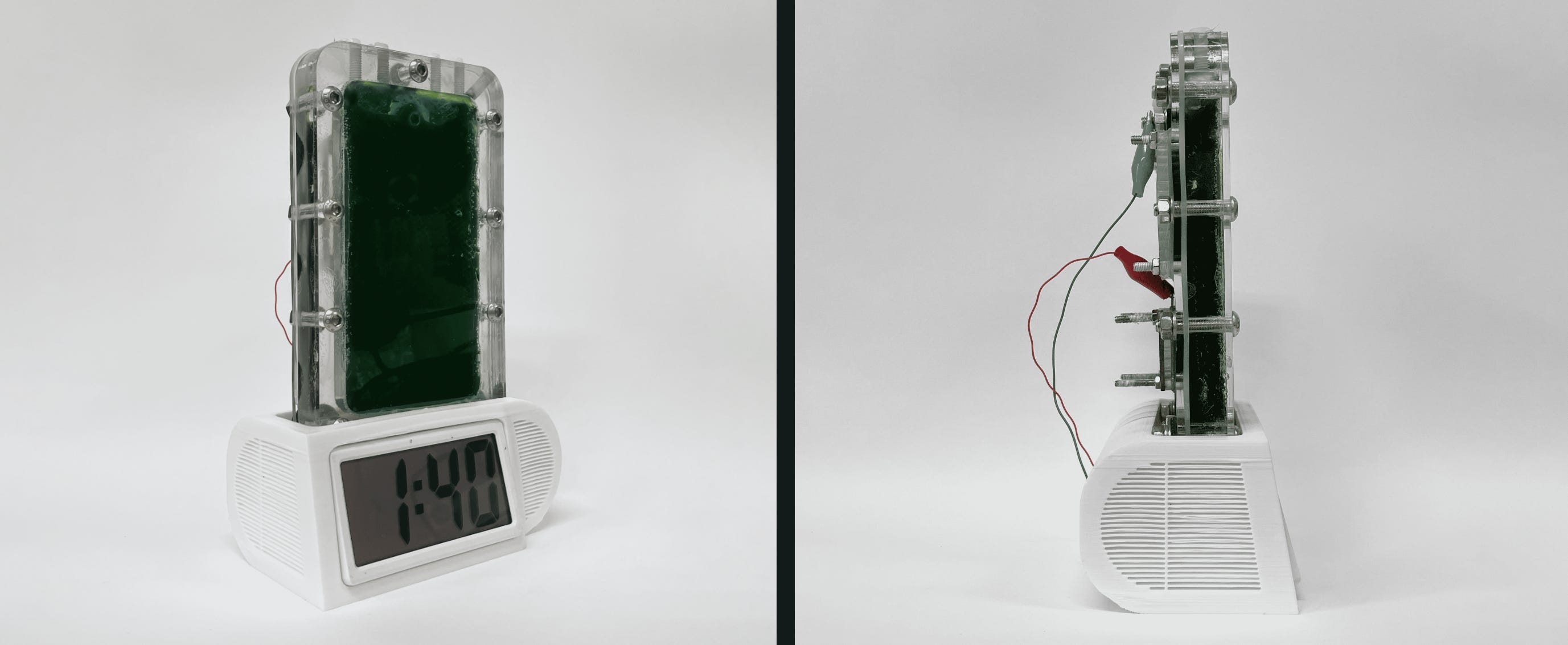
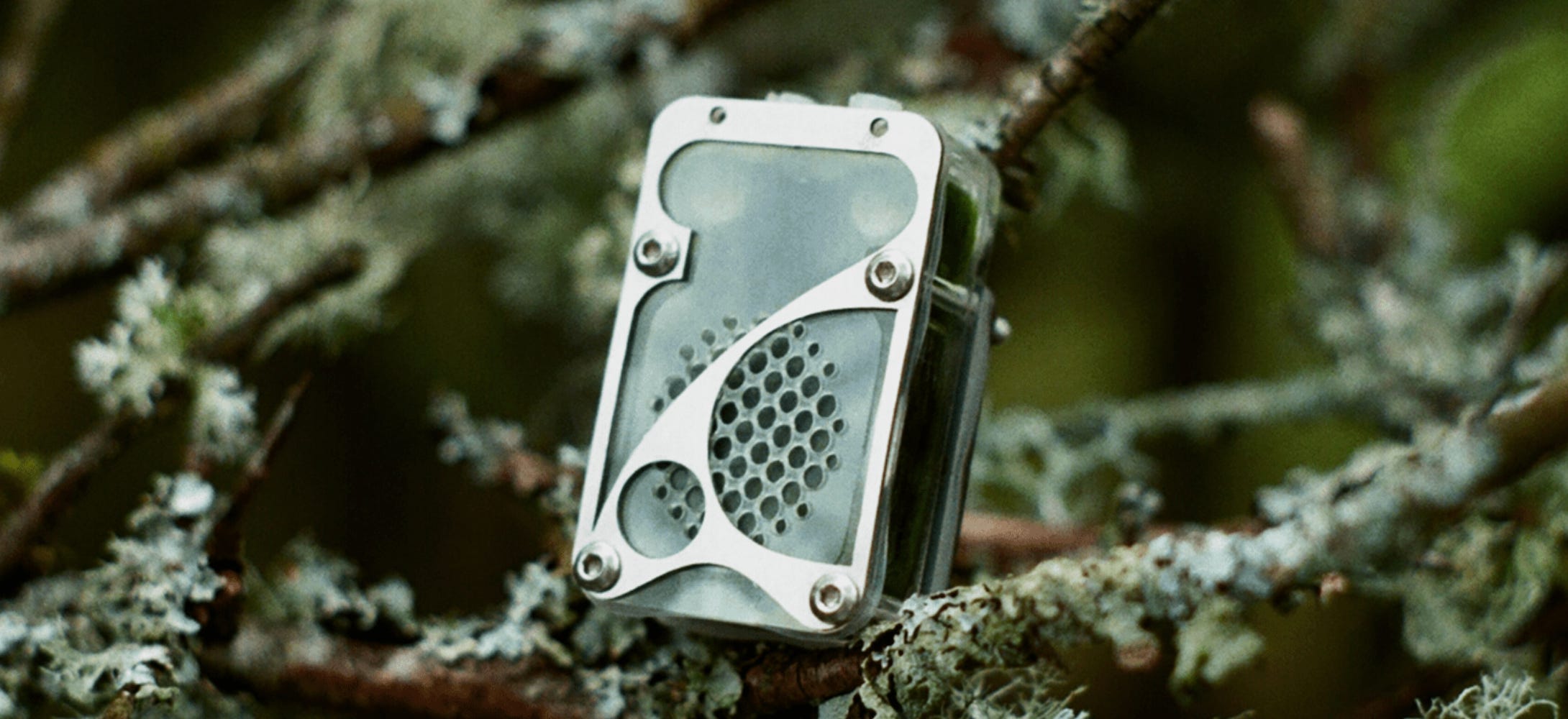
e-Pho makes biophotovoltaic (BPV) cells. They’re living energy modules that generate electricity from photosynthesis.
Living cells, real current: e-Pho couples photosynthetic micro-organisms with engineered materials to extract electrons from water under light, generating a continuous electrical current. The organism is synechocystis, a non-toxic blue-green algae that’s widely available and self-reproducing.
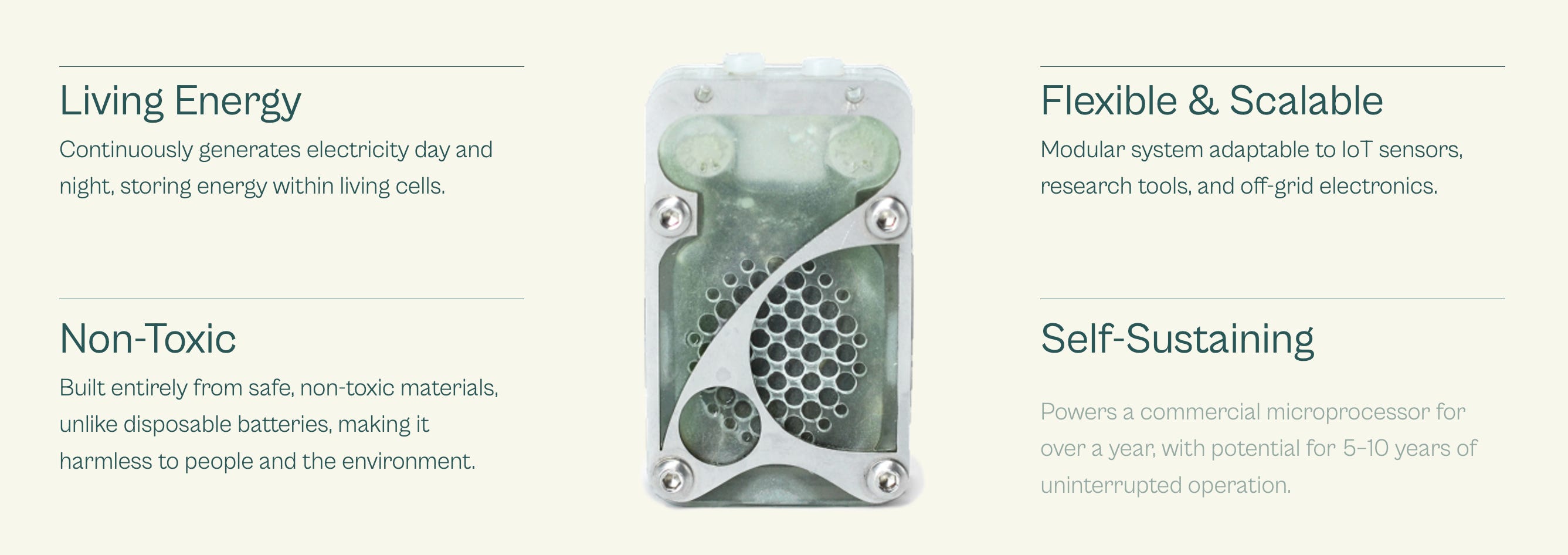
Works day and night: The device continues producing power even in darkness because the algae process food when there’s no light, and this keeps generating current. It’s not just a solar panel. It stores energy biologically.
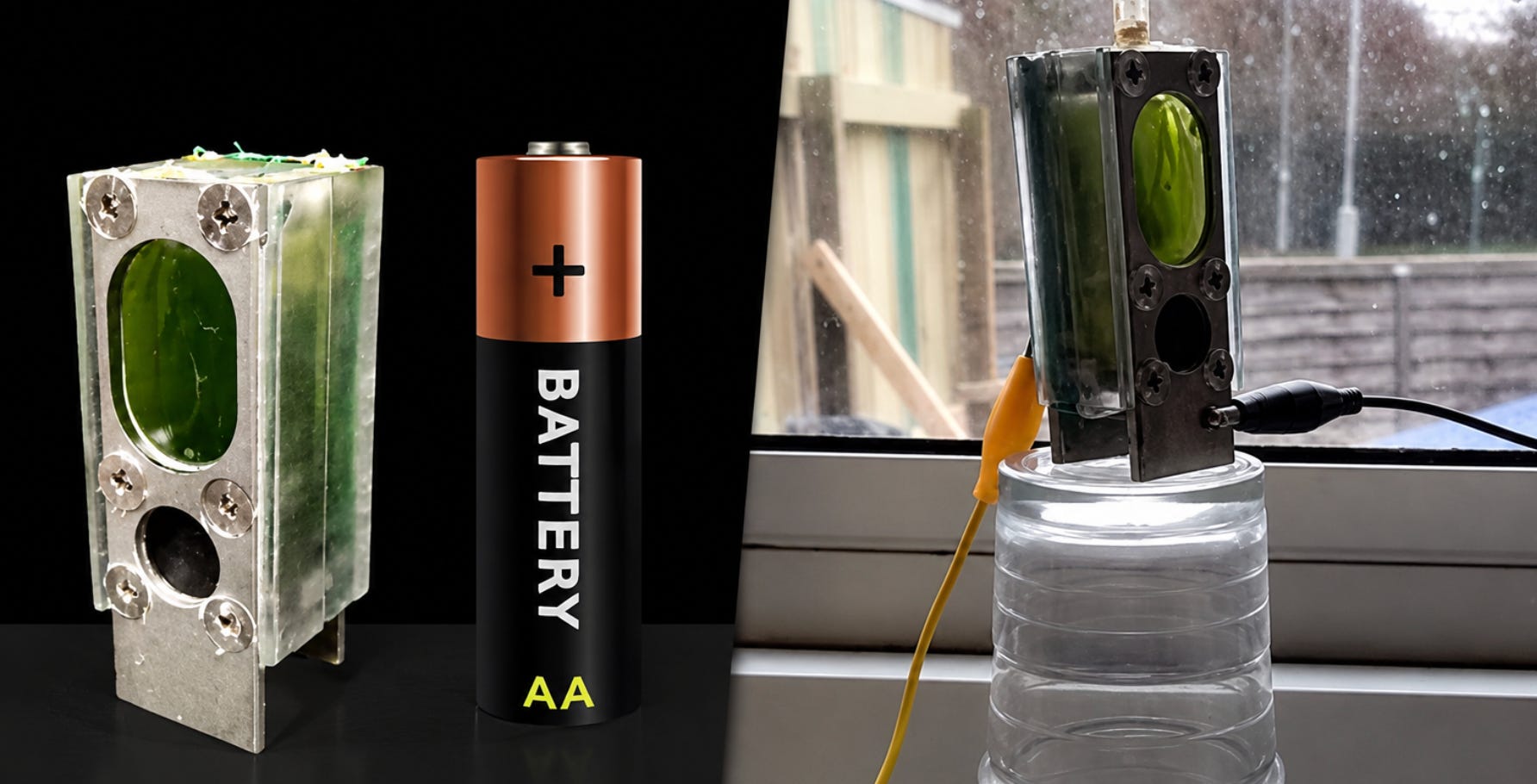
Already proven: In collaboration with ARM, the device powered a microprocessor continuously for a year using nothing but ambient light and water. The system was comparable in size to a AA battery.
Non-toxic and scalable: Built entirely from safe, non-toxic materials, modular, and adaptable to IoT sensors, research tools, and off-grid electronics. No lithium. No cobalt. No supply chain risk.
The target is the billions of ultra-low-power devices that need a trickle of electricity, reliably, indefinitely, without anyone ever having to replace a battery.
Market 🌐
The global algae biophotovoltaics market reached $128.7 million in 2024 and is projected to reach $589.3 million by 2033. That’s the narrow definition. The real prize is the broader IoT battery market: it reached $15.9 billion in 2025.
The most urgent opportunity is off-grid and hard-to-maintain sensor deployments: environmental monitoring, precision agriculture, smart infrastructure. Anywhere a battery change costs more than the sensor itself.
Other Key Players
Plant-e 🇳🇱: Wageningen University spin-off using living plant roots rather than algae to generate electricity for IoT sensors.
Bioo 🇪🇸: Barcelona company using plant-microbial fuel cells to power outdoor lighting and agricultural sensors.
e-Pho’s edge: free-floating cyanobacteria in a contained cell, no soil or living plants needed, deployable anywhere.
Founding Story 🦄
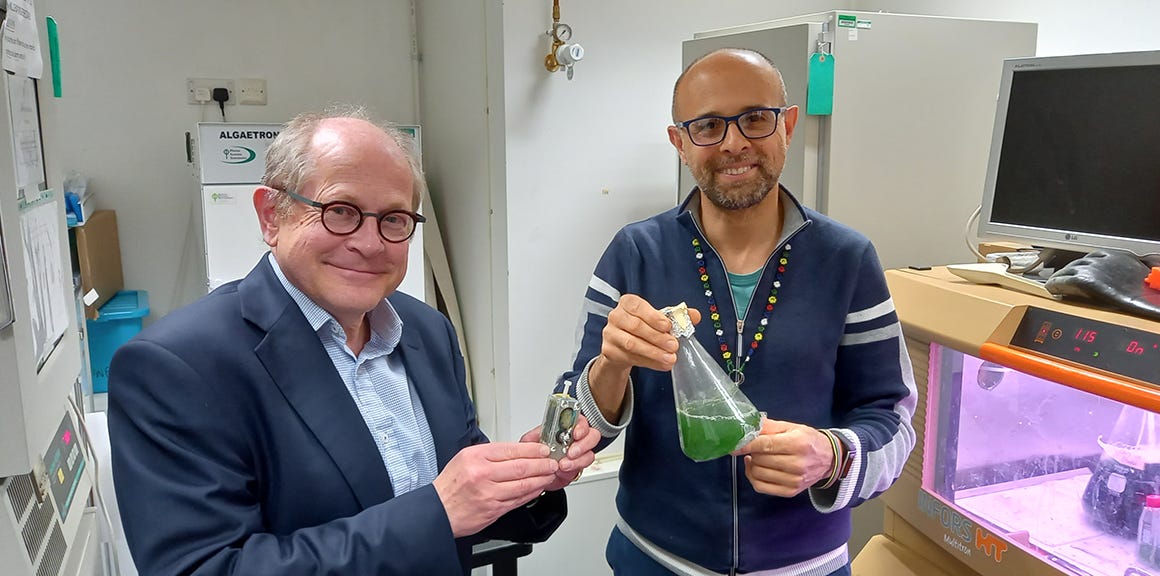
Christopher (left) and Paolo (right)
e-Pho spun out of over a decade of research at the University of Cambridge. Dr. Paolo Bombelli and Prof. Christopher Howe (both from the Department of Biochemistry) spent years developing bio-photovoltaic systems: devices that extract electrons from photosynthesising organisms and turn them into electricity.
The breakthrough came in 2022. Working with ARM, they powered a microprocessor continuously for over a year using nothing but ambient light and water. The device was the size of a AA battery. “We thought it might stop after a few weeks,” said Bombelli, “but it just kept going.” The paper was published in Energy & Environmental Science.
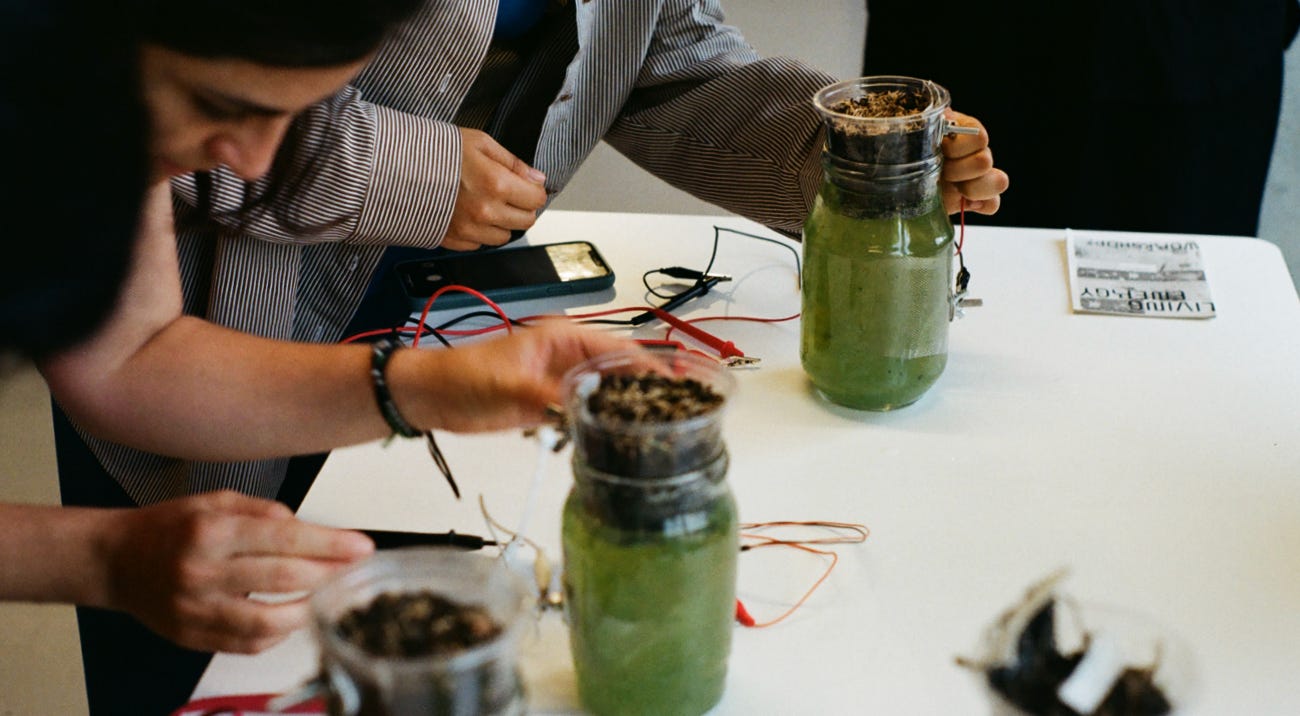
That result became the launchpad for e-Pho Ltd, now headquartered in London. The company is still very small but they’ve already built partnerships with companies like Lush and they’ve started an educational programme bringing bioelectric systems into UK classrooms.
Top Impact Stats 📈
1. Their device powered a commercial microprocessor for over a year on nothing but light and water. Potential lifespan: 5–10 years uninterrupted.
2. Zero rare materials: no lithium, no cobalt, no silicon. Living organisms that self-reproduce.
3. 78 million IoT batteries discarded every day. That’s the problem e-Pho is going after.
Whenever you’re ready, there are 2 ways I can help you:
Scale and optimize your business: Automation and AI implementation (Claude expertise) for companies so they can free up time to scale their revenues.
Give visibility to your climate company: Get your company in front of an audience of thousands of climate players and enthusiasts by sponsoring newsletter issues and LinkedIn posts.
Thanks for reading today’s issue! If you liked it feel free to hit the ❤️ button and share it with someone who might like it too. See you next Saturday:)
Subscribe to keep learning about cool climate tech companies :)